 Thursday 12 March 2026 was the inaugural “International Day of Ceramics”, a global initiative launched by the International Ceramic Federation and the Japan Fine Ceramics Association, and supported by The American Ceramic Society.
And what better moment than to simply remind that the ceramics market is the largest consumer of different types of industrial minerals.
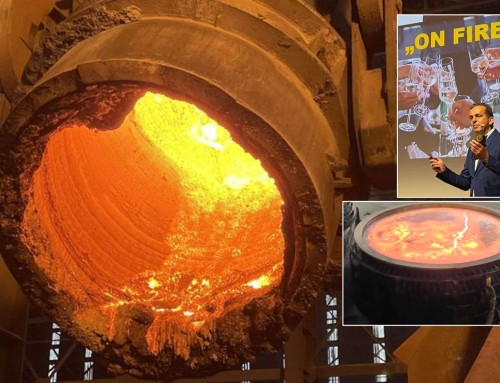
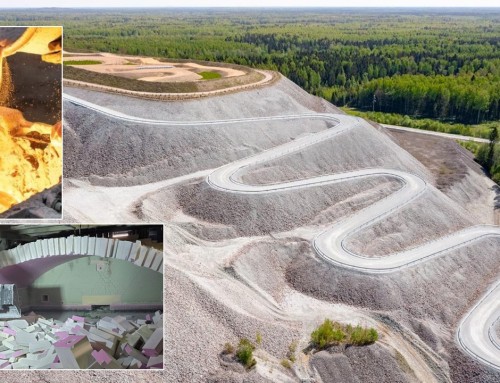
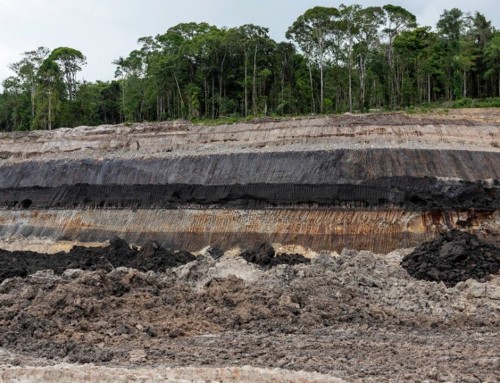
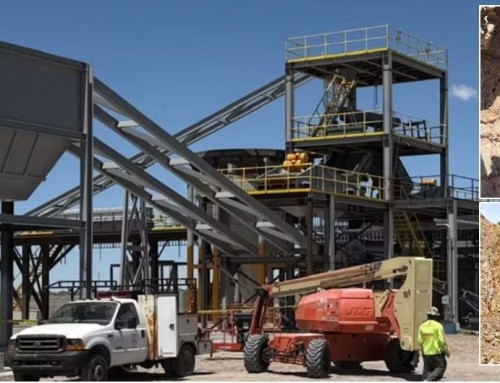
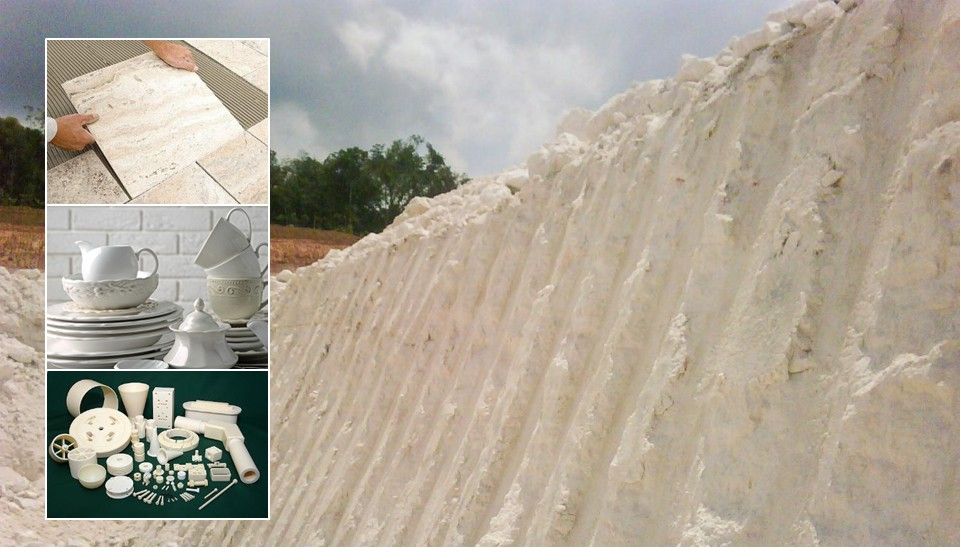
Title Image Minerals Make Ceramics: Kaolin is probably one of the most widely used industrial minerals used in ceramics – from tiles, tableware to high-tech components for defence applications; Brazil is a leading high quality source and pictured here is the kaolin mine of Artemyn Rio Capim Caulim SA, Brazil. Images courtesy Artemyn Minerals; Kopin Porcelain; Mingrui Ceramics
From alumina to zircon, ceramics manufacturing requires a wide range of non-metallic minerals – at least 40 different types! (see table right).
The accompanying chart indicates the estimated total industrial mineral types used in each primary market sector. Ceramics comes out on top in the >30 minerals set, followed in descending order by metallurgy, paint/pigments, chemicals, agrimarkets, glass, and food/pharma (chart adapted from “Industrial Minerals Basics: An Executive Primer” by Mike O’Driscoll, updated February 2026 – details here).
The pie chart data was compiled from IMFORMED’s Mineral Market Matrix®, 2nd edition 2023 – our “At a glance guide: which minerals for which markets”, which highlights the diverse world of industrial minerals and their markets illustrated in one place (more details here).
And are ceramics minerals critical?
There are certainly good arguments to support their inclusion as critical raw materials.
For example, if you had asked that question to any European ceramic tile manufacturer in February 2022 there would have been a resounding “YES” – since most leading tile producers (particularly in Spain and Italy) relied almost exclusively on the high quality ceramic ball clays sourced from the Donbas region of Ukraine – which were cut off immediately following the Russian invasion (see Industrial mineral supply disruption: Ukraine crisis).

At last year’s MagForum 2025, Jessica Roberts, Research Director, Project Blue, in her excellent presentation “Magnesia market outlook: geopolitical trends & critical mineral status” focused on the topic of “criticality” and how magnesia is viewed across different geographies.
Roberts suggested that critical mineral status for magnesia could improve resilience of domestic magnesia sectors and lead to more regionalised supply chains and new trading partnerships (for a full review of all MagForum 2025 presentations see “Magnesia market assesses its future”; also see “Industrial minerals – have they finally gone critical?“).
At the following upcoming conferences IMFORMED will be highlighting the latest developments in supply and demand of the vital ceramic minerals magnesia and fluorspar, and in recycling ceramic minerals:


Going to Ceramitec 2026, Munich, 24-26 March?
IMFORMED will be in attendance, please let us know if you are there or in town, it would be great to catch up for a chat (mike@imformed.com).