
Critical Mineral Status | Supply | New Sources | Decarbonisation | Refractories | Chemicals | Hydrometallurgy | Agrimarkets
One of the most important suites of industrial minerals are those containing magnesia (magnesium oxide), derived from both natural and synthetic sources, which supply a wide range of markets including agriculture, chemicals, construction, water treatment, steelmaking, refractories, food and pharmaceuticals.
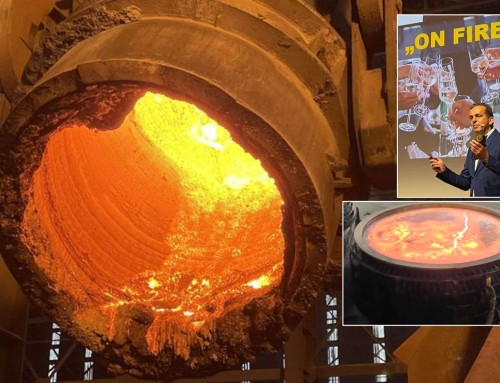
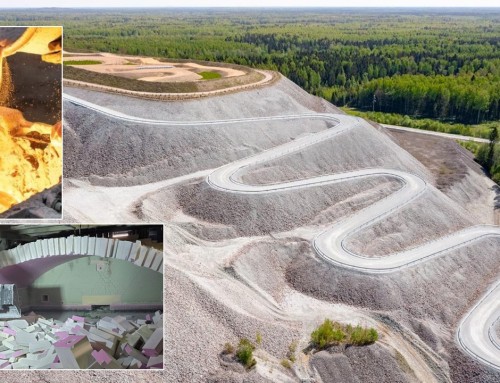
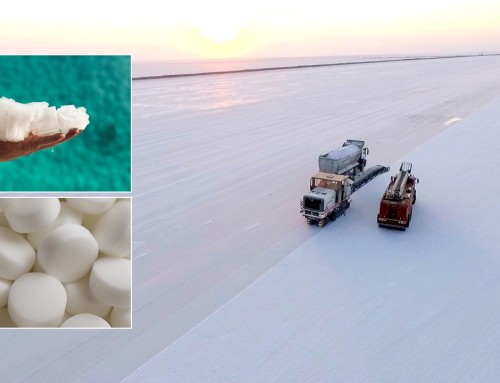
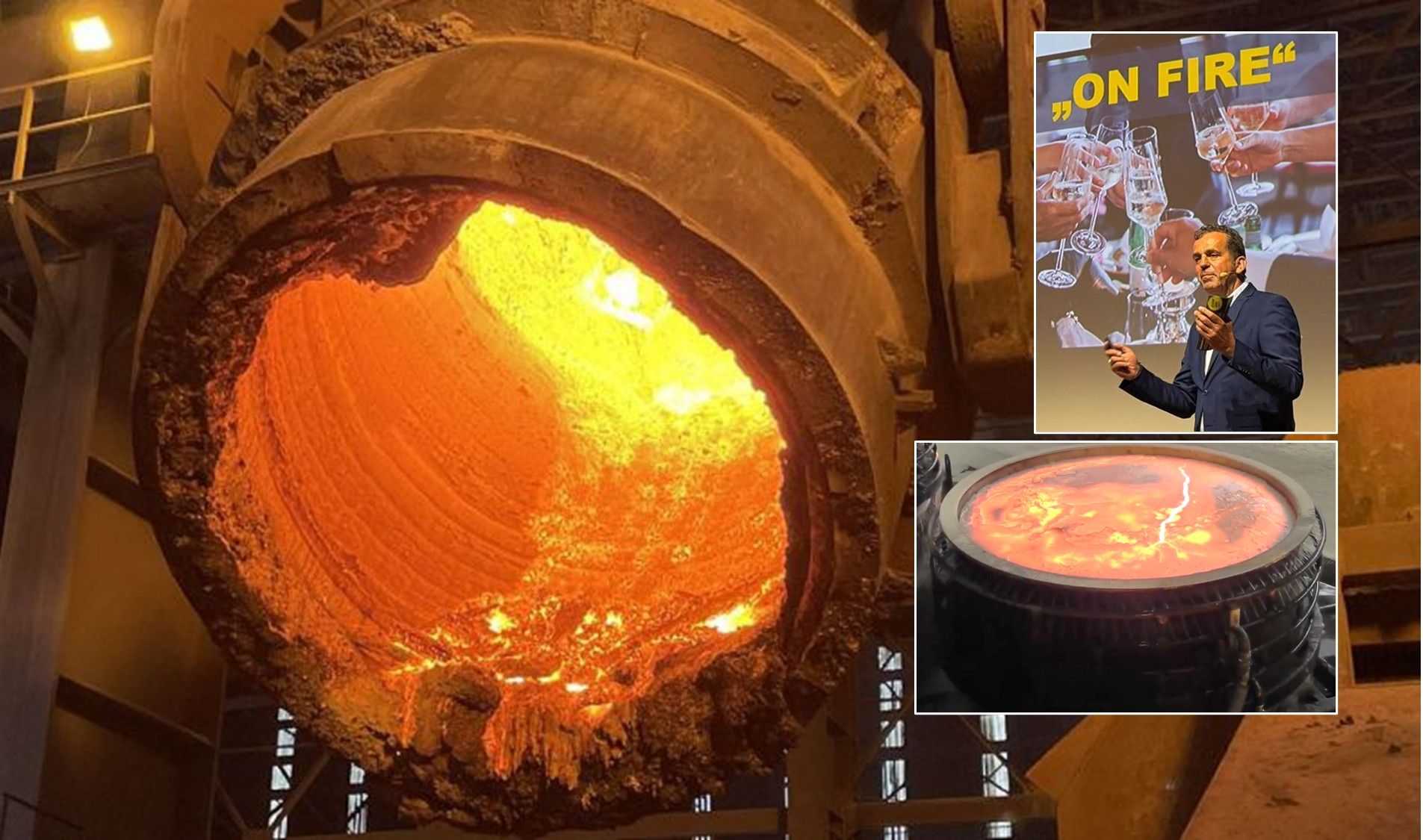
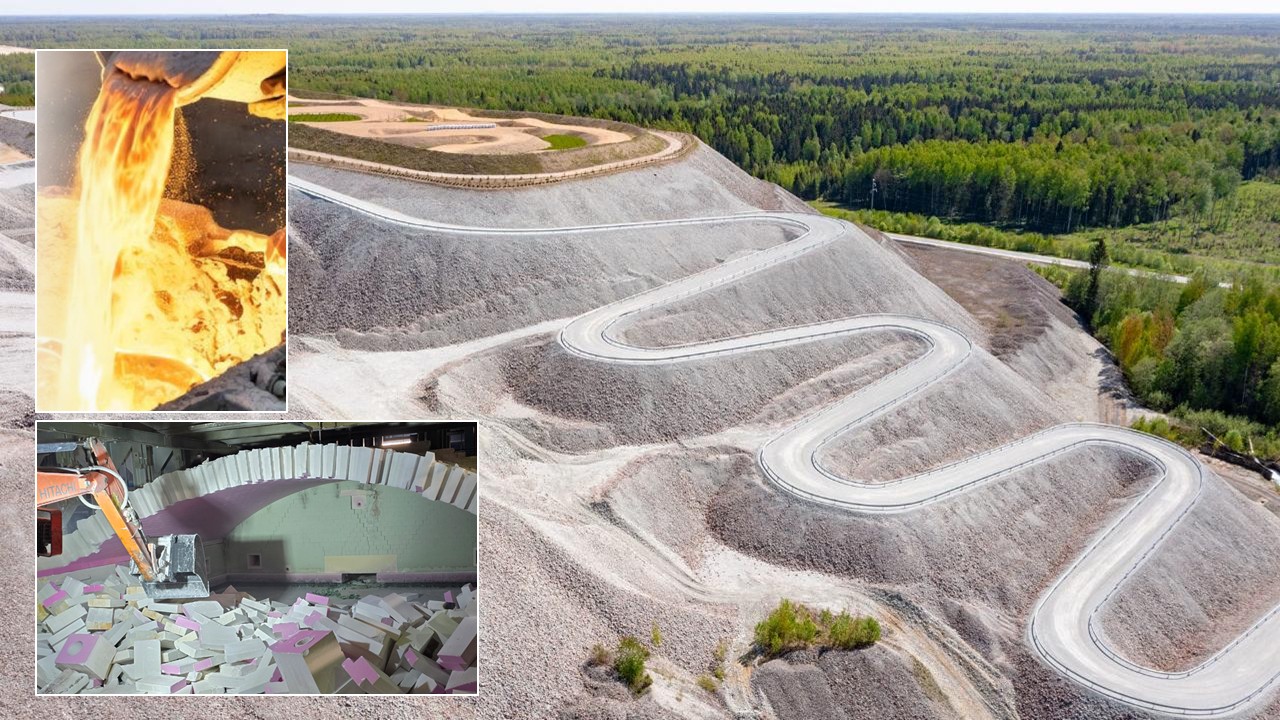
Title Image Blue Sky Thinking Required? The magnesite industry needs plans for resilience to market challenges; RHI Magnesita’s Pomba mine at Brumado, Bahia was one of the highlights of a great visit as part of MagForum 2025; inset top: Vesuvius Advanced Robotic Gunning (VARG) in action in BOF refractory lining maintenance; inset bottom: Cable and wire bearing magnesium hydroxide flame retardants. Images courtesy RHI Magnesita, Vesuvius, S&P Global
However, there are relatively few commercially developed magnesia mineral sources worldwide, and challenges in source development, logistics, environmental factors, trading climate, perception of magnesia’s “criticality”, and geopolitics have strained the sector in recent years culminating in a present period of deep uncertainty.
But at the same time there have been some very interesting alternative source and market application innovations which have provided some positive outlook.
Last year IMFORMED organised MagForum 2025 in Praia do Forte, near Salvador, Bahia which brought together the world’s leading players in the magnesia supply chain for two days of networking, and expert presentations covering the key issues of the market.
Key takeaways included:
- the significance of diversifying magnesia sourcing
- strengthening sustainability particularly in light of decarbonisation and recycling
- the overall recognition and working towards of “industry resilience”
- seeking non-refractory market applications, especially the growing demand in hydrometallurgy
- the ongoing appreciation and spreading awareness of the “criticality” of magnesite and magnesia
These presentations are reviewed below.
So what is the outlook for this year and next? After the amazing adventure of MagForum 2025 in Brazil, this year IMFORMED is bringing MagForum 2026 back to Europe, and back to the wonderful Grand Hotel Dino resting on the shores of beautiful Lake Maggiore. Just 50min from Milan Malpensa Airport.
We have a great line-up of confirmed speakers and attractive Early Bird Rates available only until 6 April BOOK NOW! – Full details and registration here.
Early Bird Rates available only until 6 April BOOK NOW!
Full details & Registration here
Confirmed Speakers*
2035 RHI Magnesita raw material strategy: magnesia in the heart
Nicolas Gangutia, Head of Minerals BU, RHI Magnesita, AustriaThe new world order: strategic developments impacting the magnesia market
Alex Medendorp, Director, Magnesium Trade & Consultancy, NetherlandsThe WRA and its assessment of raw material impact on the Product Carbon Footprint of refractories
Dr Rainer Gaebel, President, World Refractories Association, BelgiumThe outlook for magnesia in steel & metals production
Alison Saxby, Research Director, Project Blue, UKDead burned magnesia: From natural resource to industrial performance
Mustafa Çavaç Sales & Marketing Manager Raw Materials, Kümaş Manyezit Sanayi AŞ, TurkeyIndustrial development of white fused magnesia & fused magnesia in China
Dr Perry Zhang, President, Beijing Allied Rongda Engineering Material Co. Ltd, ChinaDevelopment status of chemical magnesia in China & the World: comparison & development suggestions
Sun Wen, President, Hebei Meishen Technology Co. Ltd, ChinaHigh purity magnesia for highly regulated industries: pharma, food, cosmetics & beyond
Thomas Raab, Strategic Sourcing Director, MAGNESIA GmbH, GermanyAn innovative magnesia-based technology for mine tailings pond treatment
Maryam Jafari, Market Development Manager, Baymag Inc., CanadaThe new market opportunity: converting magnesium byproducts into carbon removal credits
Omar Sadoon, Director, Strategic Partnerships, Planetary Technologies, USAPilot results & economic analysis of magnesium metal production by aluminothermic reduction of magnesia
Boris Chubukov et al, CTO, Big Blue Technologies Inc., USAAntigorite, from Nasławice KOSD quarry, Poland, as an alternative magnesia source for selected refractory products
Adrian Podgórny, Project Manager, KOSD Wrocław, PolandSustainable magnesium products (MgO; MDH; Mg) from serpentine: A new industrial platform for the EU
Dr David Konlechner, Chief Technology Advisor, MPI Magnesium, AustriaMareMag: a new process for the sustainable production of magnesium hydroxide from salt brine
Fabrizio Vicari, CEO, MareMag, ItalyDecarbonisation for the magnesia industry
Sophia Hamblin Wang, Co-Founder & COO, MCi Carbon, AustraliaProtecting what matters: Terresis’ new identity and sustainable commitment
François Mazaré, Development General Manager, Terresis, FranceMagnesium oxide in context of tubular heating elements
Dr. Wolfgang Thimm, Material Expert, E.G.O. Elektro-Gerätebau GmbH, Germany

MagForum 2025 Review
OVERVIEWS | DECARBONISATION | RHIM CAPACITY INVESTMENTS
Magnesite in a shifting world
Gustavo Franco, Chief Customer Officer, RHI Magnesita, Austria
Franco’s slick Welcome Address formally opened the Forum and tasked the audience to consider some of the most fundamental factors impacting the magnesia industry today: “MagForum 2025 is in the right place, at the right time. The future of magnesite starts with conversations like this.” said Franco.
He discussed global economic trends, industry impacts, supply risks, strategic responses, and the “real value” of this critical industry.

Gustavo Franco, Chief Customer Officer, RHI Magnesita: “Do you have a back-up plan? A critical resource demands a critical mindset.”
In summary:
Global Snapshot
- The world is fragmented with industrial strain in Europe, slower growth in the West, and overcapacity in Asia.
- Inflation remains high
- Cost structures are volatile, and supply chains are fragile.
- Global dynamics are shifting, affecting industries worldwide.
Mega Trends
- Key mega trends include globalisation versus regionalisation, AI versus digitalisation, green transition versus economic pressures, and the return of geopolitics with rising tariffs.
Market Shifts and Industry Adaptation
- Industries like construction, infrastructure, automotive, steel, cement, and glass are adapting to macro shocks and market shifts.
- The focus is on understanding how these industries respond to changing global conditions.
Magnesite Supply Risk and Future Outlook
- Strategies to mitigate magnesite supply risks must be discussed.
- The future of magnesite is envisioned as resilient, responsible, and ready.
- Ensuring long-term magnesite availability is top priority, emphasizing strategic planning and risk management.
Franco concluded by asking: “Do you have a back-up plan? A critical resource demands a critical mindset.”
IMFORMED is delighted to welcome RHI Magnesita as Lead Sponsor of MagForum 2026 and will be hosting the Welcome Reception Monday evening 18 May at the Grand Hotel Dino, Baveno on the spectacular Lake Maggiore.

Magnesia market outlook: geopolitical trends & critical mineral status
Jessica Roberts, Research Director, Project Blue, UK
Roberts provided an overview of magnesia market trends, highlighting segments with strong demand and outlook, and focused on the topic of “criticality” – how MgO is viewed across different geographies.
In summary, Roberts concluded the key factors influencing the market as:
- Overcapacity weighing on magnesia sector, primarily from Chinese oversupply
- Consolidation of older technologies underway in China, could lead to more balanced market
- Refractory magnesia facing both headwinds and opportunities
- CCM growth prospects look robust, strongest demand for hydrometallurgical in nickel, cobalt, rare earths and Li-ion batteries recycling
And with regard to magnesia’s criticality:
- Magnesia is the “workhorse” of many critical and strategic sectors
- Critical mineral status for magnesia could improve resilience of domestic sectors
- Geopolitics is leading to volatility in many mineral supply chains
- CRM status could lead to more regionalized supply chains, new trading partnerships

The challenges of decarbonisation, C footprint reduction, & ESG: which strategy for the magnesia industry?
Renato Ciminelli, Technical & Commercial Director, Mercado Mineral, Brazil
This presentation looked at the difference between the strategic concepts of Decarbonisation: Industrial Policy, Carbon Reduction: Industrial Attitude, and ESG: Industrial Practice.
Ciminelli considered the basis of a fourth strategic option involving a hybrid concept of Decarbonisation + Carbon Foot Print Reduction + ESG, urging companies to invoke a Board Strategy Review.
This would facilitate working towards a new development slope to 2050 that copes with company strategic planning, culture, skills, resources, value chains and ecosystems.
He concluded with detailed intermediate to medium to long term agendas for company strategy.
Brazilian magnesia: superior quality, scalable production, and global distribution
Rajah Jayendran, Chief Technology Officer, RHI Magnesita, Austria
In a well-illustrated presentation which doubled as a useful preview for the post-conference Field Trip, Jayendran highlighted the main features of the Brumado operations of RHI Magnesita:
- High quality magnesite reserves in excess of 100 years
- Direct rail connection from Brumado plant to dedicated rail terminal at Port of Aratu
- €100m investment plan to rejuvenate Brumado prompted by supply chain paradigm shift since Covid-19 period “shifted into high gear” in August 2024
- The world’s largest rotary kiln for DBM production (150kt), employing highly automated process control, with temperatures surpassing 1900°C to achieve peak performance with lowest ecological footprint
- Highly qualified and dedicated mineral processing R&D team with complete pilot plant
- Supplying a combined total of 500kt magnesia materials for global demand

SUPPLY DEVELOPMENTS: NATURAL & SYNTHETIC
Brazil’s magnesite resources, production, developments & markets
Dr Maisa Bastos Abram, Head of the Dept. of Mineral Resources, Geological Survey of Brazil – SGB, Brazil
Brazil ranks third in global magnesite production, and sixth in reserves, with five operating mines and 1.8m tonnes annual output; key deposits are in Brumado and Sento Sé (Bahia) and Orós (Ceará).
Brazil’s magnesite resources, production, main players and markets were highlighted.
Despite hosting considerable reserves and potential, Brazil’s magnesium minerals sector remains underexplored. The states of Bahia, Ceará, Minas Gerais, and Goiás, offer attractive opportunities, with long term growth potential – there are new mining projects (Bahia, Ceará and Piauí states) that can expand the national reserves.
Key challenges and risks in Brazil’s magnesium minerals development include:
- Chinese market dominance
- Instability of steel production; Trump impact
- Gaps in infrastructure may increase logistical costs
- Environmental licencing hurdles
- Sustainability challenges in decarbonisation, carbon capture, and recycling.

Magnesia & industrial minerals supply to the Americas: new capabilities & target markets
Emilio Lobato, Commercial Director, IBAR Ltda, Brazil & Giovanni Tancredo, Managing Director, IBAR Refractories, USA
Lobato introduced Indústrias Brasileiras De Artigos Refratários (IBAR) then described its evolving electrofusion plant, its industrial minerals portfolio, recent developments and operations in Brumado, and an overview of the group’s US strategy.
Production at the new 4 furnace 22,000 tpa electrofusion plant began in April 2020. IBAR was already facing significant price pressures on fused raw materials, with no room for negotiation. So bringing production in-house was a strategic decision to achieve self-sufficiency. Two additional furnaces were planned to come online by end-2025.
IBAR’s primary magnesite mine is Campo de Dentro, Brumado, Bahia. The average purity of the ore is around 95% MgO (on a raw basis) with reserves of 80m tonnes, with no beneficiation process beyond crushing and screening between the mine and the kilns.
At Brumado, IBAR is restarting Rotary Kiln 1 (25,000 tpa), which had been idle for some time, to make a more reactive CCM for animal feed.
In 2024, IBAR Refractories was established in the USA as a subsidiary of IBAR Group, improving logistics planning and co-ordination with US ports and warehouses, and future production in the USA is in the pipeline.

BEL MAG overview: high purity seawater magnesia manufacturing, specifications & speciality markets
Willyan Doim, Product Strategy Manager, Buschle & Lepper, Brazil
BEL MAG is the Brazilian leader in the commercialisation of synthetic magnesium from seawater, strategically located in Balneário Barra do Sul, in the northern region of Santa Catarina, with a production capacity of 3,200 tpa powder and 1,000 tpa gel and paste.
Doim outlined the company’s processing stages and the product portfolio of food, technical, and pharma grades and their respective applications.

Transforming legacy mine tailings into high-purity MgO: a low-carbon innovation in magnesium production
Olivier Dufresne, Chief Executive Officer, Exterra Carbon Solutions, Canada
Dufresne explained Exterra’s Hub I Project that will reprocess asbestos mine tailings, contribute to mine closure, and provide strong environmental and social benefits to local communities, enabling regional economic development.
Some 1,000 tpd of tailings processing capacity is envisaged from a huge resource feedstock of 800m tonnes of asbestos mine tailings produced over 120 years of operation in Quebec.
The proprietary low carbon footprint process will yield: synthetic magnesia (high purity and reactivity, 98.0-99.8% MgO), amorphous silica, and nickel and cobalt MHP.
The Hub I project will enable the valorisation of +90% of the minerals contained in the mine tailings. Engineering is underway following strong Preliminary Technical Study economics, with production start expected by 2029.

REFRACTORIES | STEEL
The future of MgO steelmaking refractories: innovations to reduce MgO-C brick specific consumption
Daniele Fonseca de Lima, Marketing & Technology Director Advanced Refractory South America, Vesuvius, Brazil
This presentation started with an overview of Brazil’s refractory market followed by a review of innovations of improving MgO refractory consumption in EAF, BOF, and steel ladles.
About 338-508,000 tpa of refractories are consumed in Brazil’s steel industry, which represents 70% of the country’s total refractory market, at 10-15kg/t steel specific refractory consumption rate.
Fonseca de Lima highlighted the challenges facing the steel sector as geopolitical tensions and trade wars; global demand slow down; unfair import competition; high local production costs in energy, logistics, labour, raw materials; and pressure to decarbonise.
On example of refractory improvements included carbon-free bricks, a new Vesuvius development to provide a response to the dual problem of saving energy, and limiting carbon recovery, particularly interesting for demanding specifications like ultra-low-carbon steels.
AI LAPS was introduced, an innovative method by Vesuvius using Artificial Intelligence for ladle fleet management, as well as development of high-performance robotic equipment for use at high temperatures and maximum speeds.

Steel in flux: A global overview amid on and off tariffs
Adriana Carvalho, Senior Manager, Pricing Metals Americas, S&P Global Commodity Insights, Brazil
Caravalho provided an excellent review of the steel industry, its key influencing factors, and impacts on Brazil and the global steel market.
She considered that the market is at a defining moment: “The steel industry is not facing just another cycle of highs and lows – it’s undergoing a fundamental transformation driven by climate goals, geopolitical shifts, and evolving industrial demands. Adaptability is no longer optional.”
Companies that succeed will be those that restructure their supply chains, embrace technology, and manage costs aggressively, without losing sight of quality and long-term strategy.
Supply security has become strategic: securing raw materials, whether through diversification, recycling, or upstream investments is now seen as critical to resilience.
Trade tensions are reshaping markets and global players must adjust to a more fragmented and competitive trade environment, where imports will also remain part of the equation.
Sustainability is now a business imperative: the shift toward low-carbon steel is not just regulatory, it is being demanded by customers, investors, and the broader market. This transition will require innovation, capital, and global coordination.

CHEMICALS | HYDROMETALLURGY | FERTILISER
Overview and outlook for the CCM and downstream chemicals market
Samantha Wietlisbach, Executive Director Research & Analysis, S&P Global, Switzerland
Wietlisbach provided a fine overview of world magnesia supply and trade, and noted that Central and South American capacity for DBM and CCM (88% sourced from magnesite) had increased, with the region being a net exporter of MgO.
World consumption of non-refractory MgO is >5m tonnes, led by the agricultural market with a 32% share of CCM demand.
Key takeaways included:
- Progress made in producing greener magnesium compounds
- Steady growth in agricultural applications for CCM, construction markets slower
- MDH flame retardants growth <3% globally 2024-29. Public transport, and E-mobility charging important

The use and importance of calcined magnesite products in the hydrometallurgical industry
Mustafa Çavaç, Marketing & Sales Manager Raw Materials, Kumaş, Turkey
This presentation covered the hydrometallurgical industry, nickel production, MHP process, use of calcined magnesia as a neutralising agent, importance of calcined magnesia, production and properties of CCM, and a review of Kumas’ reserves and CCM products.
Cryptocrystalline magnesite ore (such as that produced by Kumas), with its fine-grained, defective structure, produces highly reactive MgO after calcination, making it far more effective in the MHP process than macrocrystalline ore. The enhanced surface area and porosity of MgO derived from cryptocrystalline ore enables efficient nickel/cobalt precipitation.
Reasons why CCM is preferred in hydrometallurgy include:
- Low solubility
- Precipitates impurities
- pH control is easier
- Reduces sulphuric acid consumption
- Reduces need for harsh chemicals
- Non-corrosive and non-hazardous

ABREFEN, soil remineralizers, natural fertilizers and Enhanced Rock Weathering in Brazil
Ottavio Carmignano, Vice President Director, ABREFEN, Brazil
ABREFEN is Brazil’s National Association of Producers of Soil Remineralizers and Natural Fertilizers and represents the Brazilian production chain of soil remineralisers and natural fertiliers, key inputs for the agribusiness in Brazil.
Carmignano highlighted the regulations, requirements and national policies with respect to soil remineralisers and natural fertilisers, before going on to explain the importance and application of magnesium in crop production.
Key attributes of magnesium used as soil a remineraliser include:
- Imparting structural constituent of chlorophyl
- Imparting photosynthetic activity
- Carbon incorporation
- Important role in the defence mechanism in plants under abiotic stress
- One of the main enzyme activators in vegetables
- Positive influence on the absorption of orthophosphate ion
Carbon sequestration through Enhanced Rock Weathering using MgO-bearing rocks in crop soil is also gaining traction in Brazil.

Field Trip: RHI Magnesita, Brumado, Bahia
The conference was followed by a superbly organised visit to lead sponsor RHI Magnesita’s Brumado facilities – a long and busy but fantastically unforgettable day.
70 delegates were safely chaperoned around the operation by expert RHI Magnesita staff with visits to the two magnesite mines Pedra Preta and Pomba (including a scheduled mine blast!), the core shed, the M30 multiple hearth furnace, and the recently installed 200-metre, 150,000 tpa DBM rotary kiln (world’s largest).

Many thanks and hope see you at MagForum 2026 Baveno in May!
Special thanks to all at RHI Magnesita, also our lunch and coffee sponsors IBAR and Penoles, our supporting partners, our excellent speaker panel, and of course, our intrepid delegates in participating in this glorious adventure.
Looking forward to meeting many of you again at MagForum 2026, Baveno, Lake Maggiore (Milan), 18-20 May.
Missed attending the Forum?
Free MagForum 2025 Summary Slide Deck Download here
A full PDF set of presentations available for purchase.
Please contact Maria Bernard T: +44 (0) 208 153 0035 maria@imformed.com
How critical is magnesia?
Presented by Mike O’Driscoll at UNITECR 2025, October 2025
(click for free PDF download)