
Salt Forum 2024 Review: Global supply | Pakistan | Bangladesh | Kazakhstan | EU | Solar salt | Chlor-alkali | Sodium-ion Batteries | Processing
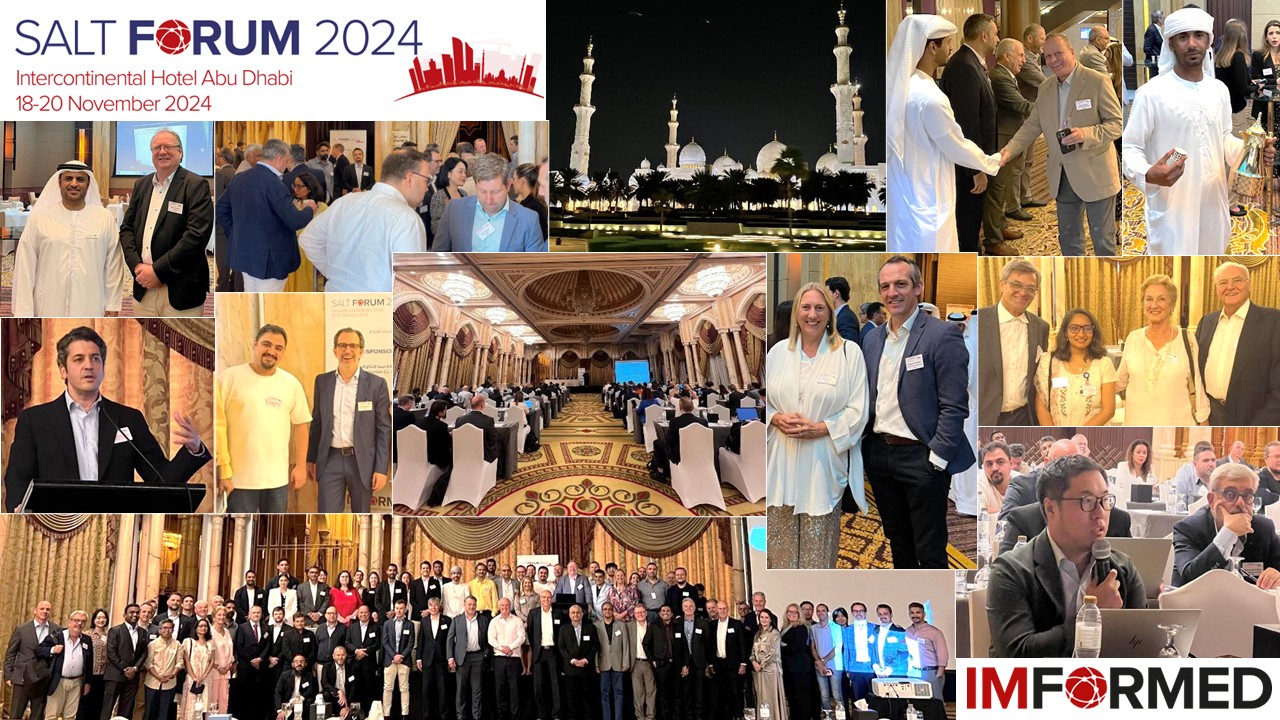
IMFORMED’s Salt Forum 2024 in Abu Dhabi November 2024 was a resounding success, bringing together the global salt market from right across the supply chain.
We were absolutely delighted to host participants from 30 countries, attaining our largest attendance so far. A packed programme of 15 presentations on key aspects of the industry, complemented by the Salt Masterclass by Vladimir Sedivy, President, Salt Partners Ltd, ensured there was something for everyone (presentations reviewed in full below).
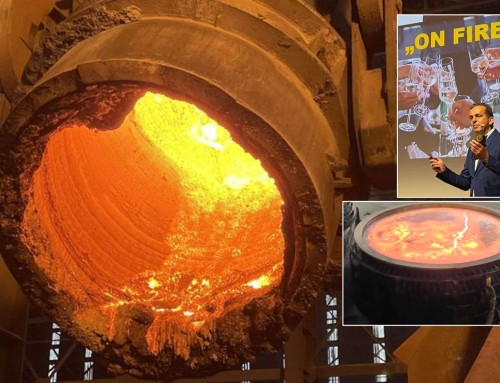
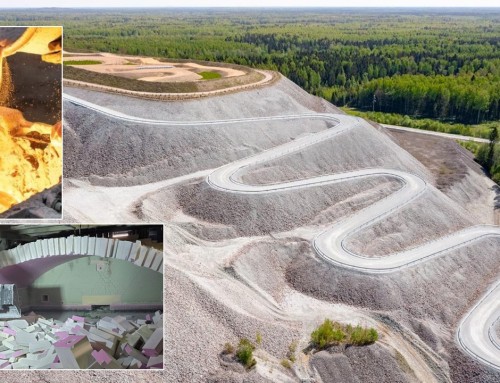
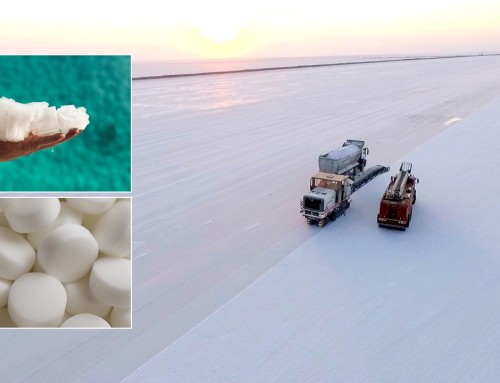
Title Image Feeding New Markets: (main image) A view of the salt lake operations of Araltuz JSC, producing food grade and industrial salt in Kazakhstan since 1925, with reserves of 47m tonnes of lake salt and producing 850m tpa salt. Araltuz has secured financing for a 120,000 tpa PDV salt plant to start in 2027, producing ≥99,9% NaCl for pharmaceuticals. While traditional food markets remain an important outlet for salt (inset), new markets such as sodium-ion batteries (inset) are sparking interest. Courtesy Araltuz.
Special thanks to Sama Salt Production Co. for a wonderful traditional Welcome Dinner, and shared insight into the impressive evolution and future expansion plans for UAE’s leading salt producer.

(Left) Prof. Saif Al Seiari, Managing Director, Sama Salt with Mike O’Driscoll, Director, IMFORMED; (Centre) Sumptous Welcome Dinner hosted by Sama Salt; (Right) Mike O’Driscoll with Mamoun Kasouha, Project Director, Sama Salt, during a private visit to the solar salt operations near Abu Dhabi after the conference.
The location of Abu Dhabi as the conference venue certainly fostered a very diverse and exciting gathering of leading international players across the salt industry, and delegate feedback showed that it was clearly a popular venue.
Therefore we have selected the same venue for Salt Forum 2025, Intercontinental Hotel, Abu Dhabi, 17-19 November – with the Salt Masterclass scheduled for Monday 17 November. We are nearing completion of the programme and have Early Bird Rates available for a limited period – confirmed speakers and full details here.
Don’t miss out, book now!

Salt Forum 2025 Confirmed Speakers
Salt supply & market outlook
Alison Russell, Research Director, Project Blue, UK
From Commodity to SALT INNOVATION HUB
Oriol Domènech, CEO, MaxiSalt, Spain
How Australia’s newest Salt Supplier BCI Minerals is responding to changing market dynamics
David Boshoff, Managing Director, BCI Minerals, Australia
Deicing salt production in Egypt
Dr. Mohamed Khalil, CEO, Al Khalil Salt Co., Egypt
Salt project developments in Africa
Balasubramanian Shriram, Managing Director, Shriraam Engineering, India
Global overview of chlor-alkali markets, new developments and trends
Angel Fernandez, Director Chlor-Alkali EMEA, Chemical Market Analytics, UK
Salt & its downstream chlor-alkali markets: direct & indirect implications of a trade war
Dr Stefan Schlag, Managing Director, Salt Market Information, Switzerland
Innovations & development of new state-of-the-art sea salt refinery
Maarten Holtkamp, Commercial Director, Tema Process BV, Netherlands
Can European chloralkali industry benefit from local availability of best quality solar salt?
Vladimir M. Sedivy, President, Salt Partners Ltd, Switzerland
Change detection using GIS through spatiotemporal analysis of salt fields
Param Dave, Manager, Tata Chemicals Ltd, India
Increasing solar salt productivity with energy efficient and climate based scientific designs and sustainable construction of saltpans
Dr Bhoomi Andharia, Principal Scientist, Salt & Marine Chemicals Division, CSIR-CSMCRI, India
“Great conference. Mike and the team make networking very easy.”
Tony Crimmins, CEO, EcoMagnesium Ltd, Australia“Thank you very much. It was a pleasure to spend a few wonderful days with you all. Congratulations on the fantastic organisation, and thank you so much for giving me the opportunity to present Seasalt Europe at such an interesting Forum.”
Gonzalo Diaz Caicoya, SEASALT Europe, Spain“An excellent platform for international networking and knowledge exchange in the salt supply chain industry. The event provided valuable insights from industry leaders on market trends and future advancements in the salt and allied minerals sector. Thank you for an enriching experience!”
Shriraam Engineering, India“The team did a great job of organising the conference! Abu Dhabi was a great choice of locations.”
David Calco, United Salt Corp., USAMissed attending the Forum?
Free Salt Forum 2024 Summary Slide Deck Download here
A full PDF set of presentations available for purchase.
Please contact Maria Bernard T: +44 (0) 208 153 0035 maria@imformed.com
SALT FORUM 2024 REVIEW
OVERVIEW
Salt global supply overview & Asian chlor-alkali market
Dr Stefan Schlag, Managing Director, Salt Market Information, Switzerland
Schlag began with a global overview of supply, demand, trade, and prices, before examining the main producing countries, chlor-alkali markets, salt supply patterns, and the outlook for Asian chlor-alkali projects and forecast salt requirements.
In summary he considered that the salt market is in the order of 320m tonnes as of 2024, it has been growing in recent years with the largest volume growth in the chemical industry. Asia is by far the largest growth region, with most Asian chemical markets depending on imports. Asian chemical market and salt import volumes are expected to continue to grow.
Specifically regarding the Asian chlor-alkali market, key observations included:
- Growth in India, Indonesia, Thailand, Pakistan to continue
- Capacity is being built to replace imports
- Thailand AGC Vinythai Group + 220,000 tonnes of chlorine capacity in 2027
- PT Chandra Asri Petrochemical and Indonesia Investment Authority (INA) +400,000 tonnes of chlorine capacity in 2027 (Binding salt offtake agreement with BCI Minerals)
- Mundra Petrochem, India + 1,300,000 tonnes of chlorine capacity in 2027

PAKISTAN | BANGLADESH | KAZAKHSTAN
Status & outlook for Pakistan salt supply, markets & future prospects
Ismail Suttar, Chief Executive Officer, HubSalt, Pakistan
Pakistan hosts all types of available salt in the world: rock salt, lake salt (brine salt), and sea salt.
The Rock Salt Range of Pakistan is the second largest salt range of the world. It covers an area of around 250 sq. km, with a confirmed reserve size of 6.2bn tonnes. Pakistan hosts 153 brine salt lakes in the southern part of the country, and its 1,050km coastline has favourable conditions of low rainfall ideal for salt production.
Pakistan’s salt lakes are rich in bromine, adding another potential extraction line alongside salt harvesting.
Pakistan’s pink salt, mined from the foothills of the Himalayas is internationally recognised for its distinctive rosy hue and high mineral content rich in iron and zinc compared to other rock salt. Its association with health, wellness, and gourmet cooking has made it a luxury product on the world stage.
Suttar described Pakistan as the new emerging export country in the gourmet category, with its products reaching markets in Australia, North America, the Middle East, and Asia.
The Pasni-Khor Kalmat Solar Salt Project comprises two sites, covering a combined area of 1,150 sq km: Site A west of Pasni, Balochistan with a potential to produce 8m tpa; and Site B near the natural lagoon Khor Kalmat aims to generate an additional 10m tpa.
The project will be started, after concession agreement with the government of Balochistan, with an initial capacity of 4m tpa (of chlor-alkali grade salt shipped via Gwadar Port), with continuous expansion to achieve the status of single largest facility of the world once reaching 12m tpa.

Vacuum salt production in Bangladesh: Fourth generation technology
Eörs Kondorosy, Managing Director, Evatherm AG, Switzerland
Kondorosy reviewed salt production in Bangladesh and underlined the environmental challenges facing the industry, noting the key milestones since 2008 culminating in a 4th generation vacuum salt plant in 2023.
Harvesting challenges were highlighted by the fact that there are more than 40,000 salt farmers accounting for 2.3m tpa salt on 66,500 acres (270 sq km).
Kondorosy outlined the process advantages in using recrystallization technology developed by Evatherm leading to the 28 tph “white salt”-based 4th Generation Vacuum Salt Plant for Bangladesh City Group in 2023 – one of the largest vacuum salt plant of its type worldwide and with the highest efficiency.
Evatherm is working on a possible 6th Generation Vacuum Salt Plant for Bangladesh.

Salt production developments in Kazakhstan
Ioanna Ponomarenko, President, Araltuz JSC, Kazakhstan & Mikhail Zlobin, Assoc. Director, EBRD, UK
Ponomarenko began with an overview of Araltuz JSC, the largest producer of food grade and industrial salt in Kazakhstan since 1925, with reserves of 47m tonnes of lake salt and producing 850m tpa salt.
Araltuz has 65% of the Kazakh food salt market (total 80,000 tonnes 2024) and 38% of the technical market (total 140,000 tpa). The company also accounts for 19% of Russia’s food salt market (1.3m tpa).
In 2024, Araltuz started production of High Grade Salt, NaCl ≥98,5%, using new methods of salt extraction and production. The company has secured financing (a convertible loan deal with European Bank for Reconstruction and Development) for construction of a 120,000 tpa PDV (pure dried vacuum) salt plant to start in 2027, producing NaCl content ≥99,9% for pharmaceuticals.

EUROPE
The Salt of Diplomacy: EUsalt’s collaborative approach to industry advancement in the EU’s changing environment
Dr Urs Ch. Hofmeier, President, EUsalt & CEO, Schweizer Salinen AG, Switzerland
EUsalt (European Salt Producers’ Association) comprises 18 members accounting for 80% of Europe’s salt production. Hofmeier explained the vision of EUsalt to be the authoritative voice of the salt industry in Europe in advocacy and to educate and communicate the values and benefits of salt as an essential building block for the chemical industry and the energy sector and as a vital mineral for health, safety and nutrition.
The European salt industry is the second largest salt producing region in the world, with many producers supplying salt for captive consumption in chemical production. In 2023, total salt consumption in the EU was estimated at 51m tonnes.
Hofmeier highlighted that the EU Salt sector is embarking on a challenging EU sustainability agenda, and urged salt producers to join in and be part of the solution by innovations and smart projects, supported by means and resources available.
EUsalt has developed its Roadmap in view of the European elections which outlines the main priorities of the sector as well as the latest numbers of the industry: versatility, sustainability, and health and safety.

SEASALT Europe: Challenges & opportunities of a unique industry
Gonzalo Diaz Caicoya, President, SEASALT Europe & General Manager, Bras del Port, Spain
Caicoya commented that Europe’s salt production is primarily focused on rock salt, leaving sea salt production behind. SEASALT Europe represents 12 members across 5 European countries, and aims to preserve the sea salt heritage, promoting its environmental and cultural value, advocating for policies that support sustainable sea salt production.
Clearly passionate about the sector, Caicoya explained that sea salt farming has its own universe, and is closely connected to the agricultural spirit: “We share challenges and take pride in our natural spaces.”


(Left) Dr Bhoomi Andharia, CSIR-CSMCRI, discusses her paper with the audience; (Right) Dr Param Dave, Tata Chemicals, shares a moment after his presentation, with chairman Mike O’Driscoll.
SOLAR SALT DEVELOPMENTS
Solar salt works & technology developments on increasing salt yield & quality with sustainability
Dr Bhoomi Andharia, Senior Scientist, Salt & Marine Chemicals Division, CSIR-CSMCRI, India
Andharia started by outlining the key tasking and research activities of India’s CSIR – Central Salt & Marine Chemicals Research Institute, and underlined its vision and mission to facilitate India to become second largest salt producer in the world by 2032 through technologies.
Then she reviewed in great detail several important projects of the CSIR-CSMCRI, including:
- A developed mathematical model for designing of solar salt works in a scientific way.
- Developed sustainable geopolymer concrete mix (green concrete) for percolation free saltpan bed design using industrial waste materials
- Case study of scientific designs, technical inputs in brine circuit and yield improvement project with different salt industry and manufacturers
- Innovative technologies of the CSIR-CSMCRI
- Developed technology to increase salt yield by enhancing evaporation rate of brine

Advancements in solar salt industry: a comprehensive exploration of automation for enhanced efficiency and sustainability
Param H Dave, Manager, Tata Chemicals Ltd, India
Dave described Tata Chemicals’ Mithapur salt works in Gujarat state, western India, which covers some 36,000 acres where crystallizers and condensers are at different locations and brine is transferred through pipelines.
Of critical significance to the operation is the changing climate which impacts salt production. It is rapidly changing with uncertainty. With this, the rain is unpredictable and has become higher. The study of the El Niño-Southern Oscillation (ENSO) is now a new parameter to determine salt production.
The ENSO is a recurring climate pattern involving changes in the temperature of waters in the central and eastern tropical Pacific Ocean. The cooling of sea surface temperatures can lead to more active and persistent rainfall patterns. This effect is also known as La Nina. When the rain goes high, salt production falls.
For such a complex saltworks, Dave explained how they have to work with “3 A’s”: Analytics, Adaptability and Automation.
As part of the Digitization & Automation journey, various initiatives have been used, including:
- Statistical analysis in Solar Salt operation.
- Theory of Innovative Problem Solving
- Analytical tools and graphical representation of data
- Mathematical Model for Bine field operation
- Remote Sensing and digitization for solar salt operation

Don’t waste an asset: Increasing solar salt value
Tony Crimmins, CEO, EcoMag, Australia
EcoMag is specialised in magnesium recovery, with 18+ years of experience and expertise in salt processing across Australia and South America. The company has 8 years of funding, dedicated to developing magnesium extraction methods with standard equipment, and is seeking “eager collaborators” to expand worldwide.
EcoMag essentially processes desalination wastes containing 4-5% Mg sourced from a local solar salt producer, which results in the following products: salt, hydrated magnesium carbonate, magnesium hydroxide, magnesium oxide, and magnesium organics, and which have been selling into the market for the past five years.
The aim is to roll out this developed process technology, in partnerships, to other such salt waste sites around the world, in order to extract the mineral value from this waste. These would include the following sites:
- Solar salt producer: discharges magnesium-rich waste into the ocean, either at shallow or deep levels
- Desalination waste producer: releases a hypersaline solution with around half the evaporation impact of solar salt producers.
- Subterranean lakes (ancient sea beds) – potash producer: potash is derived from a mixture of various salts found in these ancient salt deposits.
Any potential facilities would require an upgrade, specifically:
- a 10-fold increase in electrical power, would like the opportunity to use renewable energy.
- gas supply is essential for producing higher-grade MgO, requiring integration into the salt production facility.
- access to clean water is crucial—sourced from the town, potable supplies, or a dedicated desalination unit.
- road infrastructure is necessary to facilitate truck deliveries and export of materials.
- shipping port facilities for bulk reagents and containerized goods are vital for streamlined logistics and export activities.
EcoMag is aiming for a long-term partnership, 20–40 years, and planning for an investment of US$50-80m.

The California Supreme Salt project
Vladimir Sedivy, President, Salt Partners Ltd, Switzerland
Sedivy introduced the audience to the California Supreme Salt project, at Dale Lake, near Twenty Nine Palms, southern California.
California Supreme Salt has a mining license to produce up to 450,000 tpa salt and 150,000 tpa sodium sulphate. This requires about a 2.2 sq km evaporation surface. Current production is about 45,000 tpa salt from a 0.23 sq km evaporation pond surface.
California Supreme Salt had carried out a small scale CRYOSAL® test in February 2024 which produced high purity common salt (NaCl). Quality improvement is achieved by cryogenic desulfation of brine employing only environmental techniques.
In 2025, as a first phase California Supreme Salt plans to transfer 30,000 tonnes of brine from pond 3465-8 to pond 3465-6 and produce 5,000 tonnes of very high purity common salt (NaCl).
Salt Partners completed a feasibility study for California Supreme Salt’s expansion project which is claimed to represent an attractive investment opportunity with envisaged sales of US$35.6m per annum.

CHLOR-ALKALI | SODIUM-ION BATTERIES
The role of salt in the chlor-alkali industry & its outlook
Stephanie König, Head of European Chlor-Alkali, Argus Media Ltd, UK
König outlined the chlor-alkali production process, the role of salt as feedstock, and highlighted how demand was fragmented into many sectors.
Overall, from 2019-2033, global chlorine demand was forecast to grow from 80m to 94m tpa, with North East Asia (NEA) accounting for the largest share in demand, 60% (and 55% for caustic soda).
Global trade routes, ECU cash cost components, specific salt demand for chlor-alkali by region, capacity and demand growth in Asia and the Americas were discussed.
China is leading NEA demand growth: China accounts for 84% of installed capacity in the region, and 83% of expansion in NEA is in China with 1-2m dmt capacity added annually (75% of expansions are inland). Alumina and chemical sectors drive demand growth in China. Outside China, demand growth stagnates.
In India, rapid economic growth, coupled with expansion and investment into India’s manufacturing base has bolstered caustic soda consumption.
Europe lacks investment across the chlor-alkali chain and the market has stagnated, a full recovery is expected by 2027.

Could sodium-ion batteries upset future salt supply/demand balances?
Sean Hoffman, Critical Minerals Research Analyst, Project Blue, South Africa
Hoffman began his presentation describing sodium-ion batteries, which materials they use, and why they are relevant for a salt audience, and then looked at the potential outlook for sodium-ion battery demand.
Sodium-ion batteries (SIB) could be a cheaper, more sustainable option for some battery energy storage applications because of the low cost of materials and their slightly lower but competitive energy density to Li-ion batteries (LIB). Additionally, one of the attractions of SIB manufacturing is that production lines for lithium-ion batteries can be relatively easily swapped to the production of SIB.
Sodium is mainly in the cathode and the electrolyte. The sodium raw materials required are battery-grade sodium hydroxide or sodium carbonate (>99%), which is mainly produced through electrolysis of salt.
In SIB manufacturing, sodium carbonate is often used to synthesise cathode materials due to its ability to produce stable metal oxides, while sodium hydroxide may be preferred for certain electrolyte preparation as it plays a role in processes requiring high reactivity. However, given the assortment of sodium-based battery chemicals, both caustic soda and soda ash may be used in either cathode or electrolyte preparation.
SIB, while promising for cost-effective, stationary applications, still face limitations in energy density and commercial readiness compared to LIB. As such, they are emerging as a complementary, rather than replacement, technology for specific use cases where cost and safety are more critical than size and energy density.
All things considered, Hoffman forecast we could be looking at 2500GWh/yr of SIB production by 2050, and around 3m tpa high purity salt required.

PROCESSING DEVELOPMENTS
Innovation approach to salt plant optimisation
Robert van Voorst, Managing Director, Titan Salt, Netherlands
An overview was provided of how Titan Salt approaches projects from both a process design and project execution perspective, followed by specific examples and case studies to illustrate innovative solutions.
In managing the complete process from brine to finished products, Titan focuses on minimising energy consumption, and CAPEX, and at reducing purge streams or look at diversifying by recovering secondary products from these undesirable streams.
In the first example, challenges faced by Brinsa, a large producer in Columbia, included brine pre-treatment bottlenecks, legacy equipment issues, and environmental compliance. Solutions included a sludge recycling system, agitator upgrades, and filter optimisation, which resulted in a 20% capacity increase without major capital investment.
Crystallizer pilot study to produce high-purity salt from monovalent-ion dominant concentrated desalination brine
Dr Seungwon Ihm, Senior Expert, Saudi Water Authority, Saudi Arabia
The Saudi Water Authority (SWA) is a recently established successor organisation to the Saline Water Conversion Corporation (SWCC), the world’s largest producer of desalinated water. The SWA operates a network of 33 desalination plants in Saudi Arabia, and produces 7.5m m3 of desalinated water daily.
Ihm began by reviewing desalination projects worldwide and then focused on the parameters of brine production as a source of minerals, followed by evaluation of a proposed desalination plant integrated with mineral harvest plants.
Construction is underway of a 2,000 tpa demonstration scale plant at Haql, Red Sea, utilising membrane concentration to reduce the plant’s footprint. A large fraction of the cost is in the final thermal evaporation and crystallization. Ihm commented that a hybrid plant where this is done in evaporation ponds would be very competitive, but acknowledged that appropriate land near desalination plants is at a premium.

The use of bittern after salt crystallisation for production of by-products
Dr Stephan Kaps, Head of Chemical & Physical Process Engineering, K-UTEC AG Salt Technologies, Germany
Kaps reviewed the key elements of solar salt production with analysis of brine chemical composition, before focusing on the two methods of recovering additional salt from the bittern: the MOP and SOP routes.
The two processes were examined and their respective benefits compared, with Kaps concluding that “probably the most valuable component of seawater is the water.” Applicable process steps to recover different salts from bittern were also discussed.

Many thanks & hope to see you at Salt Forum 2025!

We are especially indebted to the support and participation of sponsor Sama Salt Production Co. LLC, exhibitors Salt Partners and Titan Salt, our supporting partners, speakers, and delegates for making Salt Forum 2024 such a success, and ensuring a fruitful and most enjoyable time was had by all.
We very much look forward to meeting you again and repeating the experience at Salt Forum 2025, Abu Dhabi, 17-19 November – we already have confirmed speakers | Early Bird Rates available for a limited period!
Registration, Sponsor & Exhibit enquiries: Maria Bernard T: +44 (0) 208 153 0035 maria@imformed.com
Presentation & programme enquiries: Mike O’Driscoll T: +44 (0)7985 986255 mike@imformed.com