US Tariffs: minerals & markets in the line of fire
Introduction to Mining Engineering IM Annual Review July 2025 by Mike O’Driscoll*
There is no doubt, if any existed, that the commercial minerals world has now moved into a new era of unprecedented challenges in sourcing, mining, processing, trade and use of industrial minerals.
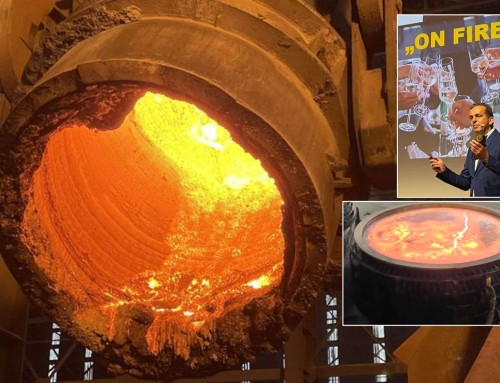
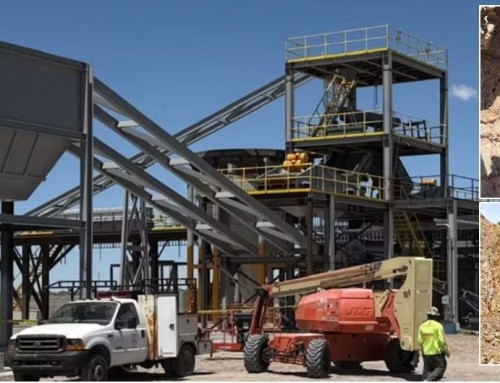
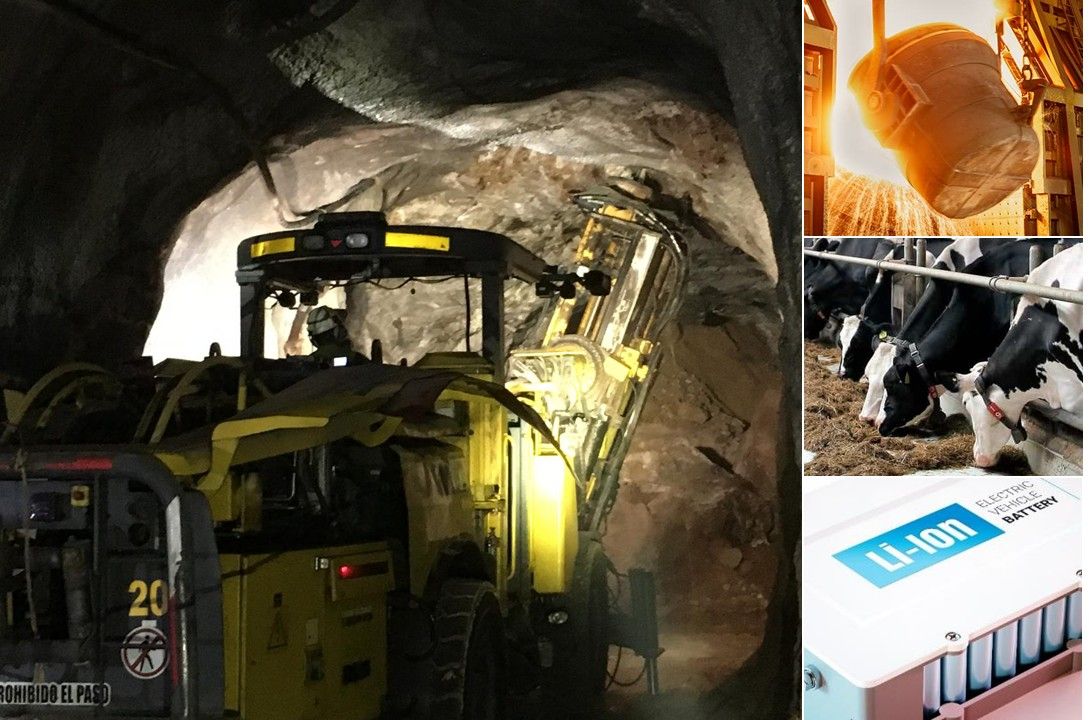
Title Image Tunnel Vision? Main image: Drilling underground at the world’s largest fluorspar mine Las Cuevas, near San Luis Potosi, Mexico operated by Koura Global; fluorspar is a designated critical mineral, of which the USA is 100% reliant on imports; Mexico accounts for 62% of US fluorspar imports, which are consumed in batteries, chemicals, electronics, and steelmaking, and now faces 25% US import tariffs; Inset images: US key markets such as steelmaking, agriculture, and batteries are all are heavily dependent on imports from Canada, China, and Mexico.
An earlier version of this article was posted on 6 March 2025 – see here
Industrial (non-metallic) minerals remain the often unsung workhorse mineral commodities and specialist raw materials which frankly keep the world’s manufacturing industries ticking over and everyday products we use in sound availability. They are also very much present among the so-called “critical minerals” necessary to advance cutting edge developments in growing high-tech markets such as in energy transition, eg. lithium, rare earths, graphite, fluorspar.
Indeed, in the USA during 2024, industrial minerals again accounted for the majority share of total mine production by value, at US$72.1bn, or 54%, followed by metals, 25%, and coal, 21% (according to latest USGS data).
But right now, “industry resilience” seems to be the rallying call, with industrial mineral producers and traders facing straitened times from market slowdowns, environmental regulations, decarbonisation and other sustainability issues, pressure to diversify and near-shore mineral sourcing, and, yes, geopolitics.
The last few years have witnessed a series of geopolitical issues that have impacted and continue to impact industrial minerals international trade. Above all, it has been the threat and implementation of recent trade tariffs between countries that have been most damaging in creating a potential trade war.
US trade tariff tumult unleashed
The end of 2024 and the first quarter of 2025 have seen perhaps the most dramatic episode of trade tariff threats and sanctioning which have impacted mineral commodities between the USA and the rest of the world, and especially China.
Rare earths have always been a familiar stamping ground in this arena, but now many other minerals are in the mix.
By the seventh week of the new US administration, the trading world was steeling itself to the latest round of US trade tariffs on 4 March brought to bear on Canada (25%), China (doubled to 20%) and Mexico (25%).
Then on 2 April, the industry was sent reeling by President Trump’s sweeping “Liberation Day” announcement of so-called “reciprocal” tariff rises for all US imports, which added 34% to existing 20% duties on all Chinese imports (Canada and Mexico import tariffs unchanged).
The upshot was that some countries, particularly China, the EU and Canada vowed to retaliate, thus fanning flames for an impending trade war.
Since then there has been backpedalling, pausing, and revision of certain US tariffs between certain countries, but it continues to be a very fluid and uncertain situation yet to be fully resolved. Suffice to say that markets and trade have been negatively impacted.
For mineral producers, traders and consumers it is an ongoing nightmare. Involved international traders, and crucially, US consumers of these minerals are now busy assessing what the future may hold for the security and cost of maintaining their existing and planned mineral trade flows. Should the trade tariffs hold, then prices will certainly increase and impact US consumers.
Don’t miss finding out the latest trends & networking with the key players for critical mineral FLUORSPAR
FULL DETAILS

Reality check: US has >50% import dependency on 24 industrial minerals
Leaving aside the rationale and debate over these tariffs, an analysis of the minerals and markets in the line of tariff fire is instructive in highlighting their importance to the US (and world) economy, and indeed the vulnerability of and reliance on their limited sources.
Acknowledging this point right off the bat was The Essential Minerals Association (EMA; the representative voice for US industrial mineral producers) releasing a statement on 3 March urging the US Administration to “refrain from implementing tariffs on imports from Canada and Mexico” and seek alternative solutions.
The EMA statement warned: “tariffs would cause prices to rise steeply across the economy…many companies would see an increase in costs in the tens of millions of dollars per year, if not worse. The tariffs, instead of strengthening the domestic mineral supply chain, would cause US manufacturers to become more reliant on foreign sources, including from hostile nations.”
So which industrial minerals are key to the US economy? The USA has a 100% net import reliance on 9 industrial minerals, >50% on 15 industrial minerals, and a 20-48% import dependency on a further 8 minerals – so, 32 industrial minerals in total (see chart).
Significantly, of these 32 minerals, 25 are sourced from Canada, China and Mexico, countries which are facing 20-25% import tariffs. These minerals are highlighted in the chart, along with their respective import source countries and overall net import reliance as a percentage.

Tariff targeted countries’ supply to US: specific mineral analysis
The accompanying table below shows more detail on the specific industrial minerals sourced for US consumption from Canada, China, and Mexico:
- whether they are defined as a “Critical Mineral”
- their overall US net import reliance
- total import volume for 2024
- the respective country’s import share
- their primary market applications in the USA
This may make sober reading for US economists forecasting the fall-out for domestic manufacturing sectors from this latest round of US trade tariffs.
Of critical minerals, Canada supplies 4, China, 8, and Mexico, 2 – quite a tally (10 different critical minerals in total).
More examination reveals that these include critical minerals with considerable supply contributions from the tariff targeted countries:
Antimony oxide: China, 76% (other major sources: Belgium, 11%; Bolivia, 6%).
Barite: China, 25%; Mexico, 14% (others: India, 40%; Morocco, 17%).
Fluorspar: Mexico, 62%; China, 8% (others: Vietnam, 14%; South Africa, 9%).
Graphite: China, 43%; Canada, 13%; Mexico, 13% (others: Mozambique, 13%).
Rare earth compounds & metals: China, 70% (others: Malaysia, 13%; Japan, 6%; Estonia, 5%).
Silicon carbide: China, 85%; Canada, 3% (others: Brazil, 4%).
Titanium minerals: Canada, 13% (others: South Africa, 32%; Madagascar, 16%; Australia, 11%).
Yttrium: China, 93%.
Moreover, just to complete the picture on all possibilities: Trump announced earlier this year that he might also consider imposing 100% tariffs on the “BRICS+” countries. This would also then impact several of the other source countries for these critical and other minerals on which US has high import dependency:
Brazil: silicon carbide, plus fused alumina, magnesia, bauxite.
South Africa: fluorspar, chromite, plus zircon.
Vietnam: recently became a partner of BRICS – the country is a key fluorspar source for the USA [the US announced new trade deal with Vietnam 2 July 2025 invoking 20% tariffs on imported goods].
“Non-critical” minerals also have significance
It is also important to remind of the other industrial minerals from Canada, China and Mexico not officially designated (yet) as “critical”, though many US manufacturing sectors strongly rely on these imports:
Fused alumina: China, 64%, Canada 11% (others: Brazil, 7%; Austria, 5%).
Bauxite: China, 80% estimated refractory grade (others: Guyana, Brazil)
Magnesia:
Caustic calcined magnesia: China, 73%; Canada, 21%.
Dead burned & fused magnesia: China, 70% (Brazil, 18%; Turkey, 3%).
Magnesium hydroxide: Mexico, 59% (others: Netherlands, 14%; Israel, 13%; Japan, 5%).
Mica:
Scrap and flake: China, 40%; Canada, 35% (others: India, 9%; Finland, 5%).
Sheet: China, 79% (others: Brazil, 6%; India, 4%).
Nepheline syenite: Canada, 99%
Potash: Canada, 79% (others: Russia, 11%; Belarus, 4%; Israel, 3%).
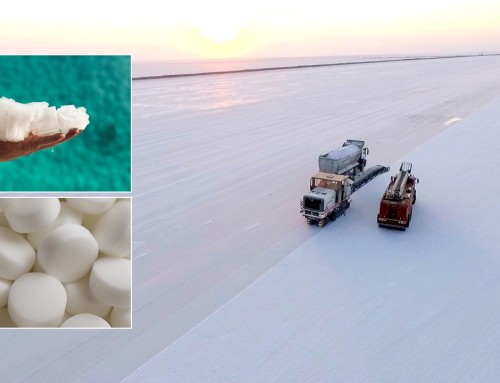
Salt: Canada, 29%; Mexico, 14% (others: Chile, 27%; Egypt, 8%).
Strontium: Mexico, 65% (others: Germany, 30%).
These are all stand-out minerals much needed for US consumer sectors.
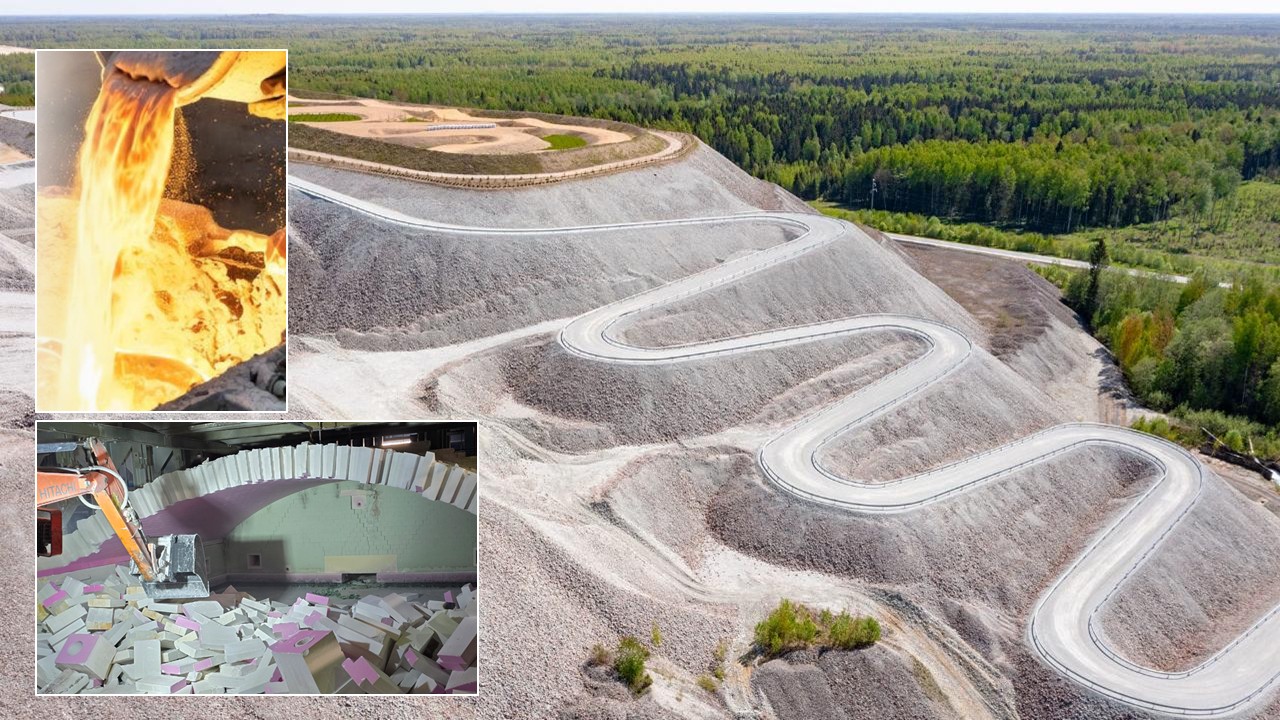
Fused alumina and bauxite are in high demand for refractory and abrasive manufacturing, with 75% fused alumina imported from China and Canada, and most refractory bauxite from China.
Likewise, all US demand for dead burned and fused magnesia essential for refractories must be imported, and mostly from China.
Caustic calcined magnesia and potash (both from Canada) are essential to US agrimarkets, with caustic calcined magnesia serving the dairy cattle market, and potash mainly for US fertiliser production.
Magnesium hydroxide from Mexico is used in a range of markets including chemicals, water treatment, and flame retardants.
Mica and salt use in the USA is also highly dependent on China and Canada imports (mica), and Canada and Mexico (salt) imports. Salt markets are wide ranging, but the north-east US deicing market relies strongly on imports.
Strontium supply from Mexico is used in ceramics, chemicals, glass, magnets, metallurgy and pigments.
It should be said that it seems that certain minerals will not be subject to the Reciprocal Tariff, ie. those already subject to Section 232 tariffs – although some observers remain unclear on this. The official “Annex II” enumerates the following industrial minerals exempt “as ores, oxides, and salts”: antimony, asbestos, barite, bauxite, chromite, fluorspar, fused alumina, graphite, iron oxides, lithium, magnesia, manganese, phosphate, potassium, rare earths, silicon carbide, strontium, titanium, yttrium.
However, industrial minerals imported by the USA that appear not to be exempt include: nepheline syenite (>95%; Canada), garnet (48%; South Africa, Australia, India, China), and those minerals with US import dependency of <40%: bromine, feldspar, perlite, salt, vermiculite, zircon.

All you need to know about global salt supply & demand
FULL DETAILS

Impact to US consuming markets
The last column of the table highlights the main market applications for these minerals and will be seen to include some very important sectors essential to the US economy.
Many of these markets are intermediate manufacturing sectors which are imperative for ultimate end markets.
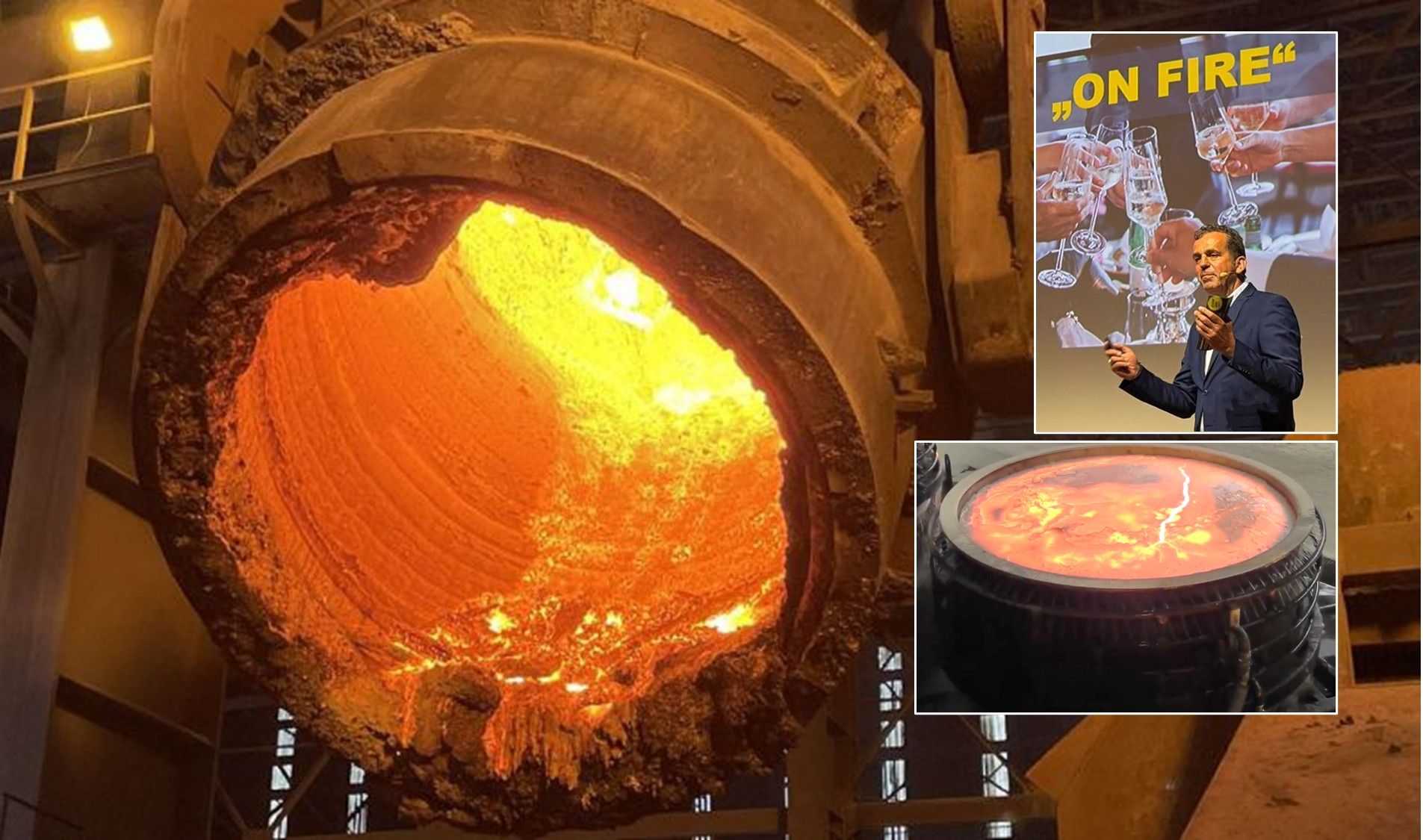
Refractories, ceramics, and abrasives for example, are vital to help manufacture components used in defence and military uses, as well as the primary use of refractories in all plants making steel, metals, glass, cement, ceramics, and petrochemicals.
Regarding the rapidly evolving Li-ion battery market, especially for EVs and municipal applications, fluorspar and graphite stand out as the critical minerals on which the USA relies 100% in imports from Canada, China and Mexico.
There are ongoing projects in the USA in trying to develop domestic sources for graphite and fluorspar but how soon they will come to fruition is unclear, and certainly not in time to ease these immediate import tariffs.
If anything, perhaps this latest round of trade tariffs may provide a boost for such US mineral development projects. For example, on 20 March, Trump signed an Executive Order to drive US mineral production, streamline permitting, and enhance national security. “Minerals” covered by the order include critical minerals, uranium, copper, potash, gold, and any other element, compound, or material as determined by the Chair of the National Energy Dominance Council.
An accompanying White House statement commented: “The United States currently imports a significant portion of its minerals from foreign countries, creating economic and security risks, despite possessing a vast supply of critical minerals. A strong domestic mineral production industry would ensure US companies can compete globally without overly relying on foreign supply chains.” So, some, if belated recognition of minerals’ importance.
How the US manufacturing sectors will absorb or pass on these cost increases for their required minerals is top of the agenda, as is the consideration of future exports to the US by producing companies in Canada, China and Mexico. Perhaps, as has happened in the recent past, certain industries may be able to successfully lobby the US Government to exempt their minerals from the tariff list.
Regarding potash, the significance of any tariff impact on this mineral and its market was at least recognised very swiftly. Just two days after the 4 March decree, a reduction of tariffs was announced on potash not already covered under the United States-Mexico-Canada Agreement (USMCA; signed in Trump’s first term) from 25% to 10%. US Secretary of Agriculture Brooke Rollins described it as “… a critical step in helping farmers manage and secure key input costs at the height of planting season while reinforcing long-term agricultural trade relations.” Could this sentiment be applied across other mineral consuming markets?
Meanwhile, this whole trade issue may also prompt US (and other) industrial mineral consumers to start seeking alternative sources of mineral supply from non-tariff targeted countries, particularly near-shore, and even to consider switching to using alternative/recycled minerals from domestic sources. Challenges yes, but also opportunities. Let’s see.
* IMFORMED is once again both honoured and delighted to be invited to write the introduction to Mining Engineering’s annual review of industrial minerals in its July 2025 issue.
For a PDF copy of ME article pages click here
Edited each year by Jim Norman, VP, Tetra Tech Inc., the IM Annual Review 2024 covers a range of industrial minerals, summarising supply and demand trends.
Bill Gleason, Editor, ME writes: “In the July issue of Mining Engineering, now online, the SME Industrial Minerals & Aggregates Division supplied summaries of 40 industrial minerals along with an excellent foreword from Mike O’Driscoll. The industrial minerals review annually gives readers a closer look at many of the minerals that are, in O’Driscoll’s words, ‘often the unsung workhorse mineral commodities and specialist raw materials which frankly keep the world’s manufacturing industries ticking over and everyday products we use in sound availability.’ ”