
In a nutshell, world demand for salt is increasing, both for volume supply (especially in Asia) and for higher purity salt grades.
This has placed a challenge for salt source developers and salt process innovators. Thus we are witnessing a range of potential new sources of salt being developed worldwide, while process technology suppliers continually strive to improve their capabilities.
Title Image Lake of Plenty Mutlucan Tuz AŞ harvests lake salt from Tuz Gölü, near Şereflikoçhisar, Ankara, Turkey; (inset top) salt crystals from Siwa Oasis, Egypt; (inset bottom) salt tablets for water softening. Courtesy Mutlucan Tuz, Alkhalil Salt.
Throw in a few influencing factors impacting global salt trade, such as logistics, energy costs, and the geopolitics of trade tariffs, then we have rather a lot going on in the world of salt supply and consumption.
Last November, at Salt Forum 2025, Abu Dhabi, IMFORMED brought together the leading players of the global salt supply chain to examine and discuss the above trends and developments – the excellent presentations from that event are reviewed below.
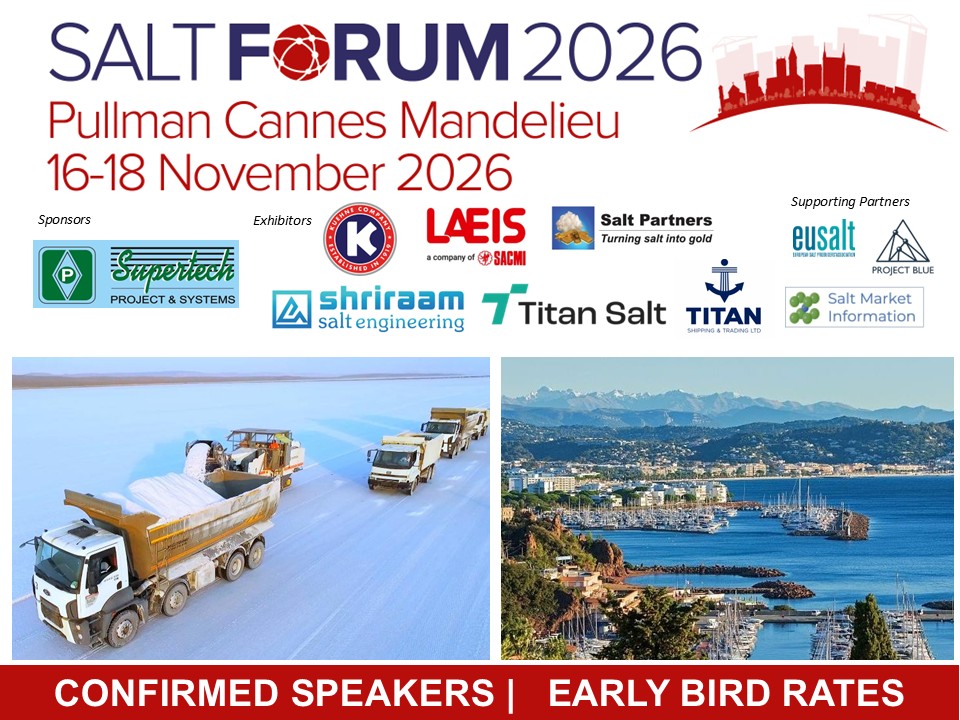
This year, we have relocated the event to south France, and Salt Forum 2026 will take place 16-18 November, at Mandelieu-La Napoule, near Cannes (see link for details; Early Bird Rates available only for a limited period).
With a confirmed panel of expert speakers on key topics, Salt Forum 2026 promises to be another enjoyable and enriching experience for all those active in salt development, processing, supply, distribution, and consumption.
Feedback on Salt Forum 2025
“This is the best networking conference in the field of salt and allied industries. I am looking forward to attending future events.”
Saahel Suvarna, Partner, Supertech Project & Systems, India
“A big thank you to the organisers for hosting such an insightful and well-structured event. The sessions on global salt markets, logistics, and technology provided valuable knowledge and new perspectives. It was great connecting with industry leaders, suppliers, and partners from around the world.”
Dr. Mohamed Khalil, CEO, Al Khalil Salt Co., Egypt
“Events like this Forum highlight how essential open dialogue and technical exchange are for driving innovation in the salt industry. We appreciate the valuable discussions.”
SEP Salt & Evaporation Plants Ltd, Switzerland

Don’t miss out this year…
Confirmed Speakers
Global salt market overview
Stefan Schlag, Managing Director, Salt Market Information, Switzerland
Chlor-alkali market review and outlook
Angel Fernandez, Director Chlor-Alkali EMEA, Chemical Market Analytics
APAC salt market review & outlook
Takashi Kawada, Director, Pacific Commodities Exchange Pte Ltd (PCE), Singapore
Unlocking new value from solar sea salt bitterns and desalination reject brine
Rudolph Van Niekerk, Industry Director-SOP, K-UTEC AG Salt Technologies, Australia
Membrane brine concentration: Enabling next-generation brine mining & salt production
Dr Basel Abusharkh, CEO, Osmosys Technologies, USA
Best practices in salt analysis for the chlor-alkali market
Azade Zaretabibi, Snr. Mgr. of Quality and Lab Services & David Miyamoto, Technical Lab Mgr., Kuehne Co., USA
High purity solar salt production technology: comparison between operations in Mexico & Australia
Vladimir Sedivy, President, Salt Partners Ltd, Switzerland
Positioning Ghana to become the leading salt producer for West Africa
Kwame Agyei Apeaning, CEO, Precious Premium Salt & Co-Founder Ghana Chamber of Salt Producers-Exporters, Ghana
North American salt market & the Great Atlantic Salt Project
Nolan Peterson, CEO, Atlas Salt, Canada
The Indian salt industry: current scenario & outlook
Bharat Raval, President, The Indian Salt Manufacturers’ Association, India
US de-icing salt market and its demand on domestic and overseas sources
Matt Fathelbab, Director, SeryLee Group, Egypt
Tunisia’s salt production and markets
Wafy Damak, Export Director, General Salt Co. – SOTUSEL / SOSASEL, Tunisia
Optical sorting in salt mining: upgrading salt for higher-value applications
Johannes Hornung, Area Sales Manager Europe – Mining, Steinert GmbH, Germany
Challenges & solutions in latest salt processing technology
TBC, Titan Salt, the Netherlands
Advances in skid mounted salt processing systems
TBC, Shriraam Salt Engineering Pvt Ltd, India
*subject to changePLUS: Salt Masterclass | Monday 16 November
Supervised by Vladimir M. Sedivy, President, Salt Partners Ltd
Resources | Production | Processing | Marketing | Consumption | Economics
SALT FORUM 2025 PRESENTATIONS REVIEW
OVERVIEWS
Salt: Key narratives on supply & demand
Alison Saxby, Research Director, Project Blue, UK
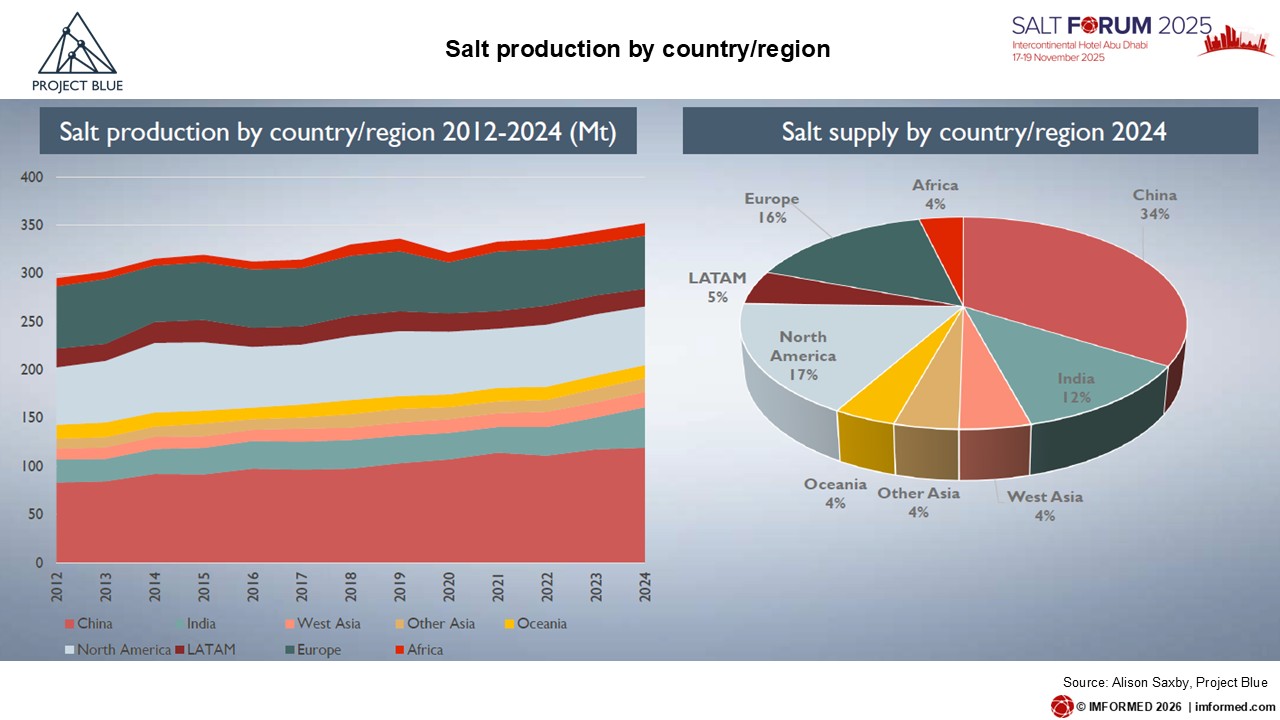
Saxby’s excellent review of the market covered: salt supply, global supply trends, Indonesia, India, supply narratives, costs of production, salt demand, selected markets dynamics, and key takeaways.
On a regional basis, Asia is expected to maintain its dominance over salt demand over the next ten years during which Asia’s market share is set to rise from 58% to 60%. Much of this is due to growth in the chemical sector. North America is expected to remain the second-largest regional market for salt.
Key takeaways included:
- Salt supply is still growing reaching over 350Mt in 2024
- New entrants to the market could shift supply routes
- Self-sufficiency drive to reduce imports
- Record exports from India in 2024
- New natural soda ash production in China displacing synthetic supply
- Indian domestic demand is increasing – potentially reducing exports in 3-5 years
- Tariffs, restrictions, new policies affecting trade flows
The European salt industry: innovation & collaboration in a changing Europe
Adriana Nosewicz, Managing Director, EUsalt, Belgium
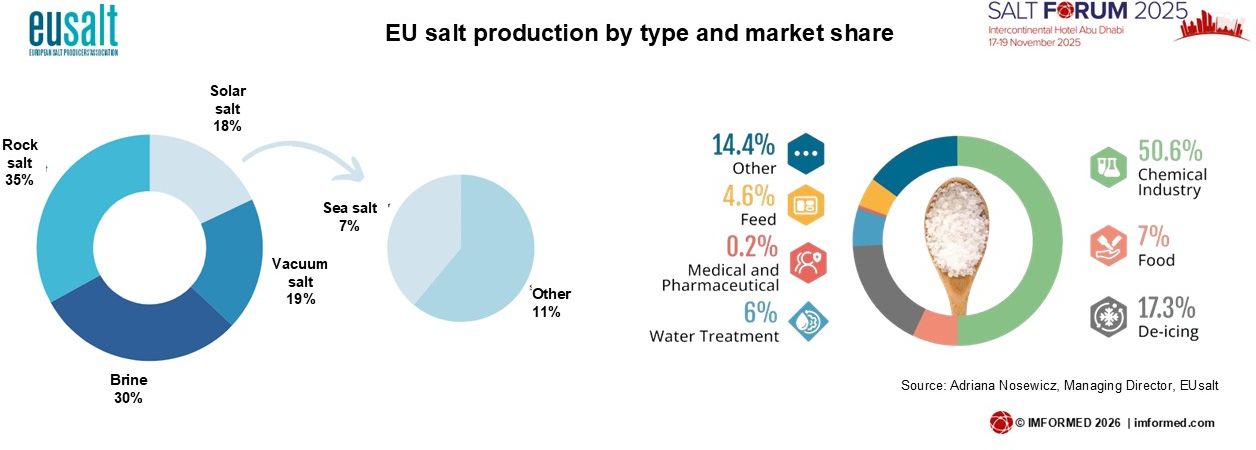
Nosewicz outlined the EU salt industry, the second largest salt producing region in the world. Many of Europe’s major salt producers produce salt for captive consumption in chemical production, and European salt exports and imports are roughly in balance.
The EU regulatory environment is evolving rapidly, from sustainability and decarbonisation to nutrition and health. Nosewicz demonstrated an example in the health sector: iodine is essential for thyroid function, growth, and brain development. Iodised salt fortification remains the most cost-effective and proven way to prevent iodine deficiency.
EUsalt is the association of European and global crystallised salt producers, and its vision is to be the authoritative voice of the salt industry in Europe in advocacy and education.
To strengthen international exchanges in the salt business, EUsalt together with other partners is organising the World Salt Symposium taking place on 15-17 June 2027 in Dublin, Ireland.
SUPPLY: LOGISTICS | EGYPT | TURKEY
From Commodity to SALT INNOVATION HUB
Oriol Domènech, CEO, MaxiSalt, Spain
Domènech introduced the audience to “Salty”, an animated figure which explained the journey of MaxiSalt, established in 2009, combining deep salt expertise with logistics excellence, to its Salt Innovation Hub, launched in 2024. MaxiSalt now supplies 800,000 tpa salt.
In 2020, the company developed Welysis, “More Than Electrolysis”, a network of plants using electrolysis to transform salt into essential compounds like chlorine, caustic soda, and sodium hypochlorite, all crucial for industry and, most importantly, for safe drinking water.
The Salt Innovation Hub is active in several projects including a global database on commercial salt, developing a marine salt purification business, and recovering and enhancing brines from desalination.
Deicing salt production in Egypt
Dr. Mohamed Khalil, CEO, Al Khalil Salt Co., Egypt
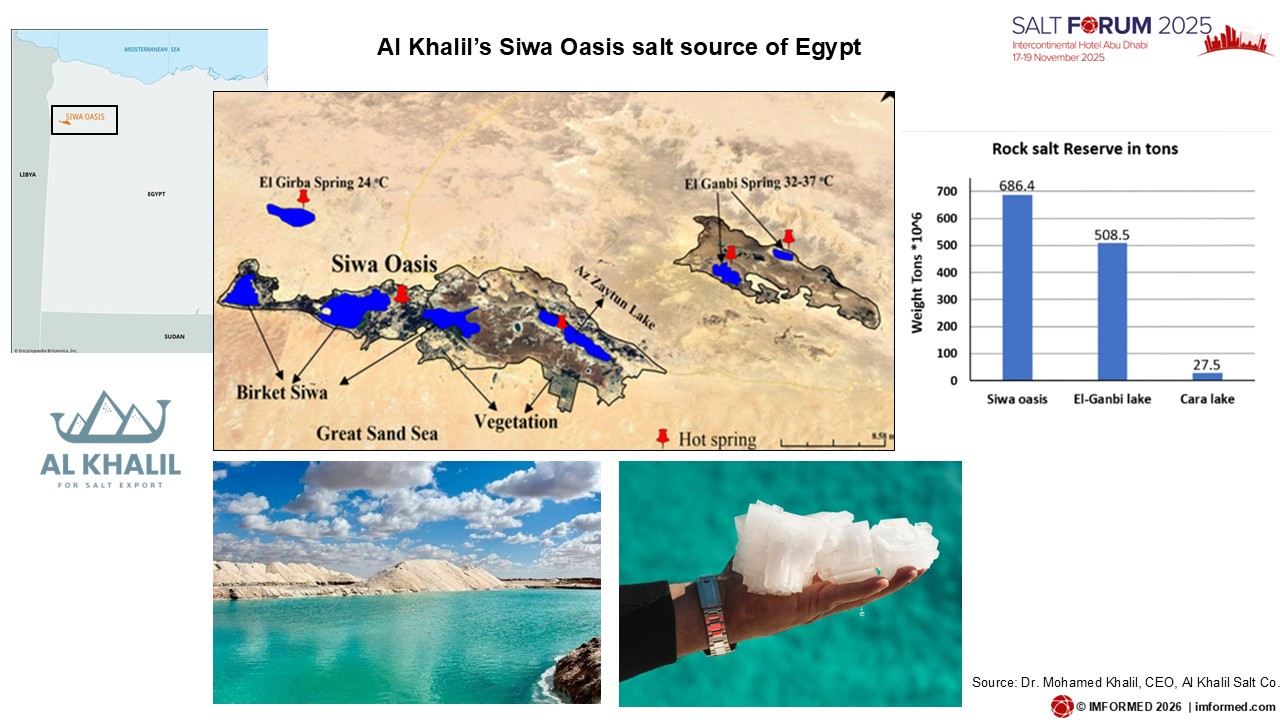
Khalil began by describing the company’s main source of salt from Siwa in Egypt’s western desert. Sourced using salt pans at the Siwa Oasis, it is naturally very pure at 97-99% sodium chloride.
According to geological studies, Siwa and its surrounding areas contain over 1bn tonnes of rock salt reserves, positioning Egypt as one of the major natural salt sources in the region.
Siwa salt is a renewable raw material, naturally re-deposited over time as saline groundwater evaporates. The content of unwanted elements, like magnesium and calcium, is very low, making it ideal for industrial use and export.
Al-Khalil is aiming to be the go-to supplier of high quality rock de-icing salt from Egypt. The company has exported >3m tonnes during the last 16 years, to Europe, Canada, and North America.
High quality salt production in Turkey including pharma grade PDV salt
Ahmet Solak, (formerly) Export Manager, Mutlucan Tuz AŞ, Turkey
Solak’s presentation covered a global view, Turkey’s resources and production, medical salt production overview, Turkish perspective and review on medical salt, and good manufacturing practice (GMP) view and conclusions.
Turkey’s main rock salt resources are the Cankırı & Kırsehir rock salt reserves, hosting 3.18 bn tonnes, and representing a strategic resource base supporting refined and medical salt investments.
Turkish total salt output in 2024 was about 9.5m tonnes with the source types being (in 2023) split approximately lake, 65%, rock, 25%, sea, 9%, and springs, 1%.
Sodium chloride used for pharmaceutical applications must meet stringent purity standards, whether used as an excipient or as an active pharmaceutical ingredient (API). In addition to chemical purity, strict bacteriological limits must be observed. These requirements are defined in the major pharmacopoeias (BP, Ch.P., JP, Ph. Eur., USP, KP, Ph. Rus.) and are further detailed in individual quality agreements between salt manufacturers and pharmaceutical companies.
The Çankırı and Kırşehir facilities produce about 450 tpd pharma-grade NaCl (national GMP-certified) and are reported to meet 70-80% of Turkey’s pharma NaCl demand.
One of the new producers is Mutlucan/Parla Salt, producing 300 tpd medical/pharma-grade NaCl (≥99.98% NaCl). Production started in May 2025, and exports were expected to start after GMP phase completion during mid-late 2026.
PROJECTS: OMAN | AFRICA | AUSTRALIA
Naqaa Salt: Laying foundation for a new global salt manufacturing hub
Vivek Somani, Strategic Business Leader, Naqaa Salt, Oman
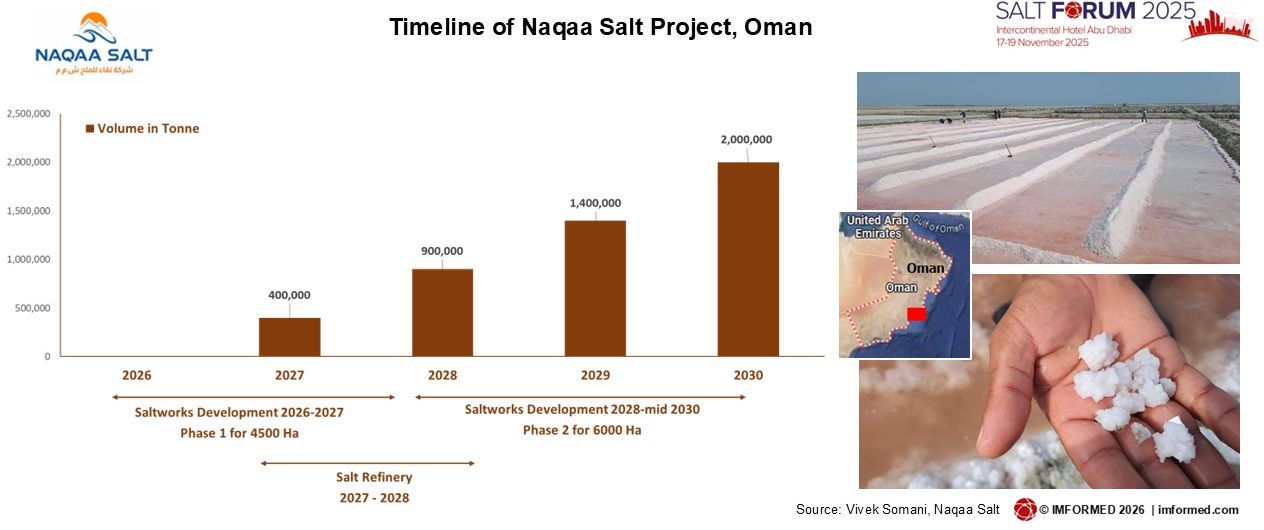
Somani outlined the Naqaa Salt Project in Oman. An initiative jointly driven by Mineral Development Oman and Dev Salt, “building one of the largest Solar Saltworks in the GCC Region designed for global market”, covering 10,000 hectares and aiming at 2m tpa salt production capacity.
Three main product groups are envisaged:
- High grade industrial salt for chlor-alkali industries – soda ash & caustic soda
- Premium high purity salt for specialised industrial usage in petrochemical, textile, water softening & other industries
- Multiple lines – double fortified, iodised & natural edible salt
A successful pilot salt pan has been completed and Phase 1 Saltworks Development is planned for 2026-27, Phase 2 2028-2030, with a salt refinery built 2027-28. Target markets are West Africa and South East Asia. The project is hoped to ultimately lay foundations for a downstream chemical complex for salt and bromine.
Salt project developments in Africa
Balasubramanian Shriram, Managing Director, Shriraam Engineering, India
Shriram Engineering is increasing its activities in Africa, with salt projects in logistics, infrastructure, and technology.
The Asia–Pacific region leads with about 46% market share in salt demand, driven by demand in food, chemical, and industrial applications. Industrial salt continues to dominate consumption globally, essential for chlor-alkali production, water treatment, and other critical industrial uses.
These global trends are now extending toward Africa, where natural advantages and growing demand are unlocking a new chapter for salt production.
Africa possesses vast and underutilised salt reserves – from the coasts of Egypt, Senegal, and Namibia to the pans of Botswana and Tanzania.
Recent data from SME Blue Pages and Salt Market Information highlight that the continent produces about 18m tpa, serving both domestic and industrial sectors.
The market potential is enormous. With Africa’s growing population, industrialisation, and food processing needs, demand is projected to rise by 40% over the next decade.
Shriraam Engineering has successfully partnered with: Electrochem Ghana – one of Africa’s largest salt projects, the 2m tpa Ada Songor project; Logochem – Benin a 50tph salt refinery project; Prime Salt, at Hentis Bay, Namibia; Arieas & Fozkudia, Angola – medium and large scale expansions; and ongoing works in Tanzania, Cameroon, Ethiopia, Liberia, Sierra Leone, Nigeria & Botswana.
Operating Australia’s largest salt project
David Boshoff, Managing Director, BCI Minerals, Australia
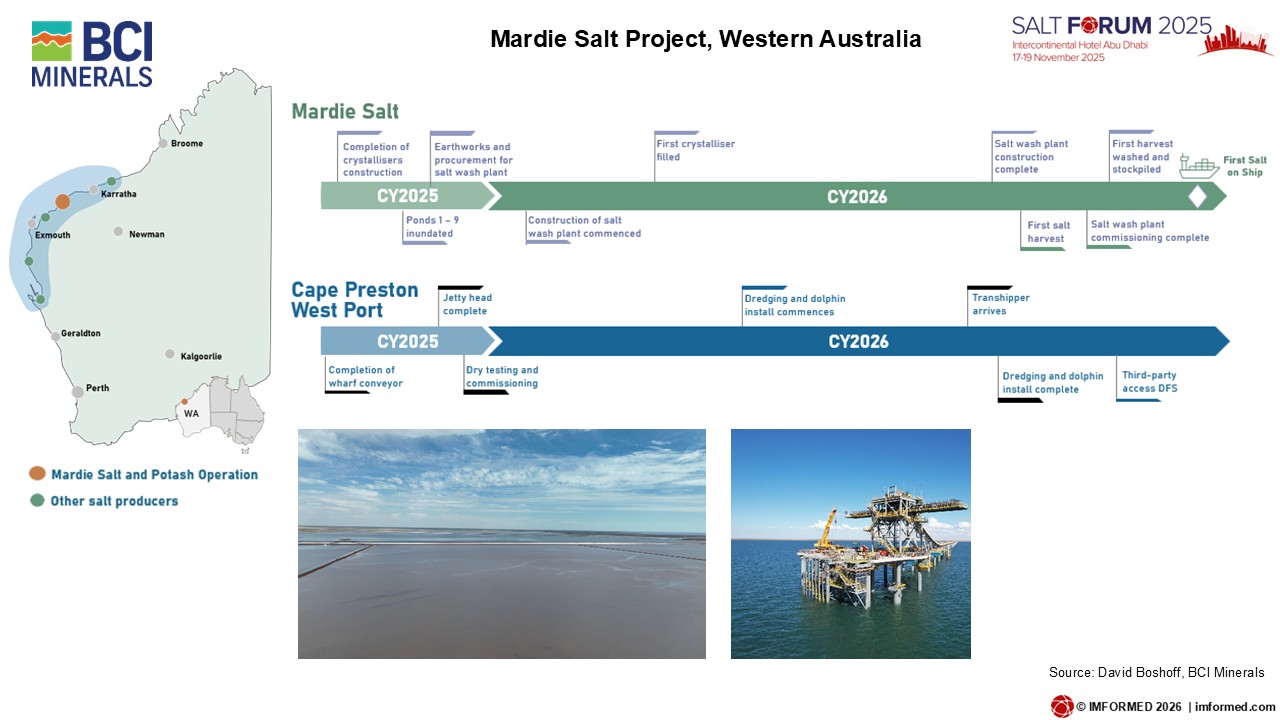
Presented by Tony Pekin, General Manger, Marketing & Sales, the audience was updated with the latest details, progress, and objectives for BCI Minerals’ Mardie Salt & Potash Project.
Salt demand in the Asia-Pacific region is growing fast, but supply shortfalls (forecast by as much as 16% by 2035) could hold back chlor-alkali and soda ash industries. With K+S not proceeding with its Western Australian salt project, Mardie intends to fill a critical gap in future global supply.
Mardie is aiming to be Australia’s largest salt producer, and the world’s third largest, with a nameplate capacity of 5.3m tpa high quality industrial salt.
The project size is extensive: 38km long and about 115km2. The overall project construction was about 74% complete in September 2025, including construction and inundation of 9 salt ponds (93% inundated as of 13 November 2025). Each of the 9 ponds must reach target density (1.18-1.22 kg/L) to produce high quality salt. Over 185 gigalitres of seawater will be pumped across the nine ponds.
Construction of Cape Weston Port, owned and operated by BCI Minerals, is 93% complete, enabling valuable access for the region to global markets.
By end of 2026, BCI is expecting the first salt harvest, completion of salt wash plant, first salt harvest washed and stockpiled, and ready for export.
PROCESSING DEVELOPMENTS & INNOVATIONS
Back to the Roots: Latest developments in the field of technology providers for salt plants
Eörs Kondorosy, Sales & Process Director, Veolia HPD®- Evatherm® Evaporation & Crystallization Solutions, Switzerland
Kondorosy began with a brief history of Evatherm, and announced that on 9 October 2025, Evatherm Technologies became officially again a member of the VEOLIA Group.
Key technology offerings were reviewed before focusing on HPD®EVATHERM® Evaporation & Crystallization, used in rock salt, solution mining, and solar salt operations.
Three case studies were examined: Shintech, US Gulf Coast, solution mined brine, 10 tph of NaCl; K+S Frisia Zout, Harlingen, Netherlands, 150 tph >99.97% Food Grade, Chlor-Alkali; City Group, Bangladesh, 28 tph vacuum salt, >99.98% Food Grade.
The Plug-in and Go innovation: Skid-mounted Pure Vacuum Dried Salt Plant
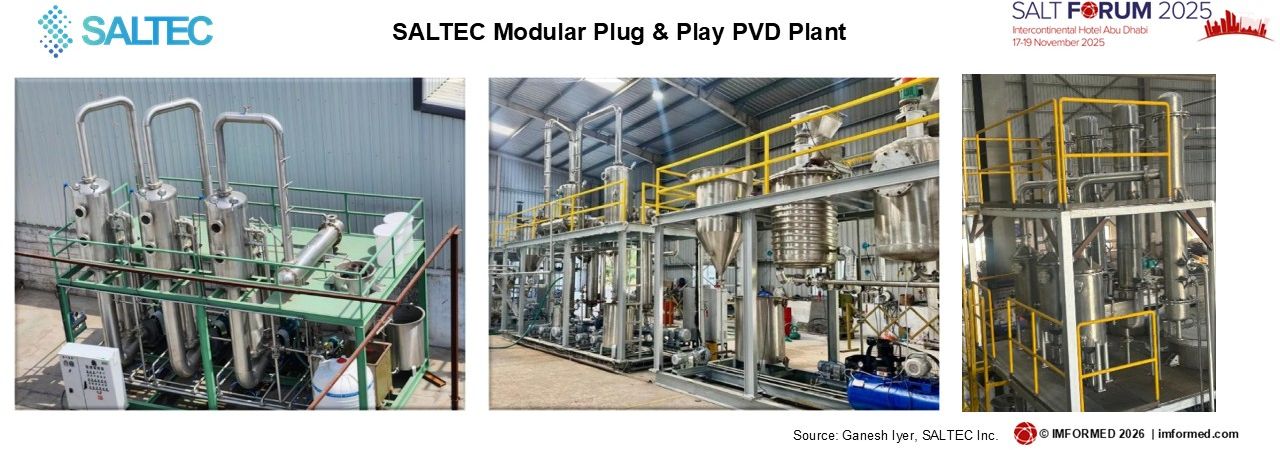
Ganesh Iyer, Chief Technical Officer, M/s. SALTEC Inc., India
Iyer covered the global industrial salt scenario, key market segments and drivers, current challenges and barriers, opportunities and emerging trends, before focusing on SALTEC and its Modular Plug & Play PVD Plant.
With the need for purer salt across most consumer sectors, advances and innovation in purification technology shall see an increase.
However, high costs in capital investment and operating costs can be significant owing to the advanced technology, energy consumption, and site preparation required. The scale of production affects CAPEX , equipment selection, workforce planning, and overall market positioning.
Environmental regulations and the technical difficulty of processing raw materials also pose significant hurdles.
Iyer then introduced a range of available Saltec Modular Plug & Play PVD Plants, with the following benefits:
Faster installation: components are pre-built and tested in a controlled factory environment, significantly reducing on-site assembly time and project timelines.
- Cost savings: reduced on-site labour, minimal custom configurations, and fewer errors lead to lower installation and long-term costs.
- Simplified maintenance: instead of complex rewiring, a failed component can be quickly disconnected and replaced like a standard plug-in device, reducing downtime and repair costs.
- Increased flexibility and scalability: standardised interfaces allow for easy expansion, reconfiguration, or swapping of components and systems from different manufacturers.
- Improved reliability: factory testing minimises the chance of issues and errors that can occur during manual on-site assembly, which helps keep projects on schedule and budget.
- Focus on core competencies: by simplifying the installation and maintenance of a system, businesses can focus their resources on their core operations rather than on complex technical setups.
Climate resilient & energy efficient designing of solar salt works for sustainability in the salt industry
Dr Bhoomi Andharia, Principal Scientist, CSIR-CSMCRI, India
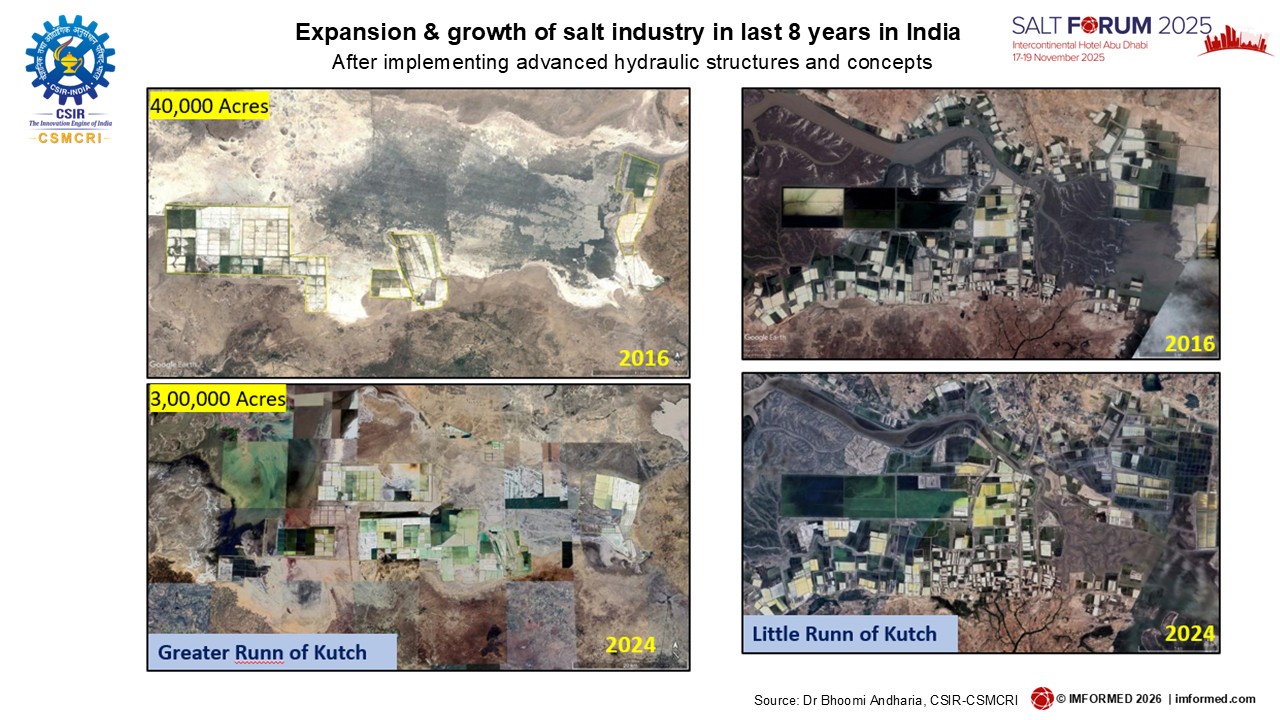
Since 1954, the Vision of CSMCRI has been to explore, harness and transform marine resources for the good of the people of India. Dr Bhoomi has been working on climate resilient and energy efficiency in development of salt field using a mathematical model, and effective rain water and flood management in solar salt field for sustainability in the industry
Designs are not similar for Oman, Australia and Africa. It depends completely on climatic parameter based computation aligned with law of land ie. coastal regulation zone, topography, flooding scenario, transport facility exists at site, etc. Humidity and wind direction aligned design will give higher productivity.
Dr. Bhoomi has developed the CI STARS facility at CSIR-CSMCRI. There are new interventions in design and development, and the latest pilot scale integrated technologies demonstrated at CI-STARS include use of RO reject to increase salt yield, bromine recovery, Mg, K recovery and use in speciality applications such as fertiliser and pharmaceuticals.
New membrane based LSRRO process improves economy of production of water, salt and minerals from seawater
Vladimir M. Sedivy, President, Salt Partners Ltd, Switzerland
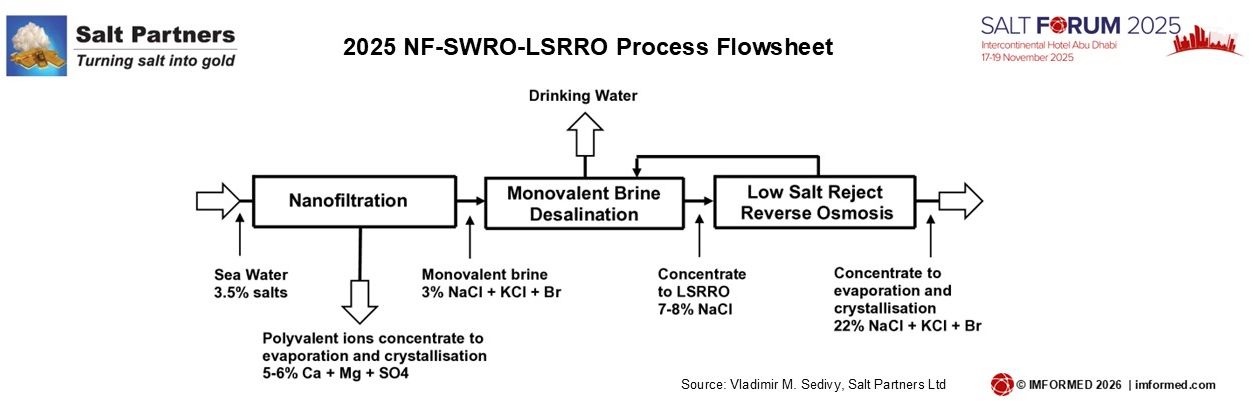
OARO stands for Osmotically Assisted Reverse Osmosis, and was first introduced in scientific research papers in 2010, introduced as feasible technical concept in 2017, and in 2023, the first commercial 200 t/y salt plant was built in Indonesia.
LSRRO (Low Salt Rejection Reverse Osmosis) membranes manufactured by DuPont facilitate implementation of the OARO process with the following advantages: significantly higher brine flux through the membrane (about 20 l/m2.h against about 2 l/m2.h); operation at standard pressure (about 80 bar); and standard sizes (4 inch).
Nanofiltration (NF) splits seawater into monovalent and polyvalent streams. Water from the monovalent stream can be recovered up to 22 gpl salinity with LSRRO membranes. The rest is recovered by thermal evaporation.
Although the OARO process concentrates monovalent brines up to 22 gpl (18%), the concentration up to saturation must be by thermal evaporation. Concentrated brine contains calcium and magnesium, which must be removed by conventional chemical purification.
NF-OARO concentrated brine contains calcium and magnesium, which must be removed by conventional chemical purification. The cost of crystallisation is the same as crystallisation from other brines.
Recovery of minerals other than NaCl is possible, but these are of relatively low value. Bromine recovery is the only relatively attractive product but does not compensate for the high cost of 18-26% concentration.
Salt drying for the pharma industry
Koen Egberts, Sales Manager, & Julian Ravenshorst, Sales Engineer, Tema Process BV (now Therma Process), Netherlands
Ravenhorst covered the capabilities in the salt industry, the principle of fluidized bed drying, designing a dryer, before focusing on design of a pharma dryer.
For this he reviewed: design regulations, one hull design, high-quality air distribution, plate cleaning in place (CIP), BFM, air supply system, exhaust system, and a typical flowsheet.
For example, employing BFM fittings, permits the following benefits: 100% sealed, eliminating leaks and dust, easy to flush through for cleaning, no tools required for fitting, and are available in a variety of materials.
Optimising salt plant performance: purge recovery & energy efficiency
Robert van Voorst, Managing Director, Titan Salt, Netherlands
The demands on salt producers are increasing due to two key factors: a growing global population needing more resources, and tightening environmental and quality regulations. These pressures are forcing the industry to innovate and become more efficient.
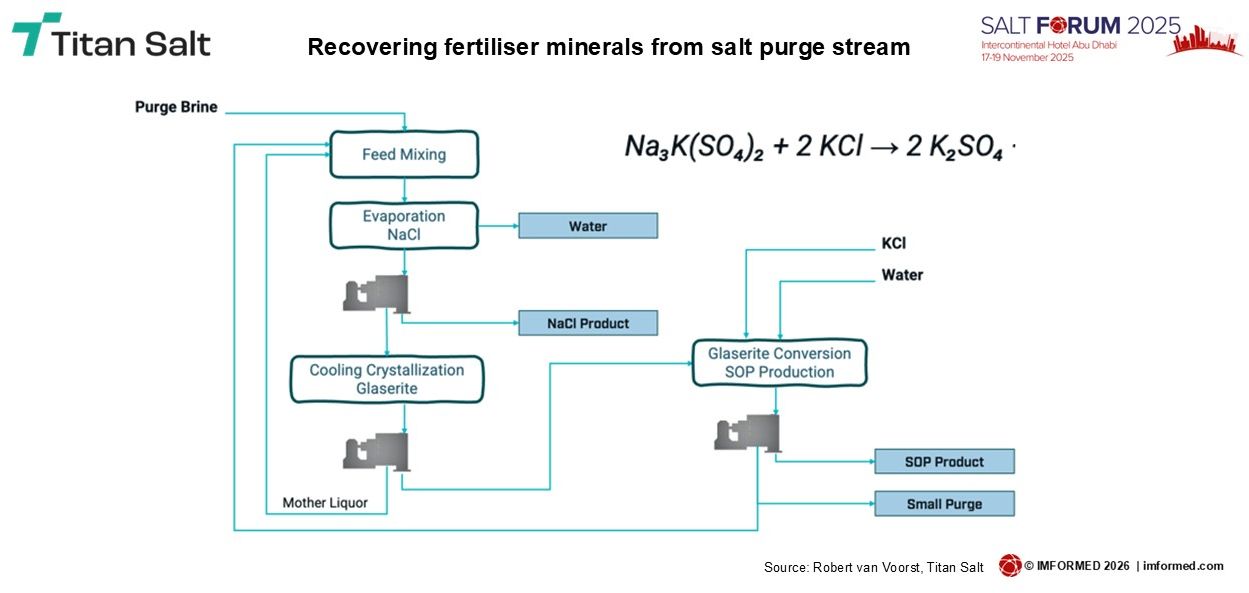
Mechanical Vapour Recompression (MVR) in processing brine to high grade NaCl is highly efficient, but it naturally concentrates impurities. This creates the “purge stream” of concentrated potassium and sulphate that has to be managed.
Van Voorst went on to explain how the purge stream can be combined with other recycled streams, heated, then cooled to ultimately produce saleable premium products for the fertiliser industry.
CHLOR-ALKALI MARKET | GLOBAL CHALLENGES
Global chlor-alkali overview: market trends & developments
Angel Fernandez, Director Chlor-Alkali EMEA, Chemical Market Analytics, UK
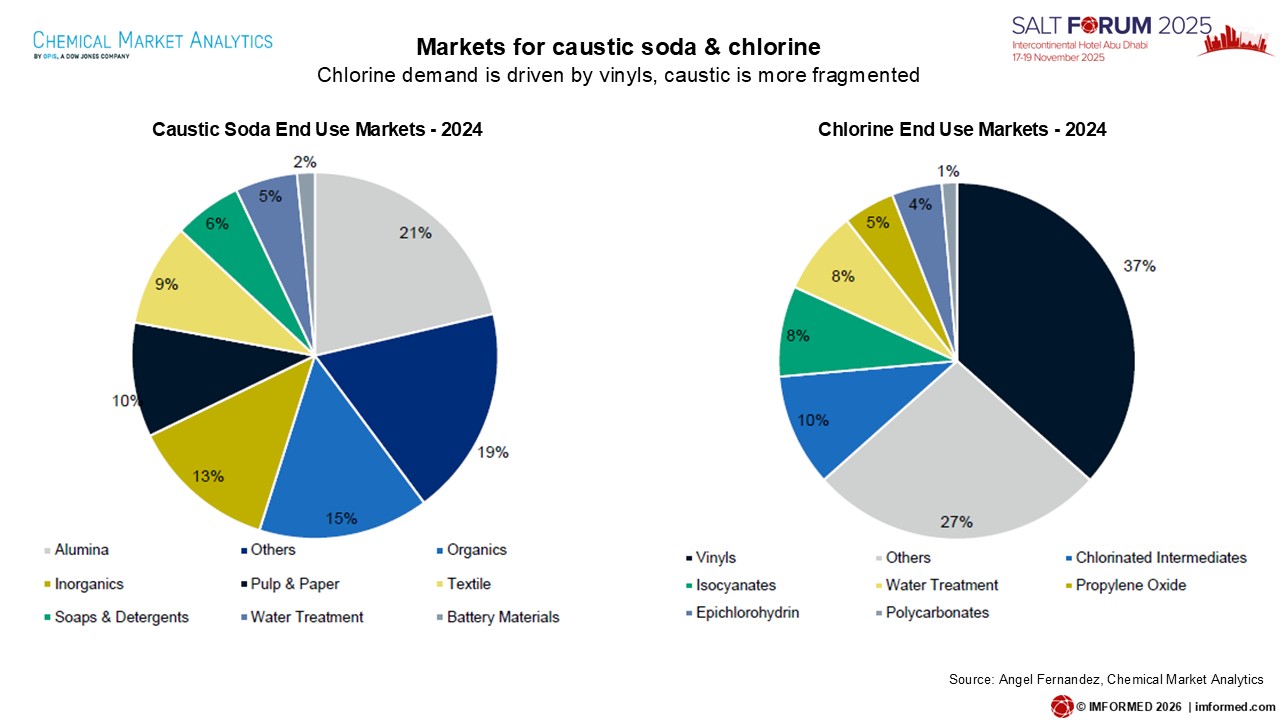
Fernandez presented an excellent breakdown of the chlor-alkali market highlighting salt’s input to producing the two main products: chlorine and caustic soda, used in a range of market sectors.
Key takeaways on the outlook for chlor-alkali included:
- US expected to maintain its position as “global supplier” due to its energy cost advantage
- Latin America expected to remain a net importer of NAM vinyls and caustic soda
- In the Middle East, tightening regional balance is supporting higher chlor-alkali operating rates
- In India new integrated chlorovinyls (CAV) expansions expected by 2027 which will increase caustic soda exports
- Rationalisation continues in Europe amid high costs and depressed demand
- Indonesia forecasted to lead demand growth in Southeast Asia.
- Mainland China PVC oversupply will not change in the short-medium term as significant production cuts are unlikely
Salt & its downstream chlor-alkali markets: direct & indirect implications of a trade war
Dr Stefan Schlag, Managing Director, Salt Market Information, Switzerland
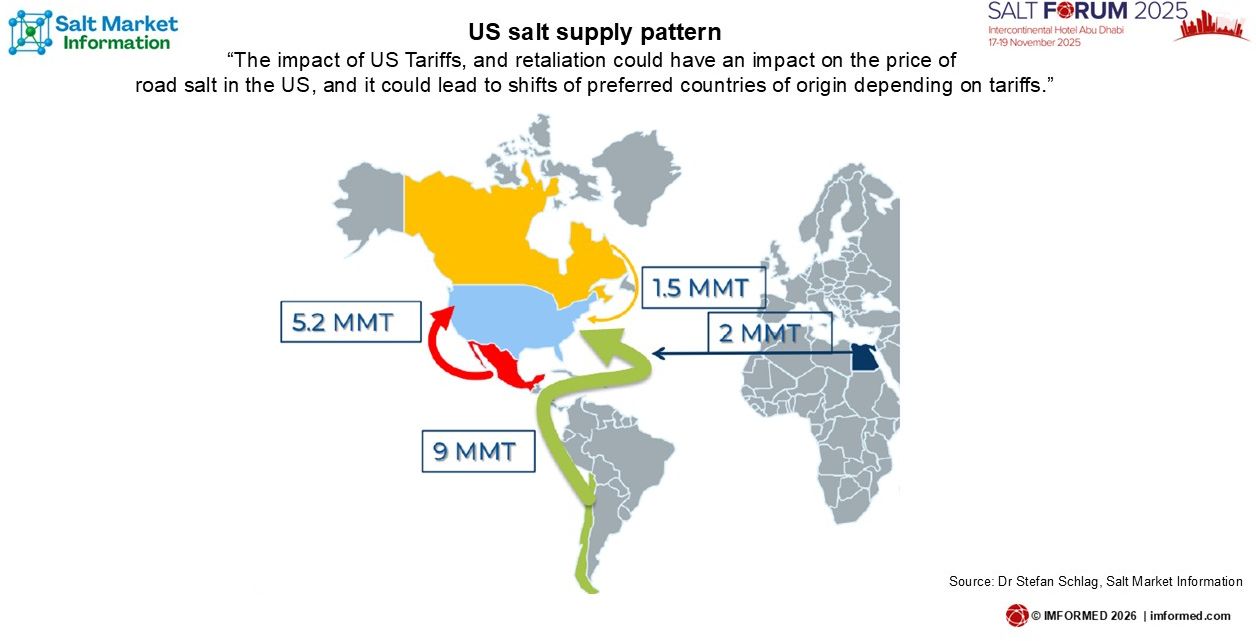
Schlag covered where salt is produced, consumed, and who trades it, before focusing on implications of US tariffs on salt supply patterns, and on chlor-alkali markets, specifically Asian chlor-alkali projects and forecasts, and salt requirements and likely supply patterns.
Schlag summarised:
- About 340 million tonnes of salt were consumed globally in 2025
- More than 60% of the salt is used in the chemical industry
- Annual average growth rate over the next ten years is estimated to be about 1.1%.
- The impact of US Tariffs, and retaliation could have an impact on the price of road salt in the US, and it could lead to shifts of preferred countries of origin depending on tariffs.
- Retaliation could reduce US exports of caustic soda and chlorinated compounds, and lead to a shift of salt consumption to countries that can replace US exports
Identifying global challenges for salt industry leaders: viewpoint from the ISA, the Global Voice of
Salt Industry Leaders
Wouter Lox, Coordinator, International Salt Alliance, Belgium
Lox introduced the International Salt Alliance, whose aim is to unite salt producers globally to foster innovation, sustainability and global cooperation across the salt value chain, and to establish an “agile” global salt network that supports producers in addressing challenges and leverage opportunities through exchanges of best practices and joint advocacy.
Global challenges to be addressed include sustainability, health, innovation, and competitiveness.
Many thanks and hope to see you at Salt Forum 2026, Cannes, 16-18 November
Special thanks from IMFORMED to Salt Forum 2025 sponsors Shriraam Salt Engineering and TEMA Process, exhibitors Hanpu, Salt Partners, Titan Salt, and Veolia, and all our supporters, speakers and delegates for their fine participation and support.
Looking forward to meeting you again later this year at Salt Forum 2026, Cannes, 16-18 November.
Missed attending Salt Forum 2025?
A full PDF set of presentations available for purchase.
Please contact Maria Bernard T: +44 (0) 208 153 0035 maria@imformed.com
And why not book now with our attractive Early Bird Rates (only until 5 October!) for…