Just like London buses, you wait for one new brown fused alumina (BFA) plant to be built outside China for the western market, then three come along at once! (Almatis/ROMCO – Bautek – First Bauxite, see below).
Then followed by the cold shower of the keynotes reminding us that we are amid the chaos of a new world order, and that the European refractory market has contracted by a third since 2019 – “one tonne in three…gone!”.
It was almost as distressing as finding out about the sad demise of the favourite post-conference watering hole “Zum Goldenen Einhorn” (“The Golden Unicorn”; guess they needed the ICR more than once a year).
For all of the above, the message is to adapt and survive.
Such news abounded at a vibrant International Colloquium of Refractories 2026 in Aachen 15-16 September, organised by ECREF: “…our best attended edition ever. Once again, it was packed with inspiring talks, great conversations and so many new connections.”
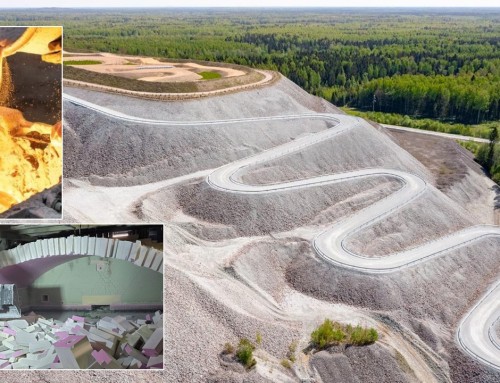
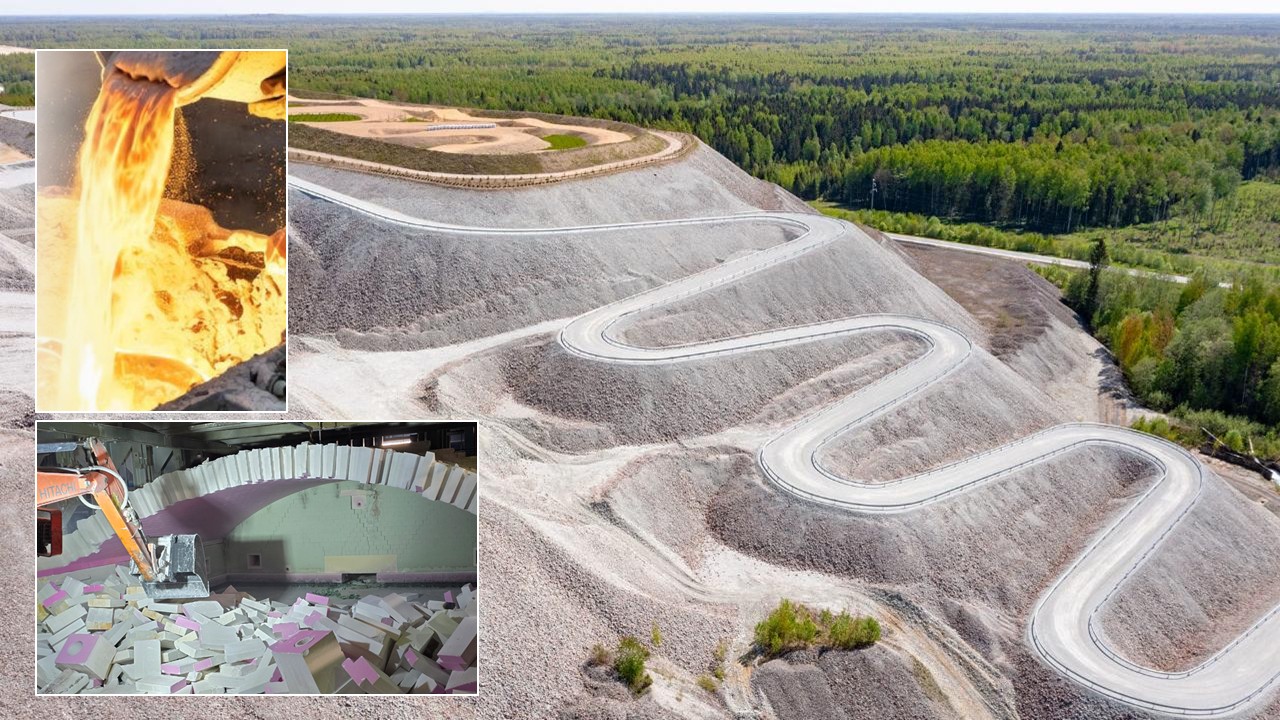
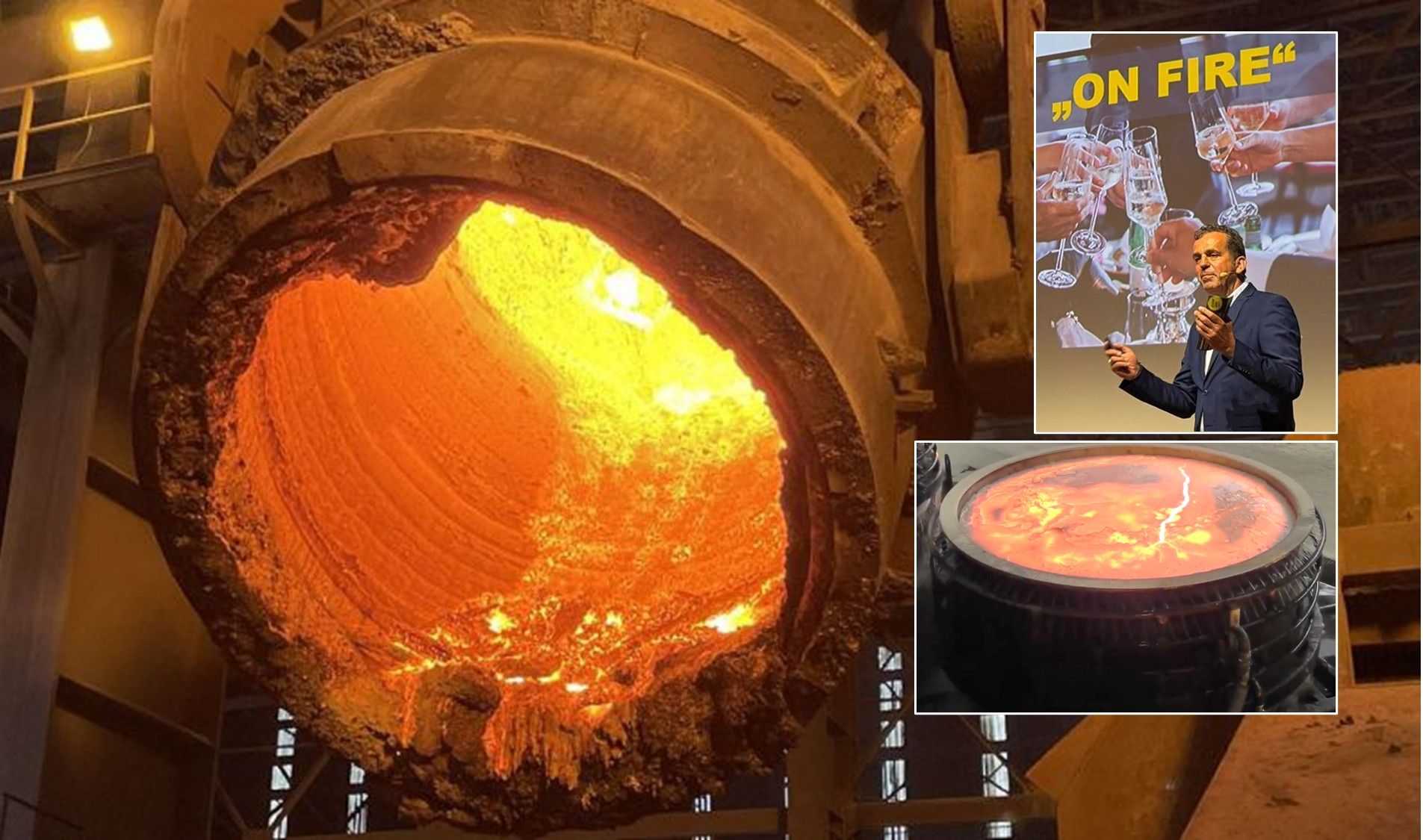
Title Image Hot Topics Refractory linings are essential to steel production, as clearly shown in this tipped ladle furnace. Europe’s refractory industry is under pressure, as discussed at this year’s ICR, led by Ulf Frohneberg (inset top), President, German Refractories Association & Managing Director, STEULER-KCH Materials. Announcements of new BFA (inset bottom) plant projects may provide some alternatives to Chinese imports. Images courtesy Zhong Tang (Dalian) Materials Co. Ltd, ECREF, Imerys.
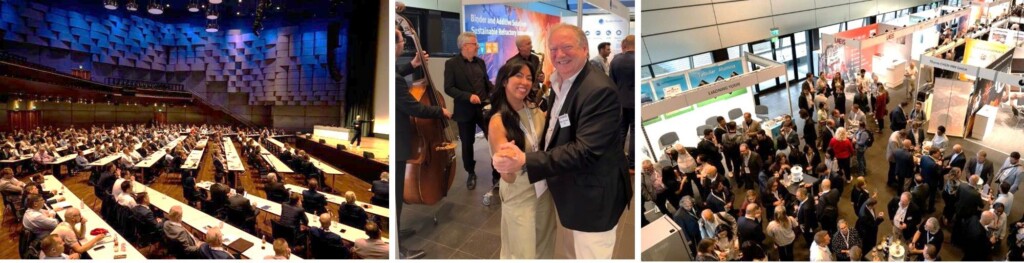
As usual the ICR proved to be an excellent event bringing together the global refractories community for >45 presentations and >700 attendees. The exhibition was always busy and hosted the evening reception including music (as seen here taken advantage of by Jennifer Astoveza, Global Strategy Director – Raw Materials & Monolithics, RHI Magnesita & Mike O’Driscoll, Director, IMFORMED). Images courtesy ECREF.
Refractory market reality check: Resilience vs. Protection
Ulf Frohneberg, President of the German Refractories Association, and Managing Director, STEULER-KCH Materials, kicked off proceedings by highlighting the conference motto this year, “Resilience vs. Protection”.
He questioned: “How do we protect what matters to us while at the same time developing the ability to adapt to change?”.
Frohneberg pointed to increasing global competition, fragile supply chains, and the importance of fair competitive trade conditions. “Where does legitimate protection end and protectionism begin?”
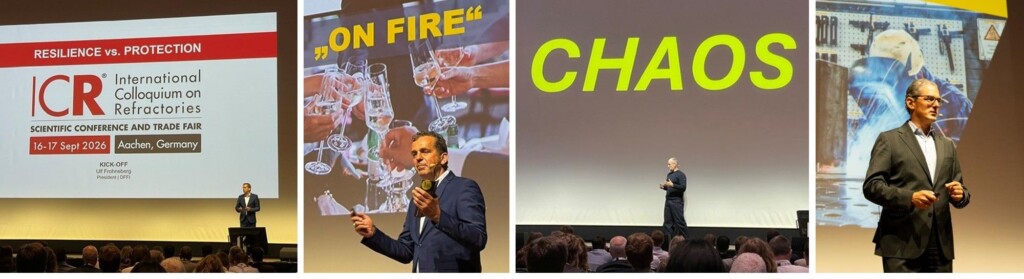
Ulf Frohneberg (left and centre), President, German Refractories Association & Managing Director, STEULER-KCH Materials, started proceedings at ICR2026 with his customary frank insightfulness and call to action. He was followed by Ansgar Baums, (centre right) Fellow Stimson Centre & General Manager, Microsoft and Matthias Stalzer, (right) President of the European Refractories Association and VP Global Key Account Manager, RHI Magnesita, who seized attention with their respective industry reality checks and recommended courses of action. Images courtesy ECREF.
The first keynote, Ansgar Baums, Fellow Stimson Centre & General Manager, Microsoft, spoke on geopolitics and risk management as a key factor for the refractory industry in a fragmented and chaotic world.
Baums illustrated the current conflicting forces influencing the business world today and explained how technology supply chains have become a geopolitical issue. Political measures such as tariffs were highlighted, and with shifts of power how they disrupt global supply chains. Companies need to adopt risk management techniques to mitigate these influences.
The second keynote by Matthias Stalzer, President of the European Refractories Association and VP Global Key Account Manager, RHI Magnesita, focused directly on the refractories industry and “Resilience vs. Protection”.
Stalzer discussed how global trade shifts are reshaping our industry and why long-term competitiveness depends on more than trade defence alone.
Europe’s strength lies in its people, know-how, research excellence, industrial heritage, and close collaboration with customer industries. Trade policy can buy time, but innovation, technological leadership, and customer proximity determine what we do with it.
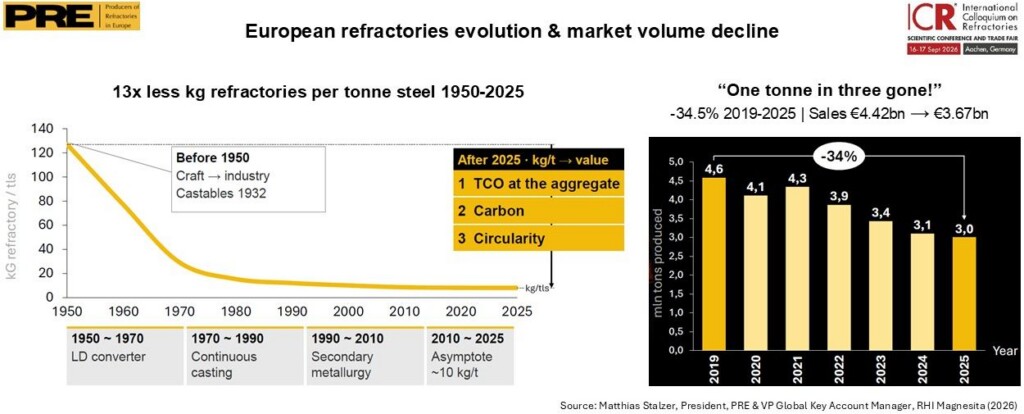
Just over a third (34.5%) of European refractory capacity has disappeared since 2019. “That figure should stop people in their tracks. No refractories, no steel, no cement, no glass — and no green transition either, because none of it runs without high-temperature processes. Competitiveness and sustainability belong at the same table.” said Stalzer.
The European refractory industry needs the right conditions to compete. Stalzer urged: “A level playing field along the full value chain and for all market participants, competitive energy and carbon cost, and recognition of refractories as a strategic enabler of European industry.”
Innovation needs to concentrate on reducing costs for customers, strengthening raw material independence with recycling loops, and turning new technologies into measurable value.
Refractory recycling latest trends & developments will be examined and discussed at
Full Details Here
Fused alumina plants in the pipeline: Almatis/ROMCO – Bautek – First Bauxite
Of all the refractory raw materials, it has been fused alumina, and specifically brown fused alumina (BFA) which has been in the spotlight of late, and illuminations continued at ICR2026.
A key refractory mineral ingredient, BFA production is relatively limited outside China, and right now Chinese supply itself remains hindered by plant closures and low capacity utilisation owing to environmental restrictions and more worryingly a lack of feedstock material due to bauxite mining and exploration curbs in Shanxi province.
Things became considerably more challenging from 15 January 2026, when the European Commission announced that imports of fused alumina from China into the EU would be subject to definitive dumping duties of up to 110.6% – piling more pressure on EU consumers of BFA.
While opportunities are sought by suppliers of potential alternative raw materials, such as specialist calcined aluminas, the real answer would be some increased BFA capacity outside China – now there are three projects in the pipeline.
Almatis partners with ROMCO for BFA | New plant planned in Odisha
At a special press briefing during the ICR2026, world leading speciality aluminas producer Almatis, Germany, and leading Indian white fused alumina (WFA) producer ROMCO Aluminates Pvt Ltd, signed a term sheet outlining the key principles for a long-term strategic partnership for BFA.
The proposed partnership brings together ROMCO’s established fused alumina manufacturing capabilities in India with Almatis’ global sales, technical service and distribution network.
Almatis CEO Anil Sönmez stated: “This is another significant step forward in line with our vision, ‘Alumina and Beyond for Tomorrow.’” Sönmez continued, “Following the expansion of our Calcium Aluminate Cement portfolio through a strategic partnership agreement with Çimsa in 2025, BFA is the second new material that Almatis has added to its portfolio.”
Subject to the conclusion of definitive agreements, the parties intend to establish a long-term manufacturing, sales and marketing collaboration for ROMCO’s BFA portfolio.
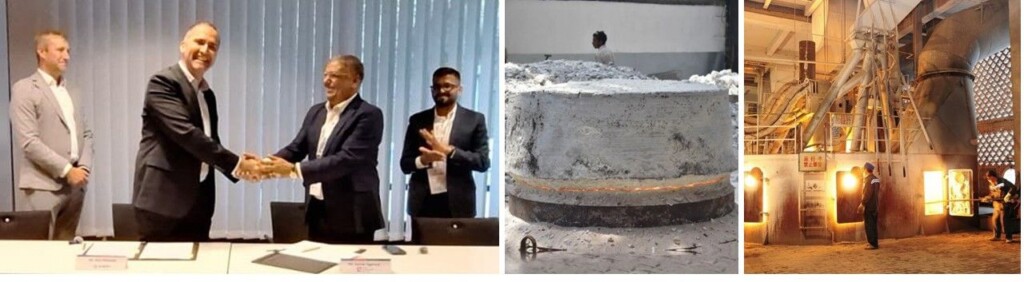
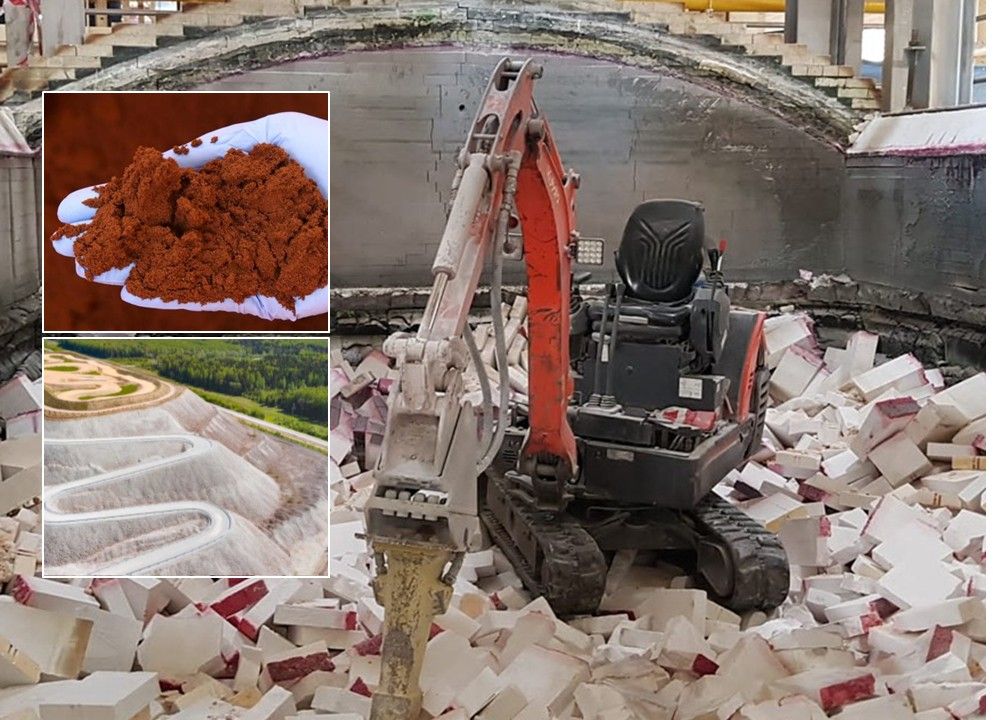
Alumina bond: (left) Almatis CEO Anil Sönmez and ROMCO Chairman Ashok Agarwal sign the BFA partnership agreement in Aachen; (centre) a WFA ingot cooling at ROMCO, Odisha; (right) A typical Chinese BFA EAF at Shanxi Taiyue Abrasive Co. Ltd, Changzhi, Shanxi. Images courtesy Almatis, ROMCO, Shanxi Taiyue Abrasive.
ROMCO, formerly Rourkela Minerals Co. Pvt. Ltd, was established in 1987 and operates a 40,000 tpa WFA plant in Rourkela, Odisha.
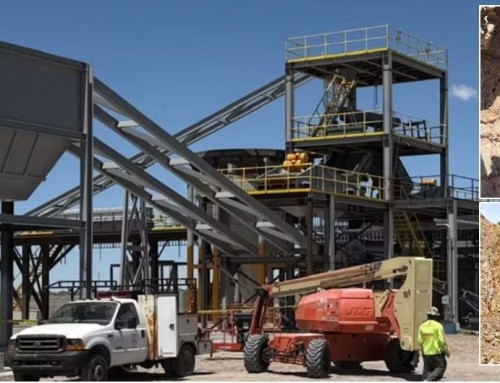
The initiative with Almatis will involve a new BFA plant at ROMCO, currently under commissioning with a 10,000 tpa BFA production capacity, expected to be ramped up to 20,000 tpa in its first quarter of commercial production (expected Q4 2026), then potentially to 35,000 tpa in 2027.
Feedstock material is thought to comprise imported Chinese calcined bauxite with possible additions of alumina in the manner of a hybrid route to BFA. Other BFA process routes include the traditional fusion of calcined bauxite, and a doping process using no bauxite, but a mixture of alumina with titanium oxide and iron oxide.
While South East Asian and Far East markets continue to enjoy low freight rates for Chinese BFA exports, target markets for Almatis/ROMCO BFA will be India, Europe and the USA.
Meanwhile, also in Odisha, Hindalco is developing a new WFA plant with 90,000 tpa production capacity.
Bautek to complete operations with BFA plant
In 2021, IMFORMED reported on an emerging new bauxite player, Bautek Minerais Industriais Ltda, which had made significant investments to launch itself as a new force for global non-metallurgical bauxite and refractory clay markets (see New dawn for Brazilian bauxite).
As shown by Paschoal Bonadia, Refractory Raw Materials Consultant/Bautek Minerais Industriais, in his ICR2026 presentation “High-purity Brazilian bauxite and brown fused alumina as alternatives to traditional global sources”, Bautek has since moved on from deposit discovery in 1999 to today’s integrated operation including mining, milling and calcination.
Pilot sintering and a 5 tonne BFA fusion trial were recently validated. Planned sintered bauxite and BFA plants will complete the chain by 2030, with target capacity of 150,000 tpa sintered bauxite and 90,000 tpa BFA.
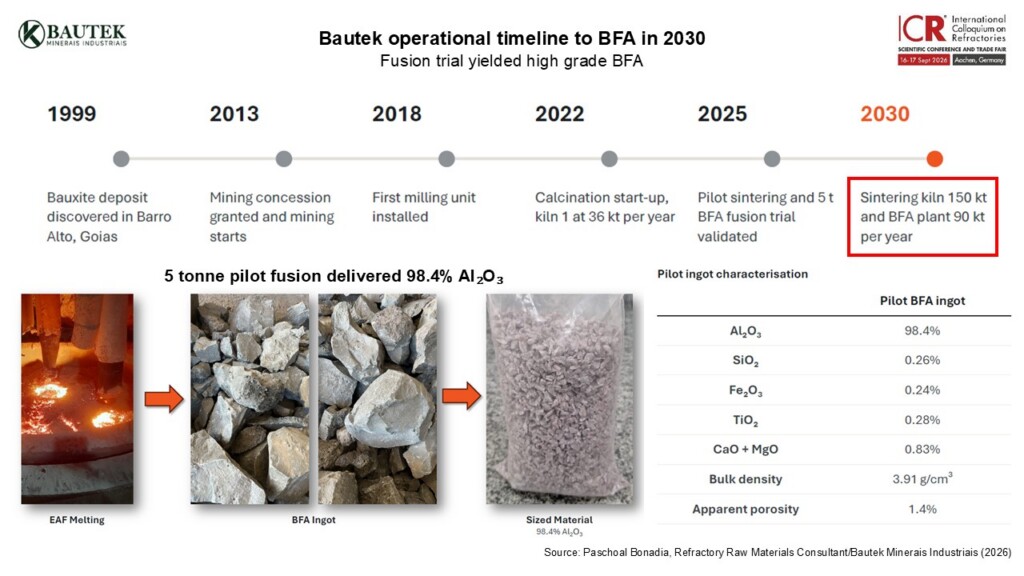
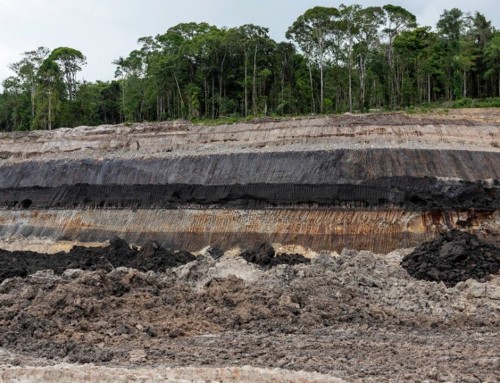
Bautek’s Barro Alto project in Goiás, Brazil, represents a large non-Chinese source of refractory bauxite, with certified reserves approaching 180m tonnes and more than 40% classified as high grade.
The deposit is gibbsitic, with kaolinite and goethite as accessory minerals, and has exceptionally low impurity levels: TiO2 below 0.50%, Na2O + K2O below 0.15%, and CaO + MgO below 0.25%. High-intensity magnetic separation effectively reduces iron oxide content (can range 2-7%).
In the recent 5 tonne pilot fusion trial, Barro Alto bauxite yielded BFA containing 98.4% Al2O3, with low porosity (1.4%) and a bulk density of 3.91 g/cm³. Simulations indicated higher refractoriness and markedly lower liquid formation than conventional BFA grades.
First Bauxite BFA plant in the mix
Although details remain as yet undisclosed, it was confirmed to IMFORMED during ICR2026 that First Bauxite LLC’s (FBX) plans still include the construction and operation of a new BFA plant in the USA, whose bauxite feedstock naturally will be from FBX in Guyana. Initial indications point to Louisiana as the location for the new plant.
IMFORMED reported last month on a combined US government and private sector funding package to support Strategic Bauxite USA LLC’s recent acquisition of FBX, and expand its operations in Guyana, and set up a new BFA plant in the USA (please see Refractory bauxite recognised as “critical” by US).
At present the USA has to import >95% of its fused alumina requirements, and mainly from China.
At IREFCON 2026, Mike O’Driscoll will be presenting
“Rip it out and start again: No longer a sideshow, recycling refractories is out of the shadows”
IMFORMED will also have a stand there, so please drop by for a chat