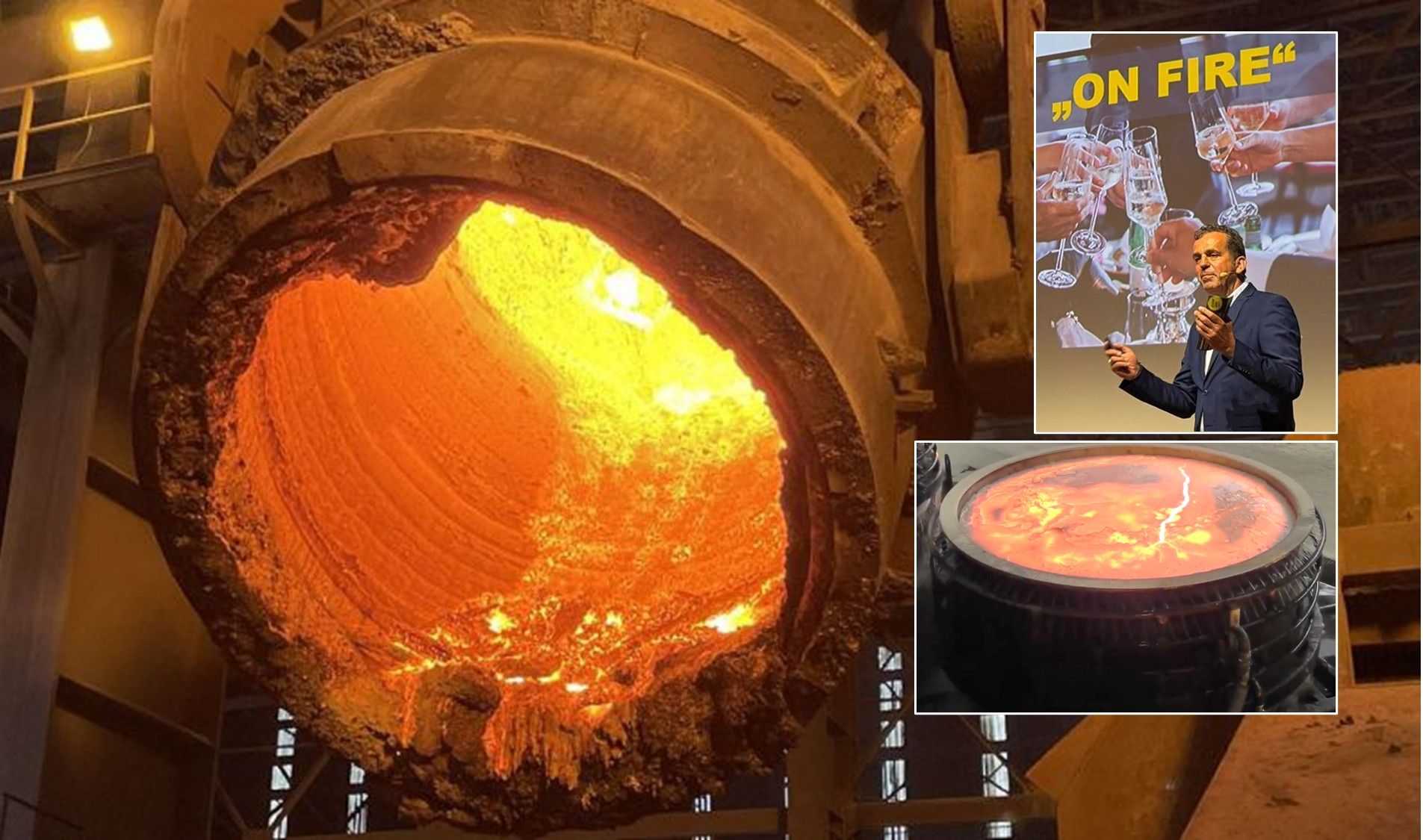
The industrial minerals recycling evolution is gathering momentum fast as more companies, organisations, and governments realise that this sector will be imperative not only for contributing to the Circular Economy and helping our environment, but in creating a vital alternative source of raw materials.
Vulnerable supply chains, logistical bottlenecks, inconsistent availability, and overreliance on limited and stretched mineral resources mean that mineral recycling has to be a viable option for the mineral consumer.
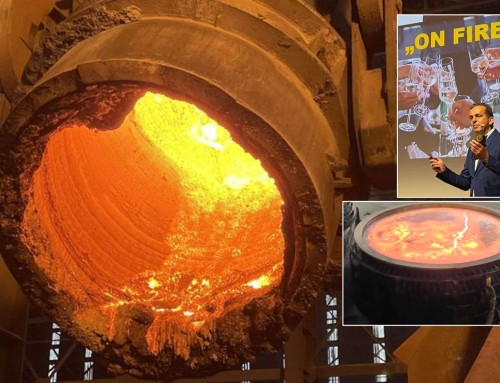
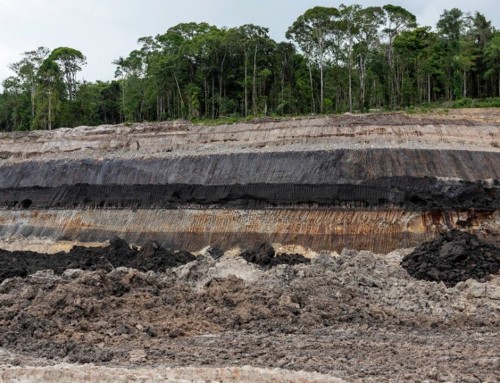
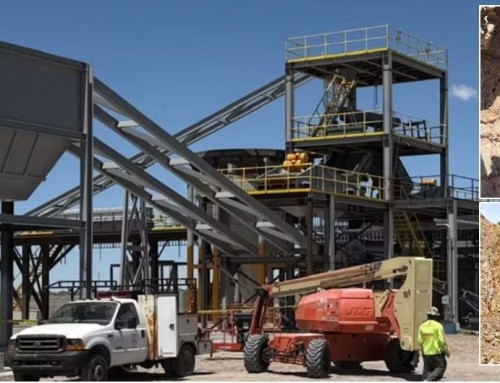
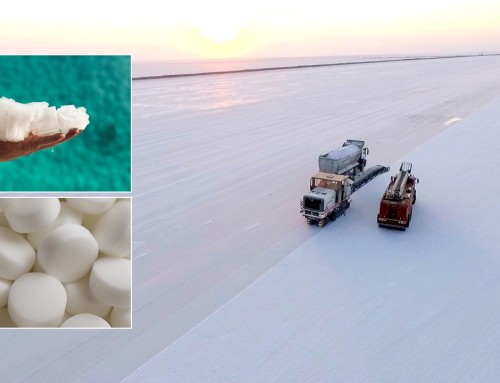
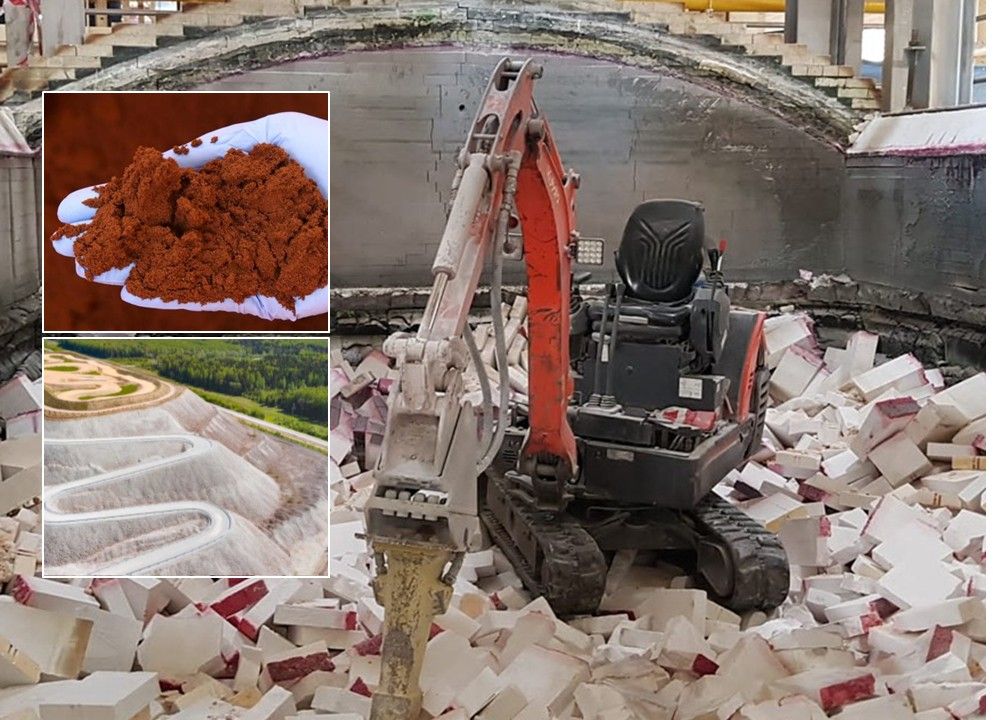
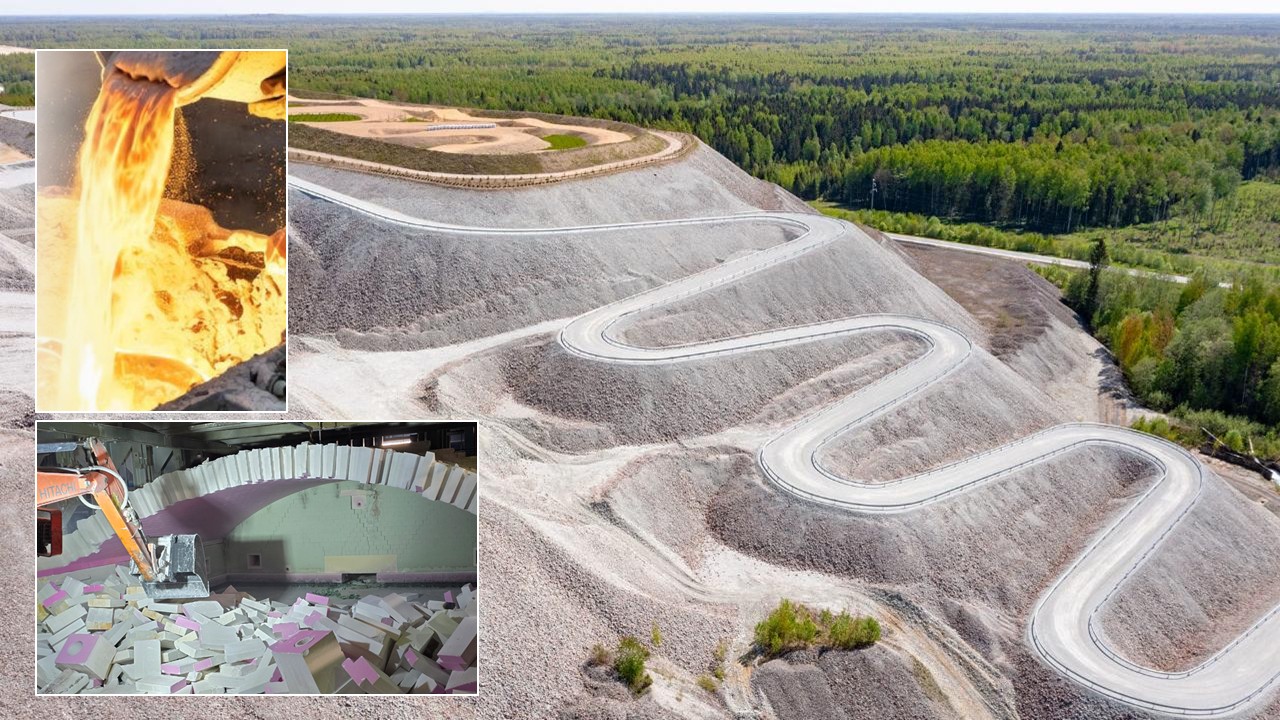
Title Image Waste Mountain A huge resource of limestone waste from oil shale extraction in Estonia is being recycled for fillers and aggregates; inset top left: CarbonBlue has developed a process to recover lime from steel slag; inset bottom left: Dismantling spent refractory lining from a glass fibre furnace, which after processing can yield sought-after refractory minerals such as alumina, chromia, mullite, and zirconia. Images courtesy of Enefit, CarbonBlue, REF Minerals.
In her recent 2026 State of the Union Address on 16 September 2026, European Commission President Ursula von der Leyen Strasbourg warned that “We [the EU] still have too many dangerous dependencies. We are more than 80% dependent on China for many critical raw materials. 90% for some rare earths. So we need to think differently.”
While she put forward a new “European Corporation on Critical Raw Materials”, recycling and use of secondary raw materials has equal billing for the EC’s vision of the Circular Economy, and frankly, is probably easier and more tangible in coming to fruition quicker than some of the many EC critical mineral initiatives aired in recent times.
In short, mineral recycling is one of the two missions of the mineral industry’s time right now; the other is decarbonisation. Get these right and the industry will be more resilient to the challenges to come.
So what’s happening?
Opportunities are already emerging in mineral recycling project developments along with increased innovation and emergence of relevant specific processing and sorting technologies. Many of these were presented and discussed at IMFORMED’s Mineral Recycling Forum 2026 in sunny Mandelieu-La Napoule during 15-17 April at the Pullman Cannes Mandelieu.
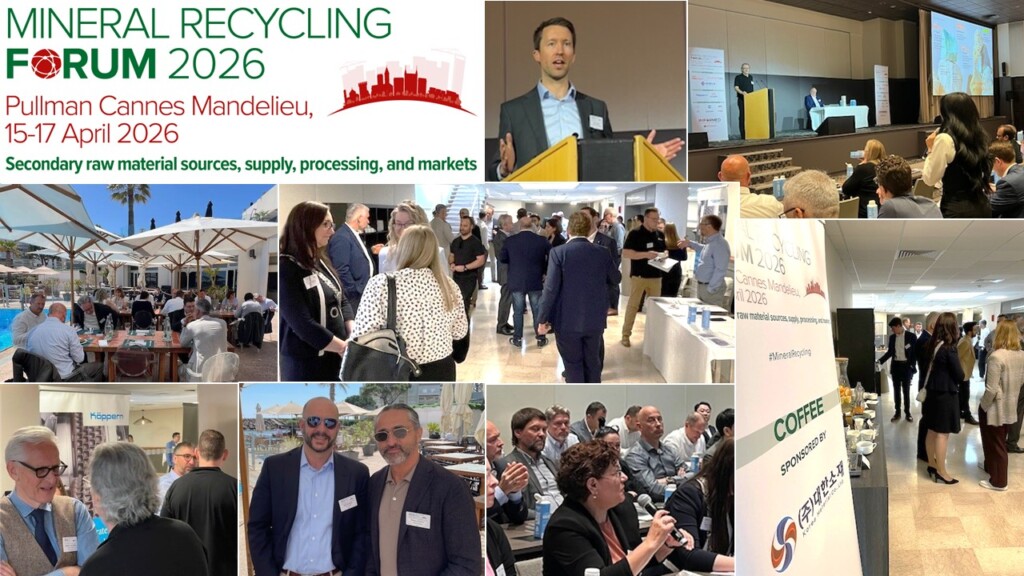
As usual this annual event brought together leading international players and interested parties in the industrial mineral recycling sector to network and hear expert speakers present on a range of interesting and relevant topics.
These included:
EU Circular Economy Act | Alumina from Catalysts | Li-ion Batteries | Phosphate from Sewage | Calcium Carbonate from Oil Shales | Refractories: Glass, Cement, USA, India, Spinel-Corundum Aggregates, Carbon Footprint | Briquetting | Grinding
See below for full review of presentations
Next year we are returning to the French Riviera for Mineral Recycling Forum 2027, Cannes, 12-14 April for more of the same and will have another excellent panel of speakers. Early Bird Rates are available, full details here.
Don’t miss out, book now!
MINERAL RECYCLING FORUM 2026 REVIEW
OVERVIEW | EC LEGISLATION
Welcome & Introduction
Mike O’Driscoll, Director, IMFORMED, UK
O’Driscoll opened proceedings with an overview of industrial minerals recycling status and outlook, highlighting some recent projects in recycling mine waste, rare earth magnets, lithium carbonate from batteries, ceramics, refractories, and calcium carbonate (for a review of the drivers and status of industrial mineral recycling see Greening the future of industrial minerals).
The EU Circular Economy Act: can legislative initiatives recognise & prioritise the role of minerals as advanced circular economy solutions?
Dr Aurela Shtiza, Director – Industrial Affairs & Raw Materials, IMA-Europe, Belgium
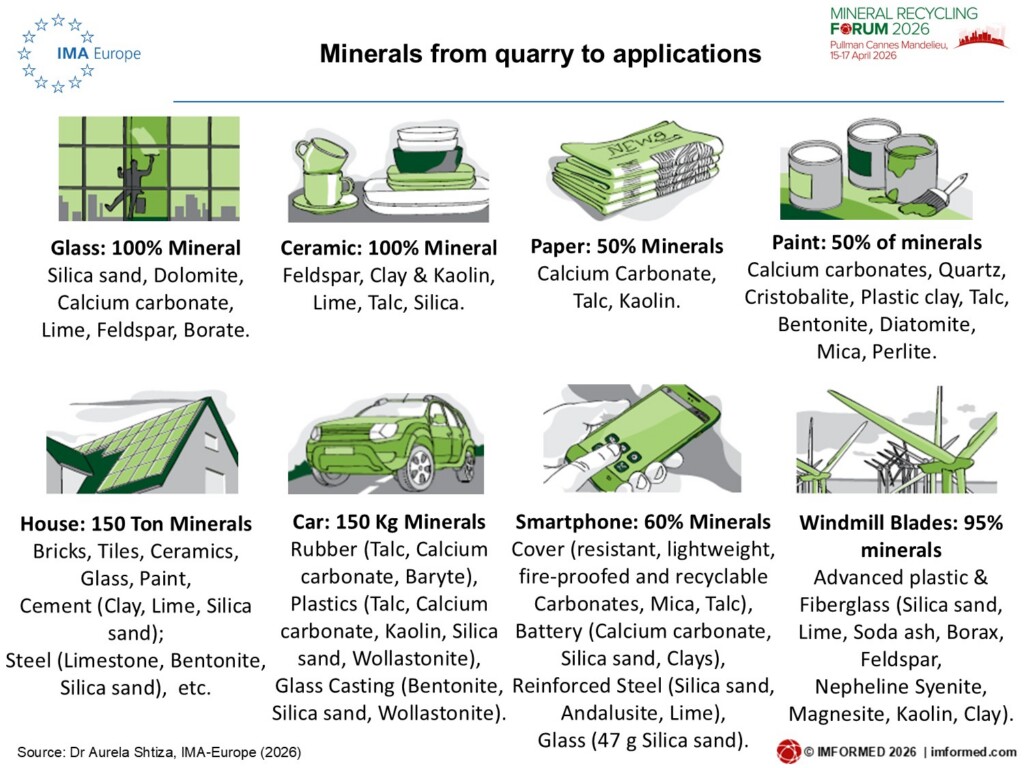
Shtiza provided some excellent examples of how much industrial minerals by weight are consumed in a variety of market applications, eg. glass, ceramics at 100%, smartphones 60%, automobiles 150kg.
Several business models with minerals were outlined as well as a range of the increasing legal and policy requirements related to circularity and innovation in the EU: Waste Framework Directive (WFD) – Existing; Circular Economy Acts (CEA) – Upcoming; and the Advanced Materials Act (AMA) – Upcoming.
IMA-Europe acknowledged that administration and over-regulating can hinder materials circularity for operators and among European countries, and concluded by urging:
Before regulating, we should assess whether the laws we have in place are fit for purpose and what is needed to boost their effectiveness.
Innovation is driven by the business case and its a lengthy process because it needs to deliver performance towards the specific application needs.
Circularity drivers such as ecosystem cooperation & stakeholder engagement are essential to make future solutions viable.
ALUMINA | LI-ION BATTERIES | PHOSPHATE
Recycling spent boehmite (gamma-alumina) from catalysts
Yongdon Joo, CEO, Korea Material Co. Ltd, South Korea
Most catalyst materials in the South Korean market are imported. Korea Material Co. Ltd plans to source spent catalyst materials, refine them, and expand supply through domestic distribution chains.
Recycled materials can achieve cost competitiveness compared to imported products, indicating strong commercialisation potential. Therefore, process development for waste resource recycling and the establishment of high-purity refining technology are essential.
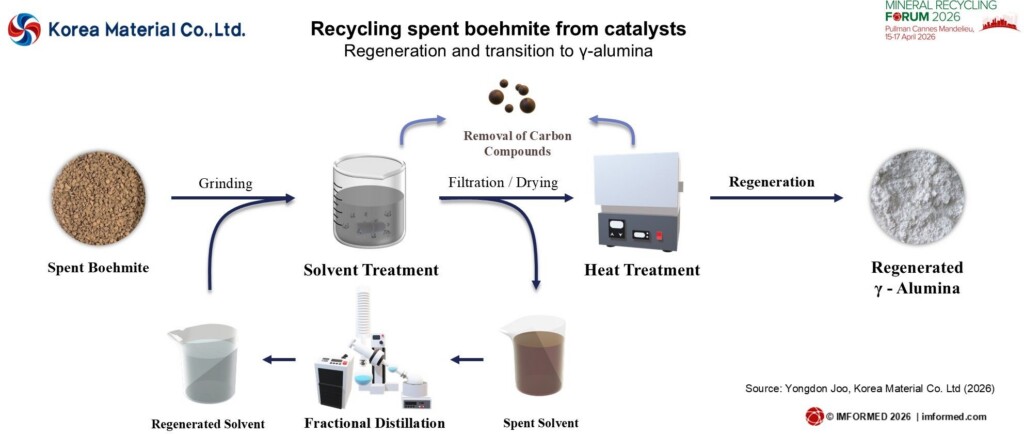
Korea Material set out to recycle spent boehmite, a precursor to alumina, which is widely used as a catalyst support material, and described the process route via raw material characterisation, experiment process, then a performance test.
The recycled γ-alumina was used as the catalyst support for coal tar hydrotreating. Comprehensive characterisation (using XRF, XRD, BET) and catalytic performance evaluation confirm that regenerated γ-alumina from spent boehmite can practically replace commercial γ-alumina.
Li-ion battery recycling status & outlook
Adam Webb, Head of Energy Raw Materials, Benchmark Mineral Intelligence, UK
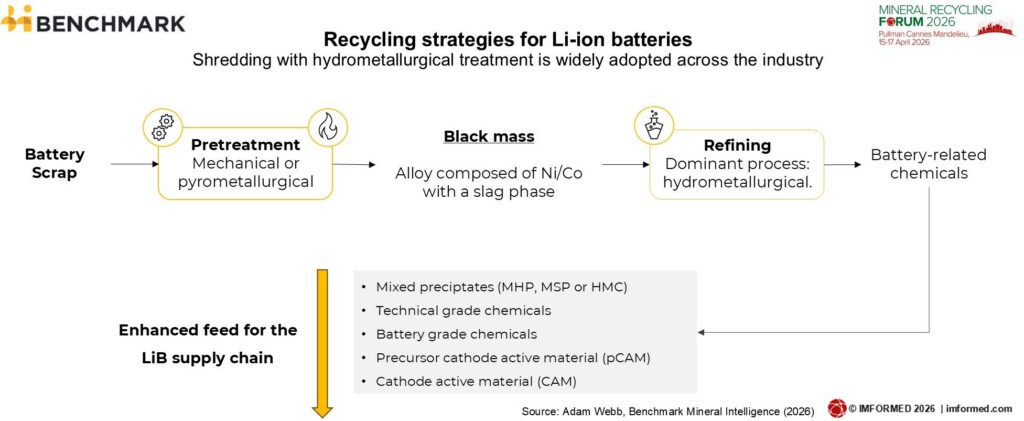
Increased supply from recycling will be required to meet growing demand for key battery raw materials. Recycling brings together several steps in the battery supply chain: between raw materials to end-use in electric vehicles.
Webb demonstrated how battery demand in 2025 surpassed 1.6TWh, with Battery Energy Storage Systems (BESS) as the fastest growing demand driver, as the EV market continues to grow strongly.
Recycled material from lithium ion battery supply chains will become an increasingly important source of supply over the coming decade and is forecast to account for 17%, 20% and 6% of global lithium, cobalt and nickel supply respectively by 2035.
The global combined battery End of Life (EOL) scrap pool is forecast to grow more than 12x between 2026 and 2040, with the majority of scrap from China (64%, in 2026, of world total of >250 GWh). The European combined scrap pool is forecast to grow ~18x between 2026 and 2040.
Webb showed the importance of regional differences in scrap distribution, feedstock for recycling, recycling strategy, and legislation. Technology evolution will impact the recycling and refining route, and recyclers will have to adapt, with improvements in funding and legislation required.
RevoCaP: Enabling Europe’s phosphorus independence with calcium phosphate from sewage sludge ash
Dr Philipp Theuring, Market Developer, EasyMining Germany GmbH, Germany
EasyMining’s aim is in closing the nutrient cycle with high grade (raw) materials easy to integrate into existing production schemes/value cycles.
Theuring outlined the company’s key processes to convert waste to products:
- AQUA2®N: removes and recovers ammonium nitrogen from wastewater streams.
- ASH2®SALT: extracts commercial-grade potassium, sodium and calcium salts from fly ash.
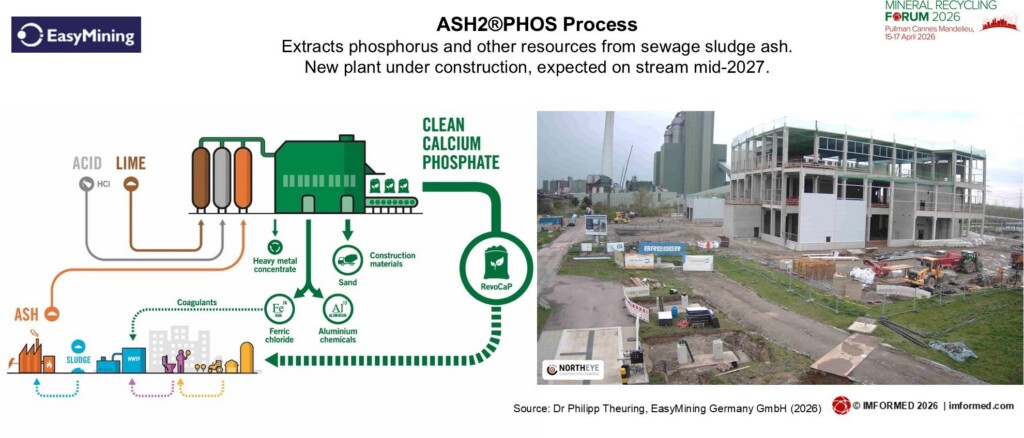
- ASH2®PHOS: extracts phosphorus (P) and other resources from sewage sludge ash.
The ASH2®PHOS process was examined whereby the incineration of sewage sludge is a key step in enabling high quality phosphorus recycling. Incineration enables the destruction of microplastics, organic pollutants, drug residues and pathogens, and results in 9% phosphorus concentration in the ash (1.8% phosphorus in the mine in Finland).
More than 95% of the recycled products can be used: phosphorus (RevoCaP®, precipitated calcium phosphate for fertiliser), and precipitation chemicals iron chloride, sodium aluminate/aluminium hydroxide, and silica sand.
Theuring demonstrated that sewage sludge ash (SSA) is a reliable and domestic P source. By 2030, it is estimated that approx. 1.2m tonnes SSA containing approx. 108,000 tonnes P could be available in Europe. With a 90% recovery efficiency, 97,000 tpa P could be sourced from SSA by end of decade.
If all P in European sewage sludge was tapped this way it would be equivalent to 270,000 tpa P, representing 22% of EU imports.
With Gelsenwasser AG, EasyMining has formed a JV company called Phosphorgewinnung Schkopau GmbH which is building the first ASH2®PHOS plant (PHORMI2) with a production capacity of 30,000 tpa SSA, expected on stream in mid-2027.
CaCO3 & CaO FROM MINE WASTE & SLAG
Unlocking the value of oil shale waste: 500m tonnes of opportunity
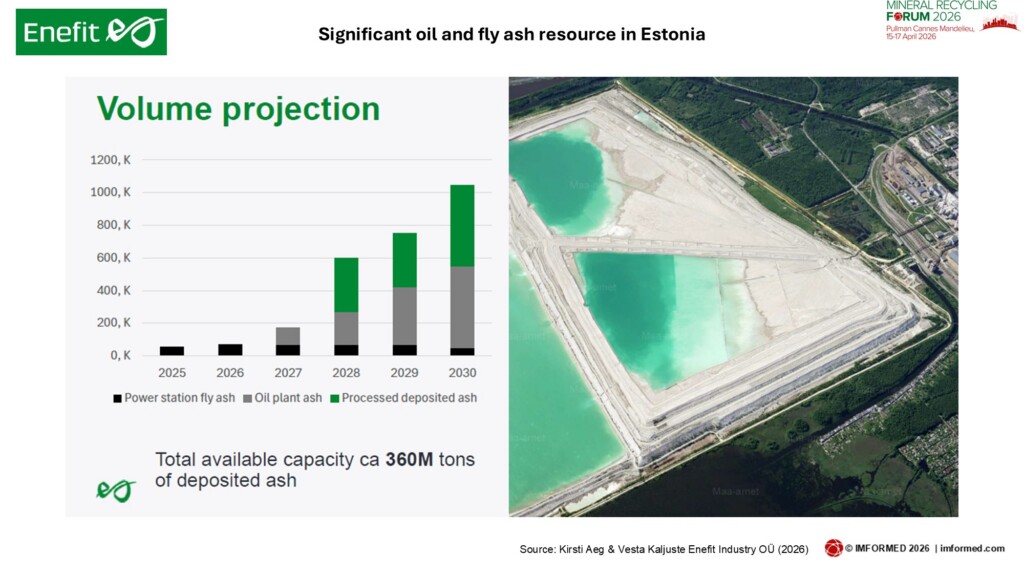
Kirsti Aeg, Oil Shale Ash Application Development Manager & Vesta Kaljuste, Mining Waste Applications Development Manager, Enefit Industry OÜ, Estonia
This presentation explained how aggregates recovered as by-products from Estonian oil shale mine waste (120m tonnes) at Väike-Pungerja, Ida-Viru county, can offer an opportunity to contribute to the circular economy.
Extractable oil shale seams (the mine’s primary target) contain limestone intermediate layers. Oil shale processing separates the limestone as a waste by-product.
Enefit produces seven different fractions of aggregates. Production is from 200-500,000 tpa. The recycled waste rock (up to 300 mm) can be used as a filler material in construction, road construction, as well as in the manufacturing of concrete.
Over the next two years the company plans to supply 800,000 tonnes of aggregates to the Rail Baltica project, while co-operating company Trisector is developing a 3m tpa mineral processing plant.
Enefit is also selling 60,000 tpa of fly ash produced in power stations for a wide range of applications. There is a total available capacity of about 360m tonnes of deposited fly ash and deposited oil ash in Estonia.
Overlooked treasures – value from “waste”: two case studies; tailings & slag
Dekel Golan, Head Business Development, CarbonBlue, Israel
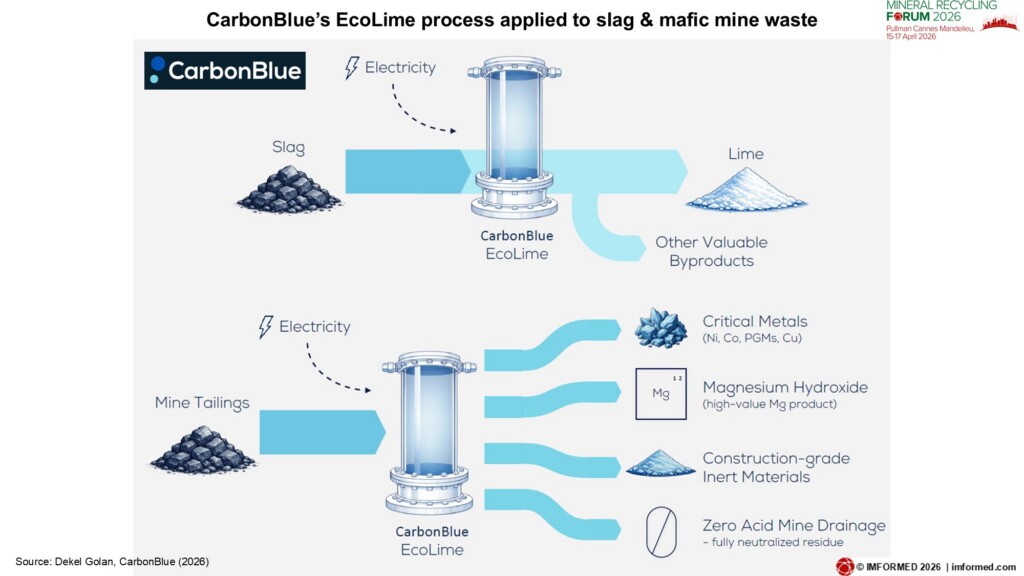
CarbonBlue has developed a low-cost fully-electric process, to generate acid and base from salts and regenerate it after the material was extracted. This process, called EcoLime, allows low-cost recycling on useful materials from waste streams.
EcoLime is a low-carbon approach to mineral recycling that is anticipated to fundamentally change the economics of industrial waste, in steel, mining, construction, and beyond.
Two case studies were presented:
1. Regeneration from steel slag — a well-defined, globally scalable opportunity that exists at every steel plant in the world. EcoLime works across both BOF and EAF slag types, covering the full range of modern steelmaking operations. The result is reduced dependence on externally purchased lime, and circular recovery of calcium that would otherwise be permanently landfilled.
2. Extraction of nickel, cobalt, and other critical metals from mafic and ultramafic mine tailings — a vast, largely untapped resource sitting beneath some of the world’s most strategically important mining districts. When EcoLime is applied to mafic tailings, it produces four revenue streams simultaneously: critical metals, eg. nickel, cobalt, PGMs, and copper; magnesium hydroxide — a high-value product with growing demand in water treatment, pharmaceuticals, and flame retardants; construction-grade inert materials; perhaps most significant from a regulatory and ESG standpoint — zero acid mine drainage.
REFRACTORIES
The hard truths about recycling and the road to circularity
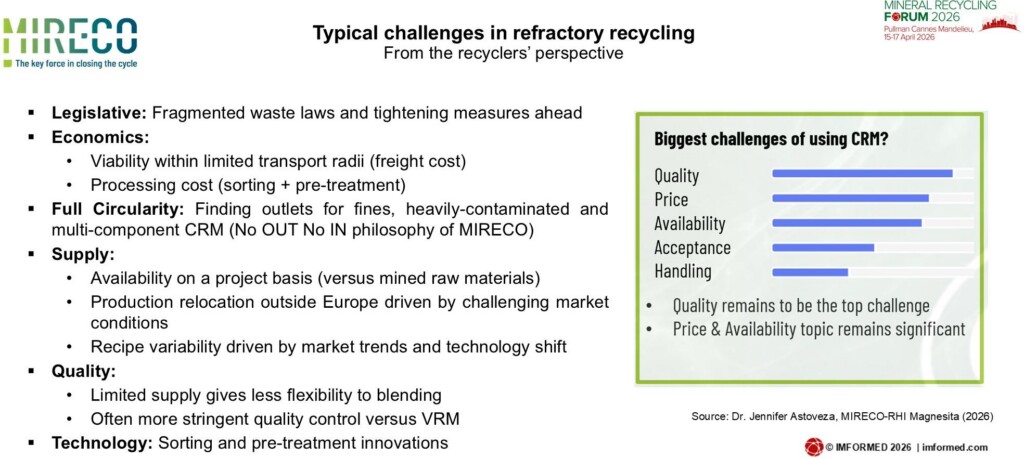
Dr. Jennifer Astoveza, Sales Manager for Circular Raw Materials, MIRECO-RHI Magnesita, France
Astoveza’s excellent paper began with an update of MIRECO’s operating locations and activities, the company is expected to recycle >250,000 tonnes in 2026.
EU waste legislation updates were highlighted before examining the range of challenges facing recyclers, refractory producers, and end users.
As to whether “green sells in Europe?”, results of a survey indicated that the price compared to virgin raw material was the highest priority, and most consumers were reluctant to pay more than 5% for a “green premium”.
In summary, full circular recycling requires:
- Strong collaboration and open dialogue across the value chain: cost/profit-sharing partnership between stakeholders
- Cradle to grave approach: designing refractories to be recyclable
- Total cost of ownership instead of purely cost-driven sourcing
- Change in mindset: the role of science communication in demonstrating recycling viability
- Harmonised waste laws and other legislative levers
Glass refractory recycling developments
Werner Odreitz, CEO, REF Minerals GmbH, Germany
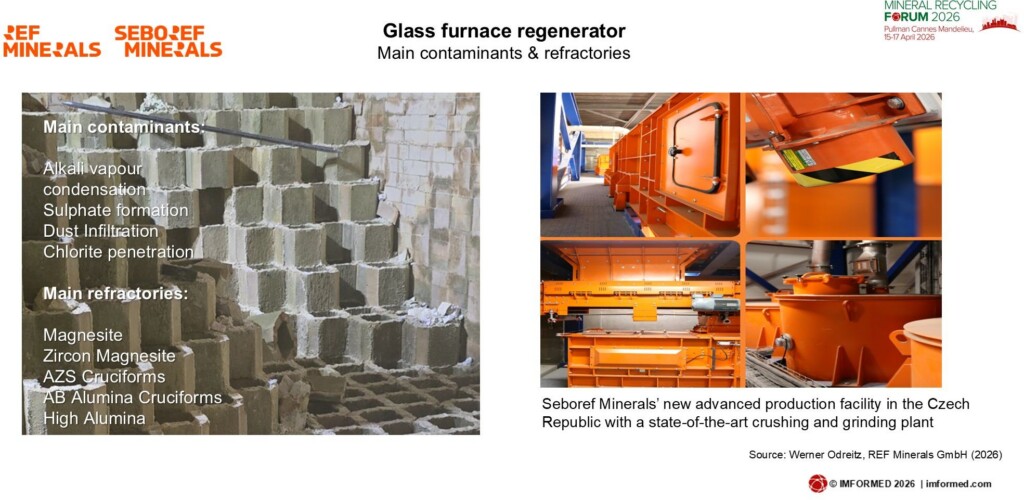
The variety of glass furnace designs and their respective refractory linings were outlined.
Odreitz underlined the expertise required in tackling both the sorting and processing of the wide range of spent glass refractories, which vary greatly according to their end use, type, exposure, and contaminants.
For example, regenerators (checkers) yield spent material containing magnesia, alumina, and zircon, with the main contaminants being alkali vapour condensation, sulphate formation, dust infiltration, and chlorite penetration.
Whereas the glass furnace crown refractories, containing silica and high alumina, are subjected to alkali vapours, alkali sulphates, chlorites, and SOx gases.
An update was provided on REF Minerals’ operations including Seboref Minerals’ new advanced production facility with a state-of-the-art crushing and grinding plant in the Czech Republic, and the main plant in Latvia.
Recycling in the cement industry
Dr. Volker Wagner, Global Refractory Manager, Heidelberg Materials AG, Germany
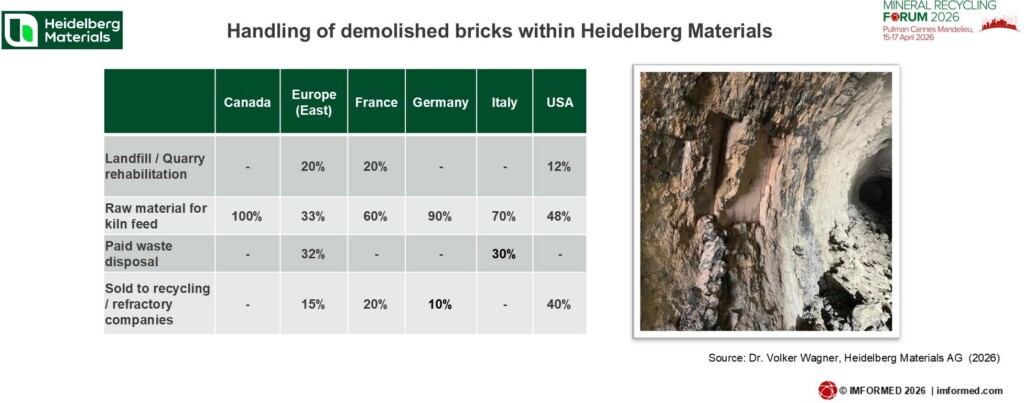
The cement industry is cautiously using more refractories containing recycled material. For example, Heidelberg Materials used just 0.4% “recycled” bricks during 2021-24, but in 2025-26 this value grew to 2.1%.
Much of Heidelberg’s spent bricks are consumed as alternative kiln feed. In Europe 15-20% is sold to recyclers, while in the USA as much as 40% waste bricks are sold to recyclers.
To enhance a much needed boost to using recycled refractories in the cement sector, Wagner recommended that refractory manufacturers should:
- Expand trial installations in stable, low-risk kiln zones
- Encourage cement plants using recycled brick solutions
- Assess feasibility of a region-wide formation of recycling hubs
- Evaluate potential of widening the recycling concept to all kind of materials (alumina bricks, monolithic refractories)
While cement manufacturers should:
- Expand trial installations in stable, low-risk kiln zones
- Encourage market entry of additional refractory suppliers for recycled brick solutions
- Assess feasibility of a region-wide tendering model for demolished bricks to generate plant-level revenue
- Evaluate relevance of Scope 3 emissions in corporate sustainability strategy
North American refractory recycling strategy & market outlook
Celio Cavalcante, VP of Marketing, Solutions, R&D and Sustainability NAM, RHI Magnesita, USA
The North American refractory industry generates some 600,000-1m tpa of refractory waste, 70% from the USA, followed by Canada and Mexico.
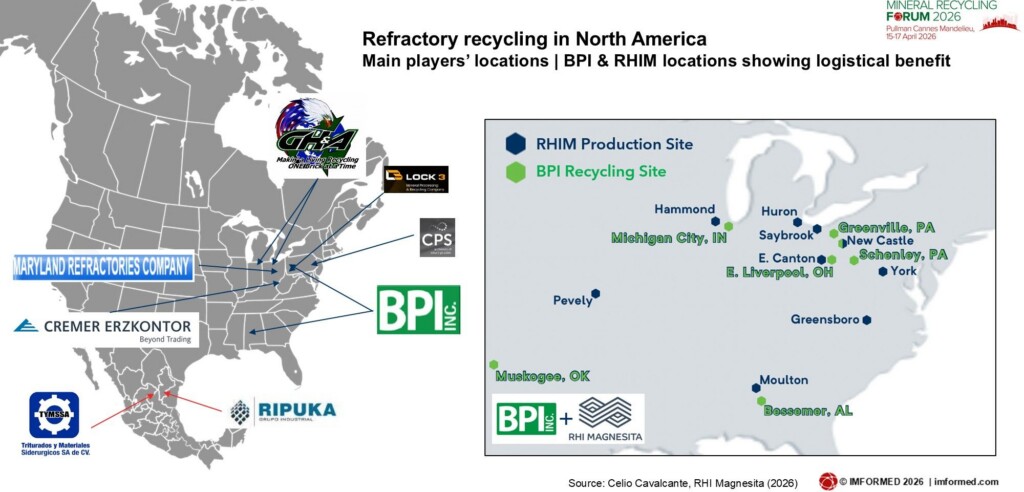
Cavalcante emphasised that “No one-stop-shop is available in North America” for refractory recycling, and urged that partnerships are needed between refractory producer and processor to develop refractory-grade circular raw materials from spent refractories.
RHI Magnesita is currently concentrating in developing recycled products with four processing partners, and the recent joint venture with BPI Inc. was highlighted.
RHI Magnesita North America’s recycling rate has increased from 3.5% in 2021 to 14.1% in 2025.
The key influencing factors of challenging US interior logistics, recent onshoring of new refractory plants, reducing import dependency from China (and reducing exposure to import tariffs), and a positive outlook for the US steel industry with sustainability priorities, were all examined.
Reinventing refractories: How US-Made spinel-corundum aggregates processed from waste could break the industry’s dependence on imports
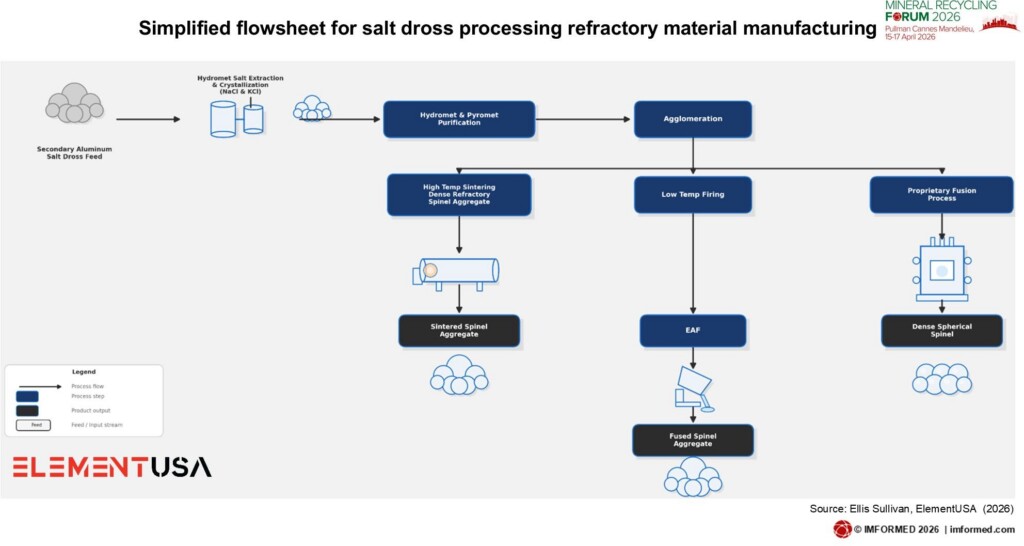
Ellis Sullivan, CEO, ElementUSA, USA
ElementUSA is an integrated infrastructure development platform able to rapidly design, build, own, finance and operate advanced domestic critical mineral processing infrastructure, to deliver minerals produced from both primary (raw ore) and secondary (mine waste) sources quickly, economically and profitably to US markets and abroad.
The USA generates over 1.6m tpa of aluminium salt dross, a material currently landfilled at enormous cost. Sullivan believes this waste stream holds the key to breaking the USA’s dependence on imported refractory grade alumina and spinel.
Salt dross (or salt cake) is a byproduct of the aluminium recycling industry formed when treating aluminium dross with a molten flux – typically NaCl/KCl along with CaF₂ – to recover aluminium metal.
The complex, multi-phase mineralogical structure of salt dross means that no single processing method can recover all values – a combination of physical, hydrometallurgical, and pyrometallurgical techniques is required.
Using a standard physical separation, and a hydrometallurgy and pyrometallurgy approach, ElementUSA has recovered a pure salt from the salt dross. A sintered alumina/spinel refractory product with 3.0 g/cm3 bulk density can be obtained.
Fused treatment has shown great promise and a final spherical alumina/spinel refractory with <100 mesh particle size with 3.3 g/cm3 bulk density and 1-3% porosity can be obtained.
The company is planning a facility to receive 100,000 tpa salt dross feedstock to yield about 40,000 tpa refractory material.
Green refractories in India
Ishan Agarwal, Head Operations and Business Development, Jai Balajee Trading Co. – JBTC, India
The government of India has established ambitious carbon reduction targets: 20% reduction in steel manufacturing emissions by 2030, 50% by 2050, and net zero by 2070. Productivity Linked Incentive (PLI) schemes by Indian steel plants are now promoting recycling with renewable energy to decarbonise operations and reduce CO₂ emissions.
As a result, around 85% of refractory waste is anticipated to be recycled on site, which will promote an overall grown of 15% in “green refractory recycling”.
Agarwal emphasised that the lifecycle of standard MgO-C bricks, from raw material processing through final usage in steelmaking operations, generates significant carbon emissions. Understanding these emission sources is critical for developing sustainable alternatives.
The substitution of virgin materials with recovered refractories substantially decreases the carbon footprint across the entire steel manufacturing value chain.
Key challenges in refractory recycling include:
- Pre-Sorting Requirements
- Quality Stability
- Physical Properties
- Cost considerations
- Grain size range
- Contamination issues
- Surface characteristics
- Market perception
Impact of Secondary Raw Materials on the Product Carbon Footprint of refractories
Dr Kathrin Weber, Head of Research & Development, Refratechnik Cement GmbH, Germany
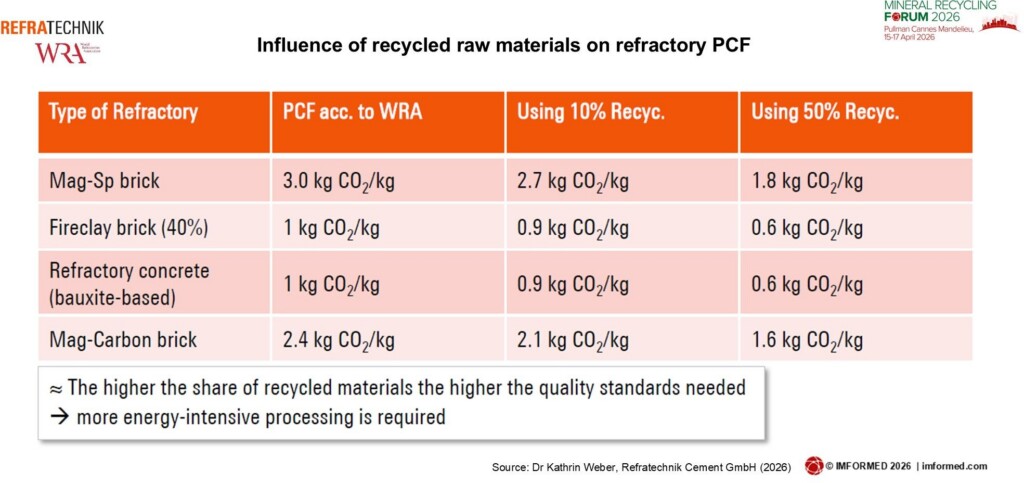
Weber demonstrated that the World Refractories Association (WRA) calculation method provides a standardised, comparable and simplified way of calculating the Product Carbon Footprint (PCF) of refractories.
Using recycled raw materials has a significant impact on the PCF. In a magnesia-spinel brick, replacing half of the dead burned magnesia (DBM) with recycled DBM reduced the PCF by approximately 31-38%.
Weber urged that attention must be paid to after-use treatment, such as washing and drying. The higher the share of recycled materials the higher the quality standards required, and thus more energy-intensive processing is required.
When calculating the PCF value, emissions from transport and processing (eg. washing, crushing) must be taken into account (and calculated).
At IREFCON 2026, Mike O’Driscoll will be presenting
“Rip it out and start again: No longer a sideshow, recycling refractories is out of the shadows”

MINERAL PROCESSING
Combining secondary raw materials: the potential of adding value by briquetting
Felix Heinicke, Senior Process Manager, Köppern Aufbereitungstechnik, Germany
Heinicke outlined the evolution of roller press briquetting and described the general principles and range of market applications, eg. briquetting furnace dust.
The roller press works like a “pump”, whereby bulk density directly influences throughput. Briquette density can reach approx. 90-95% of pure density, depending on material properties.
The key influencing factors in the briquetting process include:
- Material composition
- Moisture
- Binder
- Particle size/bulk density
- Temperature
- Roller press settings
Driving circularity in minerals & slag processing through vertical milling excellence
Tobias Korz, Senior Sales Manager, Loesche GmbH, Germany
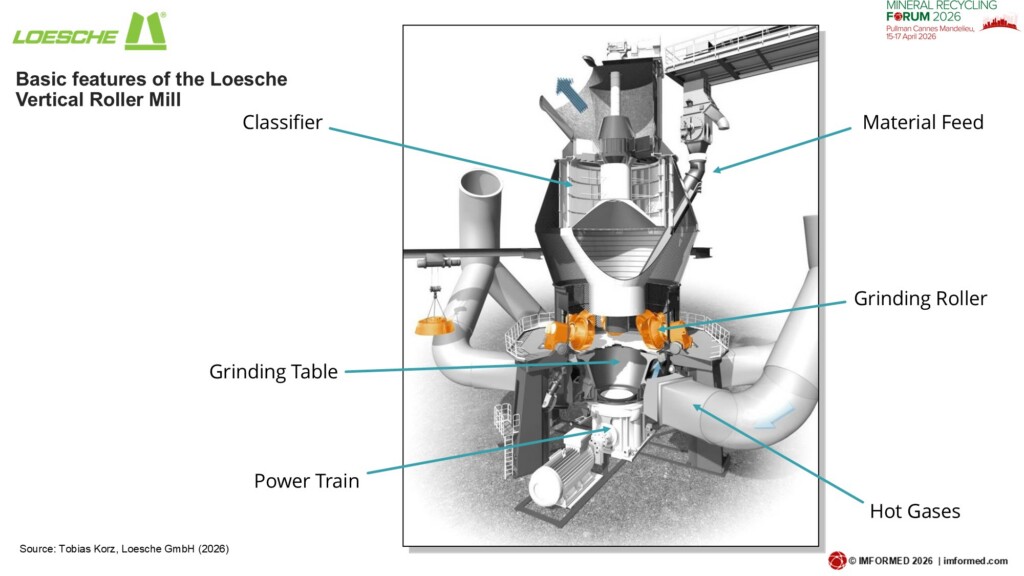
Korz demonstrated how LOESCHE Vertical Roller Mills (VRM) combine grinding, drying, and classification in a single unit, delivering efficiency and flexibility.
Case studies were described showing VRM in processing ground granulating blast furnace slag (GBFS), steel slag, and demolished concrete.
In GBFS, a proven supplementary cementitious material (SCM), compared with ball mill processing, the VRM demonstrates a clear advantage in specific power consumption, translating directly into lower operating costs and a stronger business case for circular processing.
Steel slag contains recoverable metal and a fine mineral fraction suitable for reuse. The two revenue streams can be recovered in a dry recycling process using VRM, eliminating water-intensive wet methods.
Loesche’s patented selective recycling process can separate demolished concrete into three high-purity fractions, each suitable for direct reuse.
Many thanks and hope to see you at Mineral Recycling Forum 2027!
IMFORMED would especially like to thank sponsors REF Minerals, ElementUSA, Köppern-Euragglo and Korea Material Co. Ltd, our speakers for their excellent presentations, and all our supporters and attendees for participating in a most convivial and highly informative conference.
Looking forward to meeting you again next year at Mineral Recycling Forum 2027, Cannes, 12-14 April.
Missed attending Mineral Recycling Forum 2026?
Summary Slide Deck available here
A full PDF set of presentations available for purchase.
Please contact Maria Bernard T: +44 (0) 208 153 0035 maria@imformed.com
And why not book now with our attractive Early Bird Rates for…