
Anyone scanning the fluorspar supply sector right now cannot have ignored the uptick in activity and attention to mine development projects for this specialist industrial mineral.
Fluorspar has recently garnered increased attention owing to it’s perceived “criticality” in Li-ion battery and semiconductor manufacture, and remains an important mainstay ingredient for production of steel, aluminium, fluorochemicals, cement, ceramics, and glass.
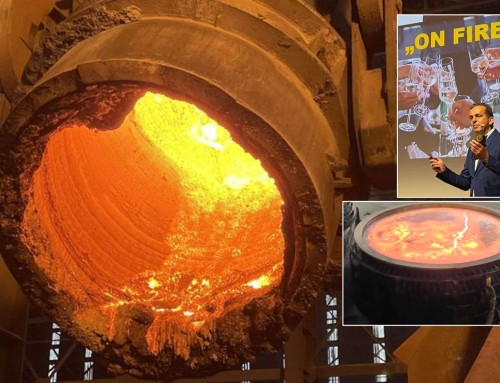
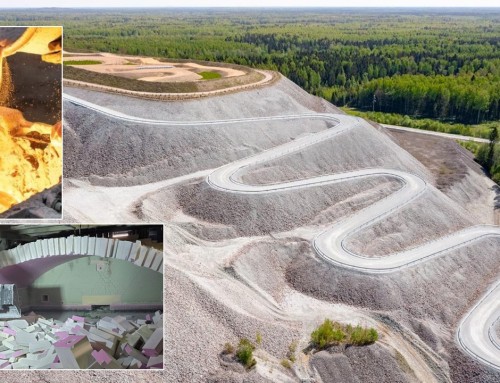
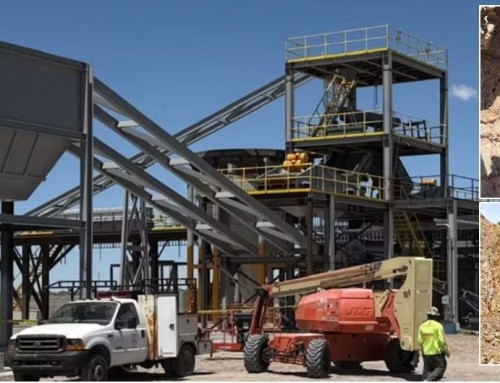
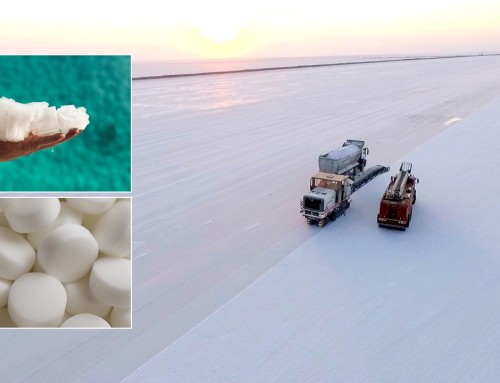
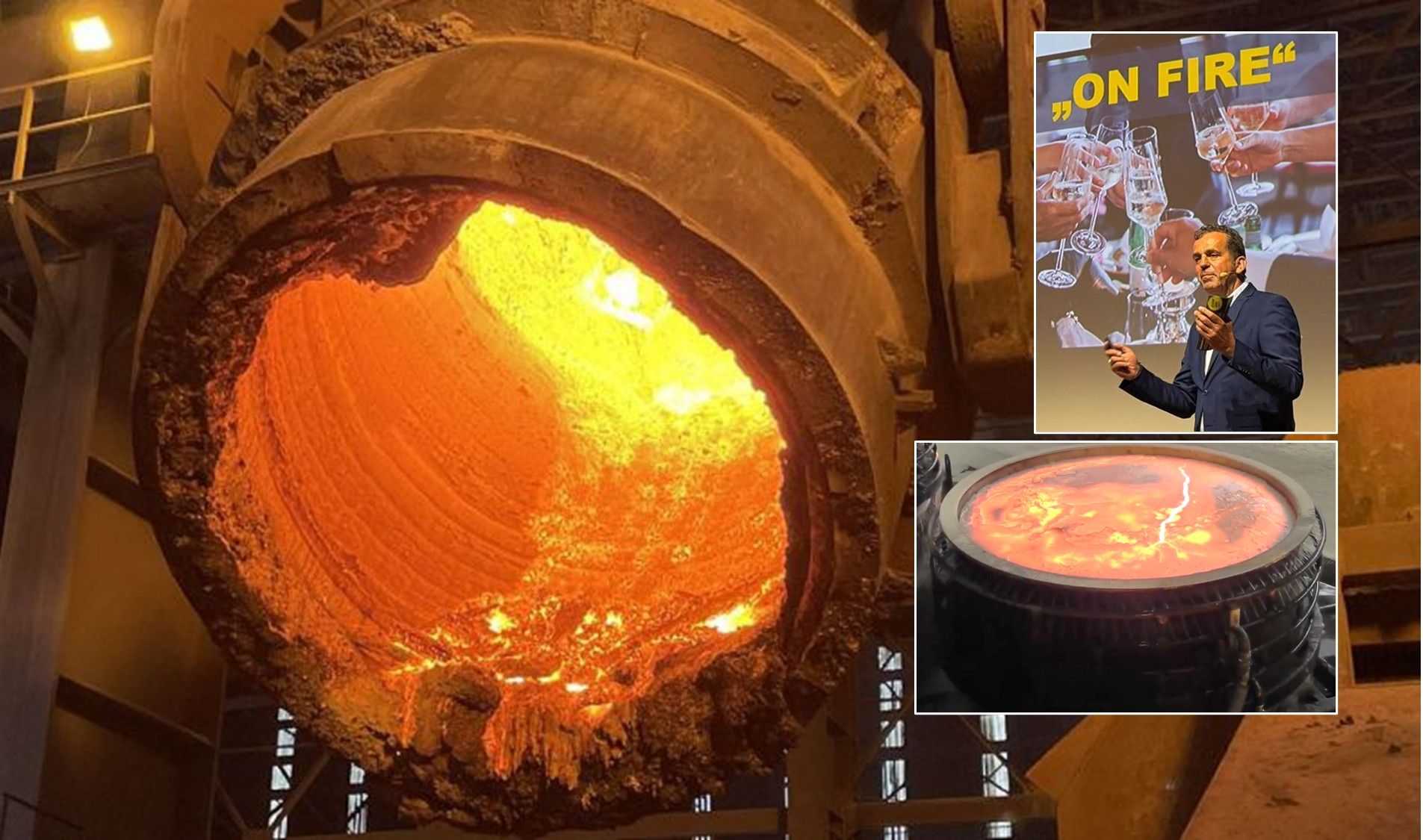
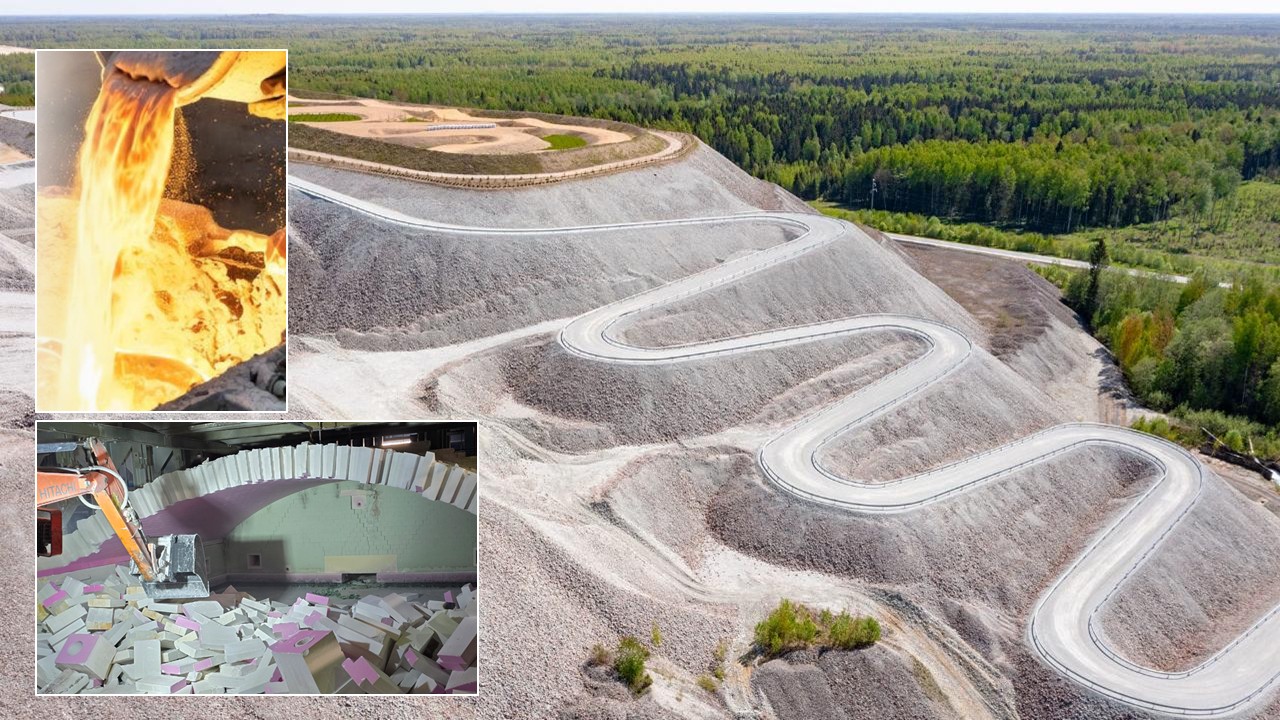
Title Image Facing up to Fluorspar Above & Below: (main image) Ongoing mine development work by Mineraria Gerrei at the Silius Mine, Sardinia, Italy; a review of latest progress will be presented at Fluorine Forum 2025; (inset top) Fluorspar crystals from Silius Mine; (inset bottom) Metspar lump plant taking shape at Delta, Utah, as part of Ares Strategic Mining’s Lost Sheep Fluorspar Project. Courtesy Mineraria Gerrei, Ares Strategic Mining.
Recent years have witnessed a reduction in world production sources, and while China remains a leading producer, it has become a net importer of fluorspar.
Consumers are seeking to secure new and alternative sources of fluorspar supply.
In the build-up to IMFORMED’s Fluorine Forum 2025, Baveno, Lake Maggiore (Milan), 22-24 October, where the leading international players in fluorspar supply and demand will gather, we thought it useful to try and summarise what’s going on and who’s doing what.
Indeed, some of these projects are the subject of speaker presentations at Fluorine Forum 2025.
Don’t miss out! >200 Attendees registered | Confirmed Programme

Fluorspar projects summary
A series of tables have been compiled, split by regions (see below), listing some of the main projects that are active and have been receiving attention of late.
It is stressed that this listing is not exhaustive, there are projects and fluorspar occurrences that have not been included, and the scope excludes China and Mongolia (which each host several projects, the more so the latter).
Also, the summary focuses specifically on only natural fluorspar mineral projects (ie. fluorite or fluorspar, grades measured in % CaF2 where known).
It does not cover potential “synthetic” fluorspar/fluorine sources, such as recovered from aluminium smelter waste, fluorosilicic acid (FSA) processing (from phosphate rock production), depleted uranium hexafluoride (DUF6; from uranium refining), and recent innovations in HF-free fluorination processes.
These potential synthetic sources are and will be very important to the future balance of fluorine supply, and will also be covered at Fluorine Forum 2025.
The projects reviewed may fall into one or more broad categories:
- Undeveloped fluorspar deposits
- Undeveloped primary metallic mineral target deposits which have fluorspar as potential by-/co-product, ie. a polymetallic deposit (eg. tin, tungsten, REE, vanadium, lithium).
- New development in historic fluorspar mining district
- Revival of former operating mine
Geographically, they are clustered in Australia, USA and Canada, Europe (Germany, Italy), and Africa (Kenya, South Africa, Zambia, Zimbabwe).
The golden question always asked is which will come to fruition first?
There are many influencing factors in each case, such as:
- financing
- partnerships
- legal permitting
- geology
- exploration & evaluation programmes to secure resource/reserve estimates
- mine and plant planning
- logistics
- local infrastructure & resources
- demand for associated primary target (eg. Sn, Li, W, REE, V)
- a feasible consuming market
But if pressed, on a thumbnail basis, one could probably consider that at the head of the pack are two of the “revival” projects: Canada Fluorspar and Sachtleben Minerals GmbH & Co. KG, Germany (through subsidiary Fluoritwerke Erzgebirge GmbH); the former has already shipped in August 2025, and the latter restarted operations in July 2025.
After that, it might be a race over the next 2-3 years between Mineraria Gerrei Srl, Italy and Ares Strategic Mining, USA – each are progressing in mine development and plant construction, with permits in place.
Presenting at Fluorine Forum 2025
“Unlocking Silius’ geological potential: reserves upgrading of Europe’s largest fluorite deposit”
Simone Cirinei, Mining Geologist, Mineraria Gerrai, Italy
The rest have longer lead times to possible fruition. Much rehabilitation work is required for any progress at the mine revivals of Deutsche Flussspat, Germany and Sofax Fluorspar Kenya, but plans are in motion for both.
Most of the other undeveloped deposit projects require more exploration and evaluation, plus mining licences in some cases. Although, ahead of that pack could be Tivan’s Speewah Fluorite Project in Australia, which this year has been boosted with funding and a JV with Sumitomo Corp. & Japan Organization for Metals and Energy Security (JOGMEC).
What will be a key driving force for some of these polymetallic mineral projects will be the demand for the primary mineral targets, such as rare earths, vanadium, tungsten, and lithium which could just help trigger the release of a by-product fluorspar source.
Let’s see! It’s an exciting time for fluorspar’s future, join us at Lake Maggiore to find out the latest.
Australia

Europe

Africa

Canada

USA